
Union Minister Pralhad Joshi dismissed rumours of food shortages following Operation Sindoor
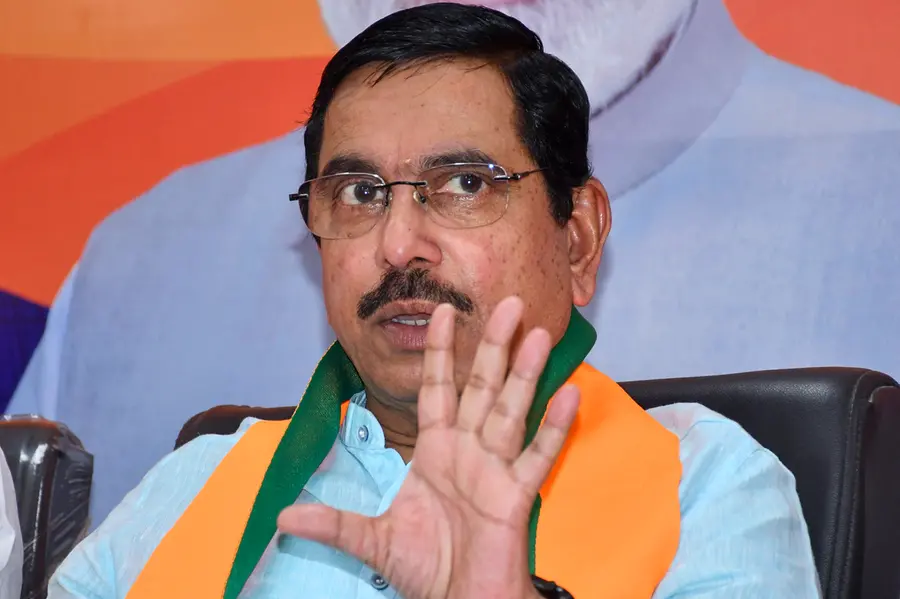
Union Minister Pralhad Joshi dismissed rumours of food shortages following Operation Sindoor, assuring the public that India has more than double the required stock of food grains and essentials.
In response to spreading panic over a rumoured food grain shortage in India following Operation Sindoor, Union Minister for Food, Public Distribution and Consumer Affairs, Pralhad Joshi, has assured the public that such claims are baseless and that the country has ample reserves of all essential commodities.
Speaking to reporters in New Delhi on Thursday, the minister said:
"The rumour that there is a shortage of food and essential commodities in the country is completely false. No one should pay attention to such baseless claims."
Joshi attributed the circulation of such misinformation to deliberate attempts by mischief-makers aiming to sow confusion and unrest, particularly in states like Punjab.
“There is no shortage of food or essential commodities anywhere in the country. In fact, stocks are more than sufficient, and there is no need for people to engage in panic buying,” he clarified.
The Central government has recently completed a nationwide review of food grain and commodity stockpiles, confirming that current reserves of rice, wheat, pulses—including Bengal gram, pigeon pea, lentils, and green gram—are significantly above national demand levels.
“There is absolutely no reason for public concern. We have double the required stock, and the supply situation is completely under control,” Joshi said.
He also addressed false reports and fear-mongering particularly noted in Punjab earlier in the day, suggesting these were intentional efforts to incite panic.
The minister strongly appealed to citizens not to rush to markets or hoard supplies out of fear.
“Do not go from one market to another or overspend based on unfounded rumours. There is no food grain crisis,” he emphasised.
The government has encouraged the public to stay informed through official channels and avoid believing unverified social media messages that could lead to unnecessary disruption in the market.
Published: 09 May 2025, 12:22 am IST
Related Topics
Disclaimer: Kindly avoid objectionable, derogatory, unlawful and lewd comments, while responding to reports. Such comments are punishable under cyber laws. Please keep away from personal attacks. The opinions expressed here are the personal opinions of readers and not that of Mathrubhumi.
