
The waiver gives Indian exporters breathing room, but uncertainty over US trade policy and Russian crude supplies remains.
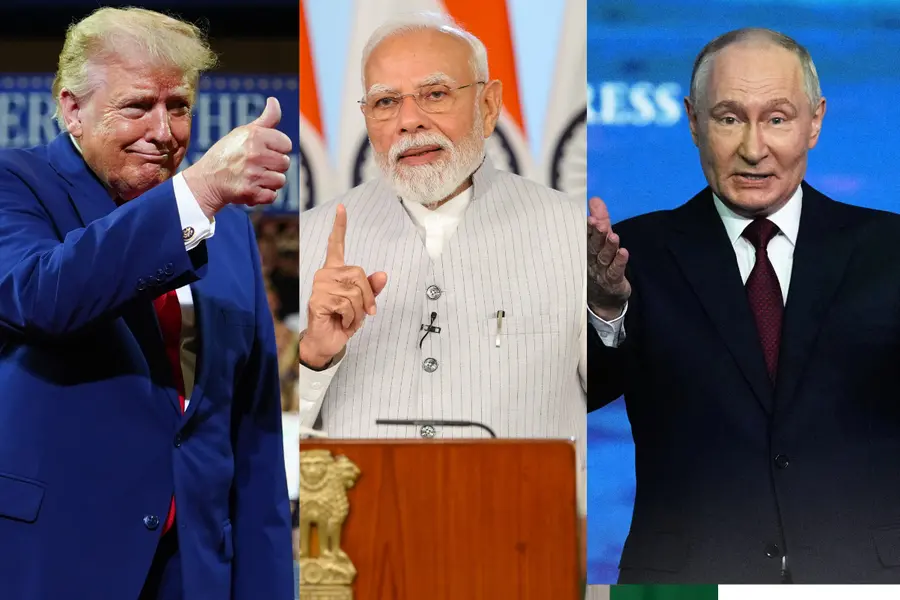
New Delhi: US President Donald Trump’s decision to suspend tariff penalties linked to Russian oil purchases gives India room to maintain its energy sourcing strategy without the immediate threat of additional duties of up to 100 per cent on its exports to the United States. But with the underlying legislation still in force, the relief does not eliminate the risk of renewed trade pressure.
The decision comes at a critical time for India, which relies heavily on imported crude oil and is navigating disruptions to energy supplies from the Middle East. It also offers an opportunity to ease tensions in the ongoing India-US trade negotiations.
However, the Global Trade Research Initiative (GTRI) has cautioned New Delhi against treating the waiver as a lasting policy shift by Washington.
“For India, the waiver buys time but offers no lasting certainty. India should protect its energy security, buy oil on commercial terms and prepare for renewed US pressure. Temporary tariff relief is no basis for permanent trade concessions,” GTRI founder Ajay Srivastava said on Saturday.
Here is what the decision means for India, why it matters and what could change next.
1. What Trump’s waiver means for India’s energy security
The waiver removes the immediate threat of additional tariffs linked to Russian energy purchases under the Sanctioning Russia and Iran Act (SRIA). This gives Indian refiners greater flexibility to consider Russian crude based on price, availability and domestic demand.
Russia became a major supplier to India after Western sanctions following Moscow’s invasion of Ukraine redirected Russian oil towards Asian markets, often at discounted prices.
Russian crude has remained important as India manages disruptions to supplies from the Middle East, including shipments through the Strait of Hormuz. However, the waiver does not guarantee that Russian oil will always be available at competitive prices.
India's sourcing pattern is also changing. According to GTRI, Russia's share of Indian oil imports fell from 51 per cent in July to 44 per cent in August, as purchases from the US and the United Arab Emirates increased despite higher prices.
The immediate benefit, therefore, is greater freedom to make commercial decisions without the additional tariff threat hanging over Russian oil purchases.
2. Why does the waiver matter for Indian exporters?
The potential impact extends beyond the energy sector.
The US is one of India's largest trading partner, and additional duties on Indian goods could raise costs for American importers, weaken the competitiveness of Indian products and disrupt export planning.
Washington had previously imposed an additional 25 per cent penal tariff on Indian goods over purchases of Russian oil, taking the overall tariff burden to 50 per cent. In February, Trump announced that tariffs on India would be reduced to 18 per cent and the additional penalty removed, while claiming that India would stop buying Russian oil.
The latest waiver removes the immediate prospect of another round of steep duties under the SRIA. This reduces one source of uncertainty for businesses, although it does not settle every tariff issue between the two countries.
Manoj Mishra, partner and tax controversy management leader at Grant Thornton Bharat, said the decision would help protect Indian exporters while reducing risks to energy sourcing.
“Avoiding steep additional tariffs reduces the risk of disruption to energy sourcing amid ongoing tensions in the Middle East. Given that the US is India’s largest trading partner, the waiver also helps shield Indian exporters from potential adverse impacts across sectors,” he said.
Mishra added that businesses would still need greater tariff clarity and predictability to make long-term export and supply-chain decisions.
Also read | Starlink responds to Reliance: ‘Ready to connect India’, but what is delaying its launch?
3. Has Trump permanently removed the tariff threat?
No. The distinction between suspending the penalties and removing the law is central to understanding the decision.
Trump signed the SRIA into law on September 18. It provides powers to impose sanctions on Russia and steep duties on countries that continue purchasing Russian energy under specified conditions.
In an executive order issued on October 16, Trump waived the relevant sanctions, restrictions and duties, citing US national interests. According to GTRI, the order puts the tariff penalties on hold while leaving the underlying legal provisions in place.
The waiver has no fixed expiry date, but it can be withdrawn. The US Trade Representative will continue monitoring purchases of Russian-origin oil and gas and possible sanctions evasion.
This means Washington retains the option of reconsidering the relief. India could therefore face renewed pressure if the US administration changes its approach to Russian energy purchases.
For Indian businesses, the distinction matters: the immediate risk has receded, but the policy uncertainty has not disappeared.
4. Why did Washington grant the waiver now?
The decision comes amid developments that have complicated the US approach to Russian energy.
According to GTRI, a US-Russia arrangement announced on October 9 involving Russian diesel purchases made it harder for Washington to justify penalising other countries for buying Russian energy while the US itself arranged supplies.
Srivastava also pointed to China's separate protection against US tariff increases until January 10 under an understanding reached during President Xi Jinping's US visit last month.
In GTRI's assessment, targeting India with additional duties while the US and China had their own arrangements could complicate Washington's trade negotiations with New Delhi.
The think tank also highlighted the broader uncertainty created when the US threatens penalties but later suspends them.
“China can push back. India risks repeated pressure unless it demonstrates that coercion carries a cost,” Srivastava said.
These are GTRI's assessments of the factors behind the decision; the waiver itself cites US national interests.
Also read | ‘Rubio summoned his employee’: Rahul Gandhi targets Modi over Jaishankar meeting as MEA defends ‘hosting dignitaries’
5. Will this help the India-US trade deal?
The waiver could remove one obstacle in the ongoing trade negotiations by reducing the immediate threat of additional duties over Russian oil purchases.
Commerce Minister Piyush Goyal recently indicated that a draft of the trade agreement was nearly ready. The suspension of the threatened penalties could create a more favourable environment for further discussions.
Mishra said the move eased a source of uncertainty in bilateral negotiations and could support progress towards the agreement.
However, the waiver does not guarantee a trade deal. Nor does it prevent Washington from using the continuing tariff threat as leverage in future negotiations.
For India, the challenge will be to pursue better access to the US market without making long-term trade concessions solely in return for relief that could be withdrawn.
6. What should India watch next?
Three developments will be important in determining how much the waiver changes India's position.
- US tariff policy: Whether Washington maintains the waiver or reconsiders it could determine whether the threat returns to bilateral trade discussions.
- Russian crude availability: Increased competition from China and changes in Russian exports could affect the volumes and prices available to Indian refiners.
- Middle East supply disruptions: Continued uncertainty around key shipping routes could increase the importance of diversifying crude oil suppliers.
India must balance the cost of imported energy against the risks of relying too heavily on any one supplier or leaving its exporters exposed to sudden tariff changes.
The bottom line: Trump's waiver gives India immediate breathing room on Russian oil-linked tariffs, but it is not a permanent guarantee. The longer-term outcome will depend on whether New Delhi can secure predictable trade terms with Washington while retaining the flexibility to buy energy on commercial grounds.
(With PTI inputs)
Published: 17 Oct 2026, 11:58 am IST
ABOUT THE AUTHOR

Disclaimer: Kindly avoid objectionable, derogatory, unlawful and lewd comments, while responding to reports. Such comments are punishable under cyber laws. Please keep away from personal attacks. The opinions expressed here are the personal opinions of readers and not that of Mathrubhumi.