
Hearing a suo motu case on the issue, the bench raised concerns over accountability and asked who should be held responsible if a nine-year-old child were to be killed in a stray dog attack.
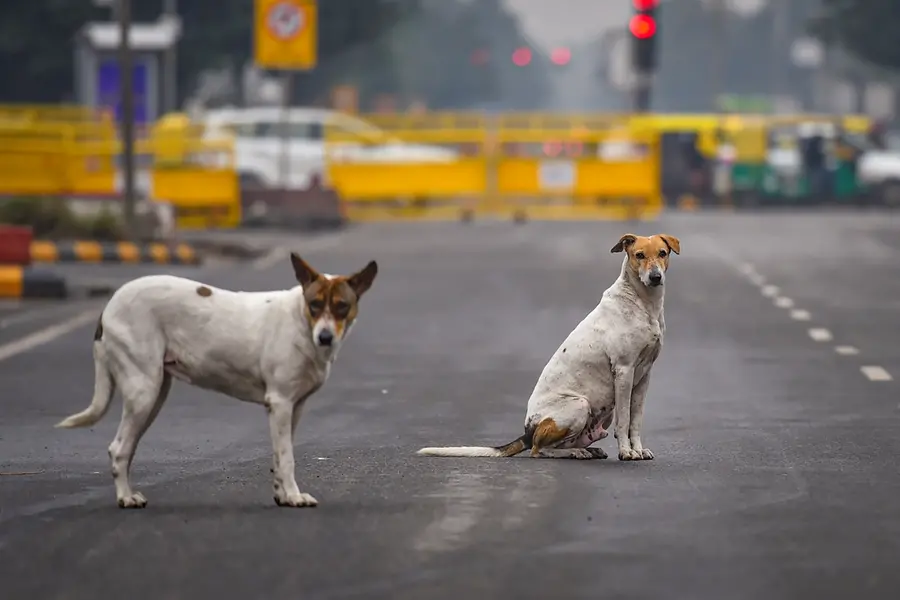
New Delhi: The Supreme Court on Tuesday questioned the conduct of individuals and organisations that feed stray dogs in public places, asking whether their compassion extends only to animals and not to people as well.
Hearing a suo motu case on the issue, the bench raised concerns over accountability and asked who should be held responsible if a nine-year-old child were to be killed in a stray dog attack. The court also questioned whether groups advocating the feeding of stray dogs in public areas should bear responsibility in such situations.
Also Read

The apex court said it may direct states to pay heavy compensation in dog-bite cases, especially those involving children and the elderly.
The Supreme Court has been hearing the matter as a suo motu case since July last year.
Poor implementation of ABC Rules
Senior advocate Arvind Datar told the court that the Animal Birth Control (ABC) Rules are largely focused on sterilisation and birth control, and that even full compliance would not entirely eliminate the risk of dog attacks. He added that the existing framework does not sufficiently address the problem of aggressive stray dogs.
Referring to an earlier hearing on January 8, the bench noted the poor implementation of the ABC Rules and said it had already cautioned dog lovers about their responsibilities. The court clarified that it had never ordered the removal of all street dogs, but had stressed the need for humane treatment in line with the rules. It also addressed the widespread attention its earlier observation, that dogs can sense fear before attacking, had received, reiterating the context in which it was made.
Health risks to wildlife
The court further observed that stray dogs can carry certain viruses and warned that when such animals are attacked and consumed by wild predators, including tigers, diseases such as canine distemper could spread, potentially leading to fatalities among wildlife.
Human-animal conflict perspective needed
Senior advocate Vikas Singh argued that the issue should not be framed as a conflict between dogs and humans, but as a broader animal–human interface problem. He pointed out that around 50,000 people die annually from snake bites and that monkey attacks are also reported, adding that dogs help control rat populations and play a role in maintaining ecological balance.
Senior advocate Menaka Guruswamy said that culling stray dogs would not reduce their numbers and that sterilisation remains the only effective solution. “If regulators had done their job properly, we would not be facing this situation today,” she said, calling for adequate funding for organisations working at the grassroots level. She also alleged that several programme centres were failing to properly utilise the funds allocated to them.
Dog attack survivor shares experience in court
A woman who was herself a victim of a dog attack also addressed the court, saying she believed proper implementation of the ABC programme could reduce both aggression and the stray dog population. She told the bench she had been bitten by a community dog without any apparent provocation.
“The dog had been subjected to cruelty for a long time. It was kicked and stoned. This was defensive aggression triggered by fear,” she said, adding that cruelty towards otherwise friendly community dogs creates fear that can later manifest as aggression. She said she had suffered as a result of the actions of others.
IANS
Published: 13 Jan 2026, 03:31 pm IST
Disclaimer: Kindly avoid objectionable, derogatory, unlawful and lewd comments, while responding to reports. Such comments are punishable under cyber laws. Please keep away from personal attacks. The opinions expressed here are the personal opinions of readers and not that of Mathrubhumi.