
The delay is linked to an internal contest involving 3 senior leaders.
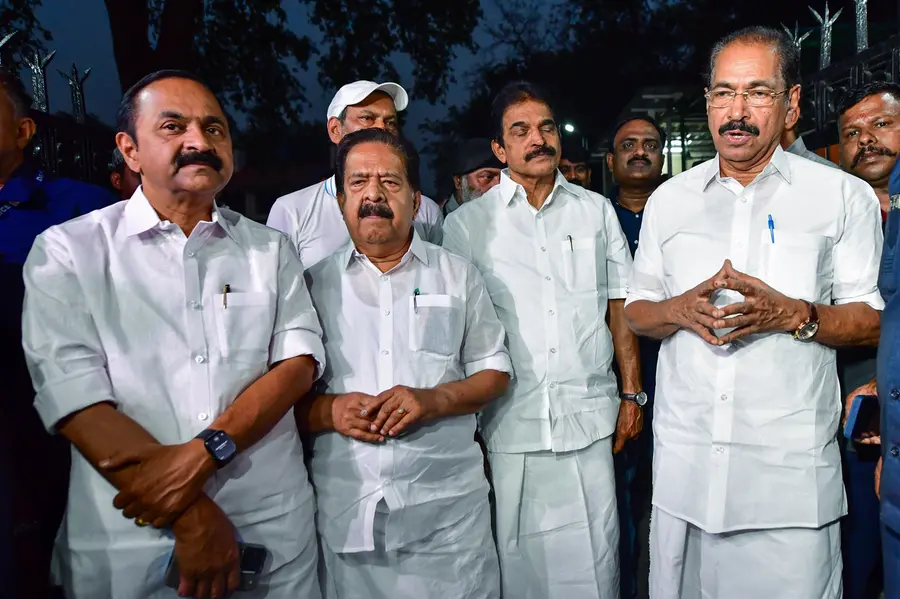
Kerala is in a political waiting phase with the Chief Minister’s office remaining vacant despite an election outcome. While states such as West Bengal and Tamil Nadu have already sworn in their leaders, the Congress-led United Democratic Front (UDF) continues internal discussions on leadership selection. As time runs down toward a constitutional deadline, the situation carries the possibility of federal intervention if no decision is reached.
10-day countdown under constitutional framework
The current government in Kerala is operating under a strict constitutional timeline. Under Article 172 of the Constitution, a state Assembly has a fixed term of five years from its first sitting, after which it ceases to exist.
In Kerala’s case, that five-year period began on May 24, 2021, and is scheduled to end on May 23, 2026. This leaves the UDF with ten days (as of May 13, Wednesday) to decide on a Chief Minister and complete government formation.
If a Chief Minister is not appointed within this period, the Assembly is automatically dissolved. The outgoing Chief Minister continues in a caretaker capacity, limited to routine administrative functions and unable to take major policy decisions.
Three-way contest within UDF leadership
The delay is linked to an internal contest involving three senior leaders. V. D. Satheesan is described as enjoying strong public support, while Ramesh Chennithala is noted as the most senior leader in the state.
The equation shifted further with the inclusion of K. C. Venugopal, AICC General Secretary. He is understood to have backing from 43 newly elected MLAs, though he did not contest the state election.
Questions have been raised over eligibility since he is not currently an MLA. However, Article 164(4) and earlier Supreme Court rulings allow a non-MLA to be appointed Chief Minister. The condition attached is that the individual must secure election to the Assembly within six months of taking oath, failing which the position is lost.
Constitutional constraints and route to President’s Rule
There is little scope, under constitutional procedure, for the party to delay naming a leader while proving majority support. Article 164 provides that the Governor appoints the Chief Minister first, followed by the appointment of other ministers on the Chief Minister’s advice.
Without a sworn-in Chief Minister, there is no constitutional authority to advise the Governor on formation of the Council of Ministers, creating a functional deadlock.
If the UDF is unable to resolve the impasse by May 23, the state may move into a situation where the Governor can recommend President’s Rule under Article 356.
In such a case, central administration is imposed through the Governor, the elected government structure is suspended, and fresh elections would need to be organised later by the Election Commission.
Published: 13 May 2026, 12:34 pm IST
Related Topics
Disclaimer: Kindly avoid objectionable, derogatory, unlawful and lewd comments, while responding to reports. Such comments are punishable under cyber laws. Please keep away from personal attacks. The opinions expressed here are the personal opinions of readers and not that of Mathrubhumi.
