
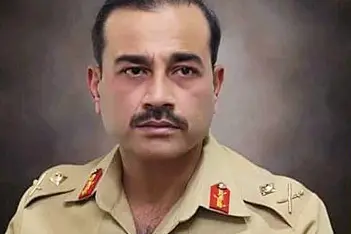
A speech made by Pakistan Army Chief General Asim Munir days before the deadly terror attack in Jammu and Kashmir’s Pahalgam is now under sharp focus, as questions are being raised about its timing and content. A video of the speech, which is widely circulating on social media, has added fuel to the fire, especially as it comes just before the worst civilian attack in India in nearly two decades.
Addressing the Overseas Pakistanis Convention in Islamabad on April 16, General Munir described Jammu and Kashmir as Pakistan’s “jugular vein” and asserted continued support for what he termed the “heroic struggle” of Kashmiris.
“Our stance is absolutely clear, it was our jugular vein, it will be our jugular vein, we will not forget it. We will not leave our Kashmiri brothers in their heroic struggle,” Munir said in the speech, which has since gone viral online.
Defending the two-nation theory, General Munir told the gathering, “You should definitely tell Pakistan's story to your children. Our forefathers thought that we were different from the Hindus in every aspect of life. Our religions, our customs, traditions, thoughts and ambitions are different. That was the foundation of the two-nation theory that was laid.”
General Munir stressed that children in the Pakistani diaspora should not forget the ideological foundation of Pakistan. “You have to tell Pakistan's story to your children so that they don’t forget that our forefathers thought we were different from Hindus in every possible aspect of life,” he said.
He further stated, “Our religions are different, our customs are different, our traditions are different, our thoughts are different, our ambitions are different. That was the foundation of the two-nation theory that was laid there. We are two nations, we are not one nation.”
How has India responded to the speech?
India strongly objected to General Munir’s remarks. Reacting last week, the Ministry of External Affairs (MEA) said: “How can anything foreign be in a jugular vein? This is a Union Territory of India. Its only relationship with Pakistan is the vacation of illegally occupied territories by that country.”
MEA spokesperson Randhir Jaiswal reiterated India’s sovereignty over Jammu and Kashmir, stating, “This is a Union Territory of India. Its only relation with Pakistan is the evacuation of the illegally occupied territories by that country.”
He added, “Pakistan may try hard but its reputation as the epicentre of global terrorism will not diminish,” referring to the recent extradition of Tahawwur Rana, a key accused in the 26/11 Mumbai attacks.
What happened in Pahalgam?
Just a week after Munir’s remarks, terrorists struck in the scenic Baisaran Valley in Pahalgam, a popular tourist destination often referred to as "mini Switzerland". At least 26 people, mostly Indian tourists and one Nepalese national, were killed in the attack, and 17 others were injured.
The assault, carried out on Tuesday afternoon, is the deadliest targeting of civilians in India since the 2008 Mumbai attacks. Video footage captured by survivors showed bodies scattered across the meadow, with people crying and pleading for help.
Prime Minister Narendra Modi, who cut short his Saudi Arabia visit and returned to India on Wednesday morning, condemned the incident and said the perpetrators “will not be spared”.
Who claimed responsibility?
A group calling itself The Resistance Front (TRF), widely believed to be a shadow outfit of the banned Pakistan-based Lashkar-e-Taiba (LeT), claimed responsibility for the attack via a social media message. The group cited anger over the settlement of over 85,000 “outsiders” in the region, which it said had triggered a “demographic change”.
Although TRF’s claim is in the public domain, the Indian government has not yet issued an official confirmation regarding the group’s involvement. Reports have suggested that Saifullah Kasuri alias Khalid, a top Lashkar commander, may have masterminded the attack. However, there has been no official word on this yet.
What is the historical context?
The Pahalgam attack has drawn comparisons to the Chittisinghpura massacre of March 2000, where 36 Sikhs were killed by terrorists in Anantnag district, a day before US President Bill Clinton's state visit to India. Both Chittisinghpura and Baisaran, the site of the recent attack, are in South Kashmir’s Anantnag district.
Tuesday’s attack took place while United States Vice President JD Vance was in India and Prime Minister Modi was visiting Saudi Arabia.
On the same day as the Pahalgam attack, Pakistan Prime Minister Shehbaz Sharif raised the Kashmir issue during a joint press conference with Turkish President Recep Tayyip Erdoğan in Ankara. According to Pakistan-based Express Tribune, Sharif thanked Turkey for its “unwavering support” on Kashmir.
“Prime Minister Shehbaz called for an immediate ceasefire in Gaza, as he strongly condemned the killing of 50,000 innocent lives there. He expressed gratitude for Turkey's unwavering support on the Kashmir issue,” the report said.
Published: 24 Apr 2025, 07:07 am IST
Related Topics
Disclaimer: Kindly avoid objectionable, derogatory, unlawful and lewd comments, while responding to reports. Such comments are punishable under cyber laws. Please keep away from personal attacks. The opinions expressed here are the personal opinions of readers and not that of Mathrubhumi.
