
India rejects a World Bank-backed Indus Waters arbitration award, calling the court illegally constituted and saying it has no jurisdiction over India's sovereign water projects.
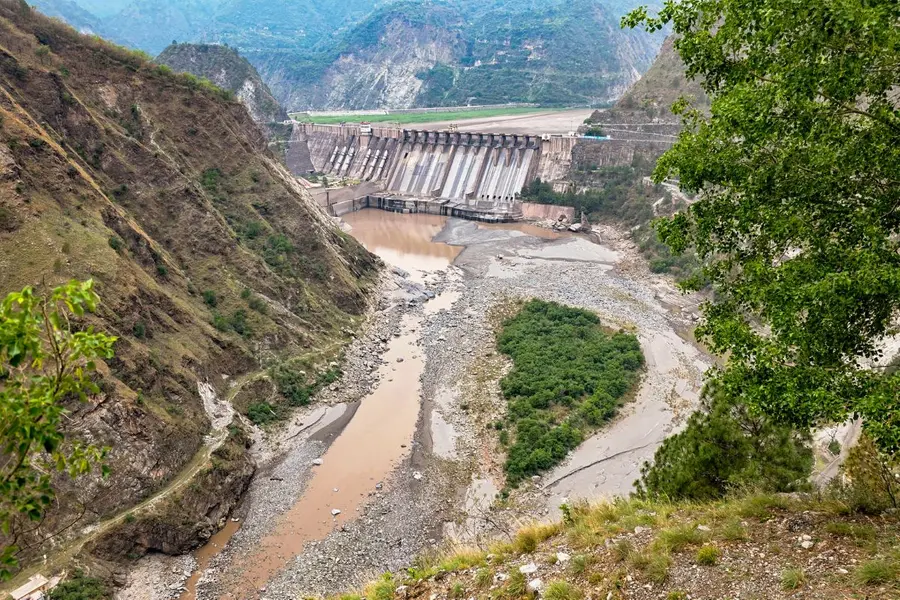
The Indian government on Monday rejected an award issued by the so-called Court of Arbitration (CoA) on matters concerning interim measures and the status of the Indus Waters Treaty.
New Delhi said it does not recognise the legal existence of the body and has consistently rejected its proceedings and previous pronouncements.
Also Read

India said the arbitration court was constituted by the World Bank in what it described as a “patent breach” of the terms of the Indus Waters Treaty.
The government said it therefore categorically rejects the latest award.
India says court cannot rule on its projects
New Delhi maintained that the arbitration body has no authority over India's sovereign decisions.
“This so-called Court of Arbitration has no jurisdiction whatsoever to pronounce on India's sovereign decisions,” the government said.
India further stated that the body's current or future pronouncements would have no effect on its actions concerning projects being undertaken by the country.
The government also reiterated that India has never appeared before the arbitration body and has refused to take cognisance of its earlier pronouncements.
Why is the Indus Waters Treaty important?
The 1960 Indus Waters Treaty is a World Bank-brokered agreement between India and Pakistan governing the use of six rivers of the Indus river system.
Under the arrangement, the three eastern rivers — Ravi, Beas and Sutlej — were allocated primarily to India, while the three western rivers — Indus, Jhelum and Chenab — were allocated primarily to Pakistan, subject to specified provisions and uses.
The treaty has remained a key framework governing water relations between the two countries despite decades of political and military tensions.
Why did India put the treaty in abeyance?
India announced that it was placing the treaty in abeyance in April 2025, following the Pahalgam terror attack of April 22, 2025, in which 26 civilians were killed.
New Delhi linked its decision to Pakistan's alleged continued support for cross-border terrorism.
India has maintained that the treaty will remain in abeyance.
Its latest statement again made clear that it does not accept the arbitration process as having authority over India's decisions while the treaty remains in abeyance.
Pakistan's warning over water
Pakistan has strongly opposed India's decision to place the treaty in abeyance.
Pakistan's Deputy Prime Minister and Foreign Minister Ishaq Dar recently said that any attempt to deprive Pakistan of waters allocated under the treaty would have “profound consequences” for regional peace and security.
Speaking virtually at a seminar organised by the Pakistani Embassy in Washington, Dar argued that the treaty did not permit either country to unilaterally suspend its obligations.
He said the issue went beyond India-Pakistan relations and concerned the wider principle of the sanctity of international treaties.
Why Pakistan says the treaty matters
Dar described the Indus Basin as the “lifeline” of more than 250 million Pakistanis.
Pakistan's agriculture, food security, energy generation, livelihoods and broader economic activity are heavily dependent on the Indus river system.
Dar also pointed to Pakistan's water-security challenges, including changing rainfall patterns, glacial retreat, floods, droughts and increasing variability in water availability.
He argued that these pressures made cooperation over shared water resources even more important.
India-Pakistan water dispute enters another phase
The latest exchange marks another development in the increasingly contentious dispute over the Indus Waters Treaty.
Pakistan has sought international attention over India's decision to place the treaty in abeyance, while India has maintained that its decision is linked to cross-border terrorism and has rejected the legitimacy of the arbitration mechanism involved in the latest award.
The disagreement now involves not only water allocation but also competing interpretations of the treaty, international arbitration and the limits of India's and Pakistan's obligations under the agreement.
The latest dispute is significant because the Indus Waters Treaty has historically survived even periods of severe India-Pakistan hostility. India's decision to place it in abeyance after the Pahalgam attack marked a major departure from that pattern.
The competing positions are now clear. Pakistan argues that India cannot unilaterally suspend treaty obligations and warns that disruption of water flows could have serious consequences for its agriculture, food and energy security.
India, meanwhile, rejects the jurisdiction of the Court of Arbitration cited in the latest award and says the body itself was constituted in violation of the treaty. New Delhi has also made clear that the body's pronouncements will not determine India's sovereign decisions concerning its projects.
The issue is therefore developing on three interconnected fronts: water security, international legal mechanisms and India-Pakistan security relations.
For Pakistan, the Indus system is central to its economy and food production. For India, the treaty is increasingly being viewed through the wider lens of national security and cross-border terrorism.
The latest exchange suggests that the dispute is unlikely to be resolved through arbitration alone while the two countries remain divided over the treaty's status and the broader security relationship.
Published: 31 Aug 2026, 06:02 pm IST
ABOUT THE AUTHOR
Disclaimer: Kindly avoid objectionable, derogatory, unlawful and lewd comments, while responding to reports. Such comments are punishable under cyber laws. Please keep away from personal attacks. The opinions expressed here are the personal opinions of readers and not that of Mathrubhumi.