
Justice Ujjal Bhuyan called mass disenfranchisement ‘intrinsically arbitrary’, prompting Congress to step up its criticism of CEC Gyanesh Kumar.
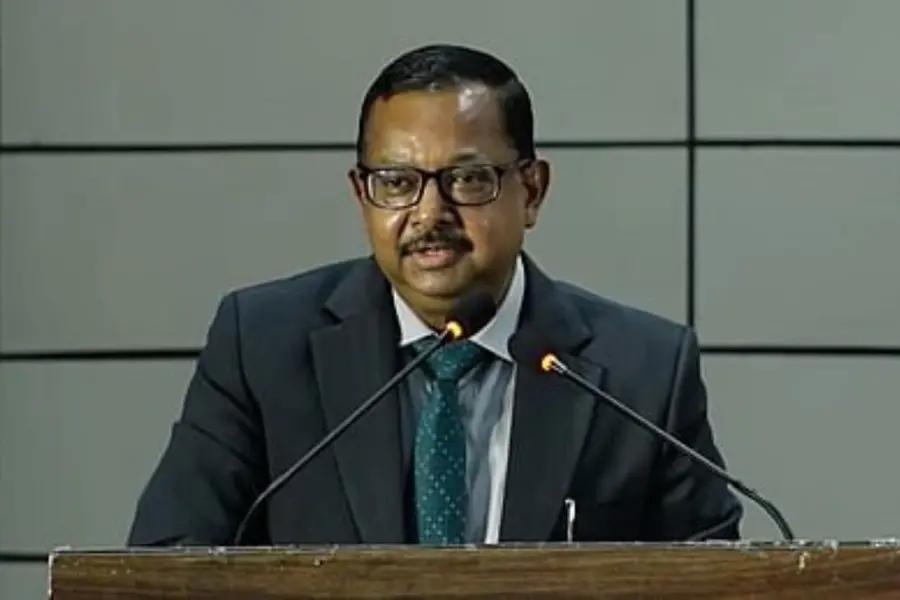
Supreme Court judge Justice Ujjal Bhuyan’s remarks on the right to vote have triggered a fresh political confrontation over the Election Commission, with the Congress using his comments to step up its attack on Chief Election Commissioner Gyanesh Kumar.
Speaking at an event at NALSAR University of Law in Hyderabad, Justice Bhuyan said any process that results in millions of Indian citizens being deprived of their voting rights would be “intrinsically arbitrary” and contrary to the constitutional order.
The judge said the Constitution does not envisage two categories of citizens — one with voting rights and another without them.
“If any process results in disenfranchising millions and millions of Indian citizens making them second class citizens in their own country... such a process is intrinsically arbitrary,” Bhuyan said.
He added that no amount of “whataboutery” could justify a process that leaves large numbers of citizens without the right to vote.
What Justice Bhuyan said about voting rights
Justice Bhuyan linked the issue of disenfranchisement to Articles 326 and 14 of the Constitution.
Article 326 deals with elections to the Lok Sabha and state legislative assemblies being based on adult suffrage, while Article 14 guarantees equality before the law.
Bhuyan said any process that leads to the wholesale disenfranchisement of Indian citizens, leaving them as citizens without voting rights, would violate these constitutional provisions.
His remarks were framed around the broader constitutional principle of voting rights. The judge did not name Chief Election Commissioner Gyanesh Kumar or directly target the Election Commission in the comments.
However, the timing of the remarks has given them political significance amid the continuing dispute over the Election Commission’s Special Intensive Revision process.
Congress turns remarks on Gyanesh Kumar
Congress general secretary communications Jairam Ramesh seized on the comments to attack Gyanesh Kumar.
Ramesh said Justice Bhuyan’s remarks showed that the right to vote is part of the basic structure of the Constitution. He argued that this meant the Chief Election Commissioner, as a constitutional functionary, had violated the Constitution “both in letter and spirit”.
Ramesh also claimed that Bhuyan’s comments had exposed the CEC and said Gyanesh Kumar had “lost all moral right” to continue in office.
The Congress has been repeatedly critical of the Election Commission over the Special Intensive Revision process, making the judge’s remarks an additional point of attack against the poll panel.
Why the remarks matter in the SIR debate
The controversy comes against the backdrop of questions over decisions taken during the Special Intensive Revision of electoral rolls.
The Indian Express recently reported that Election Commissioners Sandhu and Joshi had objected on record at least 14 times over a 10-month period to decisions and orders connected with the SIR process.
According to the report, the two commissioners had raised objections to decisions they said were issued without their knowledge or recommendation.
The reported disagreements have added to the political debate over how the revision process is being conducted and the safeguards surrounding the electoral rolls.
Election Commission defends its process
The Election Commission has pushed back against concerns over differences within the institution.
The poll panel has said that differing views and observations are part of deliberations in any institution. It has also maintained that its orders carry full legal sanction and are issued in accordance with established statutory procedures.
With agency inputs
Published: 05 Oct 2026, 12:06 am IST
ABOUT THE AUTHOR

Disclaimer: Kindly avoid objectionable, derogatory, unlawful and lewd comments, while responding to reports. Such comments are punishable under cyber laws. Please keep away from personal attacks. The opinions expressed here are the personal opinions of readers and not that of Mathrubhumi.