
The ECI says all its decisions, including the SIR electoral-roll exercise, were unanimous. The clarification comes after reports that two Election Commissioners had recorded 14 objections over 10 months.
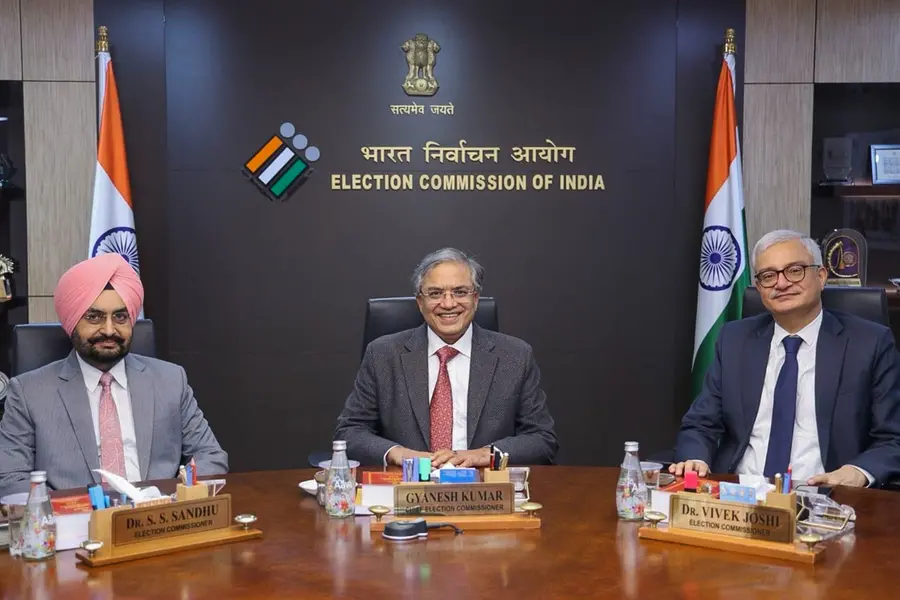
New Delhi: The Election Commission has responded to reports of internal objections over the Special Intensive Revision (SIR) of electoral rolls, saying that its decisions on the exercise were unanimous and approved by Chief Election Commissioner Gyanesh Kumar and Election Commissioners Sukhbir Singh Sandhu and Vivek Joshi.
The clarification follows reports that Sandhu and Joshi had flagged multiple issues during the electoral-roll cleanup, including the deletion of voter names in various states and the handling of voter databases, officials said on Wednesday.
Also Read

The clarification comes after a media investigation reported that Election Commissioners Sukhbir Singh Sandhu and Vivek Joshi had raised objections on several issues over the past 10 months.
What is the latest ECI clarification?
According to ECI sources, there was no lack of approval from the three-member Commission over SIR or its other decisions. The sources said that decisions were taken unanimously with the approval of CEC Gyanesh Kumar and Election Commissioners Sandhu and Joshi.
This is significant because the clarification comes after reports described repeated objections by Sandhu and Joshi over electoral-roll decisions and the functioning of the Commission's IT systems.
A media investigation reported that Sandhu and Joshi had formally recorded objections at least 14 times over 10 months. The reported concerns covered voter registration, deletion and restoration of names, appeals linked to SIR and access to electoral-roll databases.
One reported disagreement involved Form 6, which new voters use to apply for registration. The investigation said the form was changed to include a declaration linked to previous SIR electoral rolls, prompting objections from the two commissioners.
The report also raised questions about the centralisation of access to electoral-roll systems and the way some administrative decisions were handled.
Why did the July 29 letter matter?
The two commissioners separately wrote to Cabinet Secretary T V Somanathan on July 29 over an internal work-allocation order and the oversight of the ECI's IT division.
According to the investigation, they objected to a change that affected the supervision of the IT infrastructure supporting electoral rolls. They later moved to restore the earlier arrangement until a consensus was reached.
The letter has since become an important part of the debate over how disagreements are handled within the Commission.
What about the 14 objections?
The reported objections do not automatically mean that the final decisions of the Commission were taken without the approval of all three members.
That is where the latest ECI clarification becomes important. The Commission's position is that the final decisions, including SIR-related decisions, were unanimous, despite the reported concerns recorded by the two commissioners.
In other words, the current dispute involves two different questions: what concerns Sandhu and Joshi recorded during the decision-making process, and whether the final decisions formally adopted by the Commission had the approval of all three members.
What about the senior officials who left?
The controversy has also drawn attention to the departures of two Deputy Election Commissioners. Gyanesh Bharti left the ECI on August 10, while Sanjay Kumar left on August 28. The timing has prompted questions about whether these events are connected to the internal dispute.
However, the sequence alone does not establish that the July 29 letter or the reported disagreements caused either departure. No causal connection has been established by the information currently available.
Opposition leaders have criticised the reported internal disagreements and questioned the ECI's functioning.
Congress leader Pramod Tiwari has demanded CEC Gyanesh Kumar's resignation and called for the concerns raised by the two commissioners to be made public.
Former Election Commissioner O P Rawat described the reported situation as unusual and said that, during his time in the Commission, differences were generally resolved through consensus.
P. Chidambaram has also focused on the distinction between the decisions taken by the ECI and the process through which those decisions were made.
These statements represent political reactions to the reported developments and do not independently establish that the ECI acted unlawfully.
The latest ECI statement adds an important qualification to the controversy. Reports have highlighted repeated objections recorded by two commissioners, while the Commission says its final decisions, including SIR, were unanimous and approved by all three members.
The key issue now is how the reported objections were handled internally and how they relate to the final decisions adopted by the Commission.
The reported disagreements, by themselves, do not establish that elections were manipulated or that voters were deliberately disenfranchised. Those claims would require separate evidence.
Published: 23 Sept 2026, 11:47 am IST
ABOUT THE AUTHOR
Disclaimer: Kindly avoid objectionable, derogatory, unlawful and lewd comments, while responding to reports. Such comments are punishable under cyber laws. Please keep away from personal attacks. The opinions expressed here are the personal opinions of readers and not that of Mathrubhumi.