
The Supreme Court will hear pleas challenging CEC Gyanesh Kumar over 14 SIR decisions allegedly taken despite objections from two Election Commissioners.
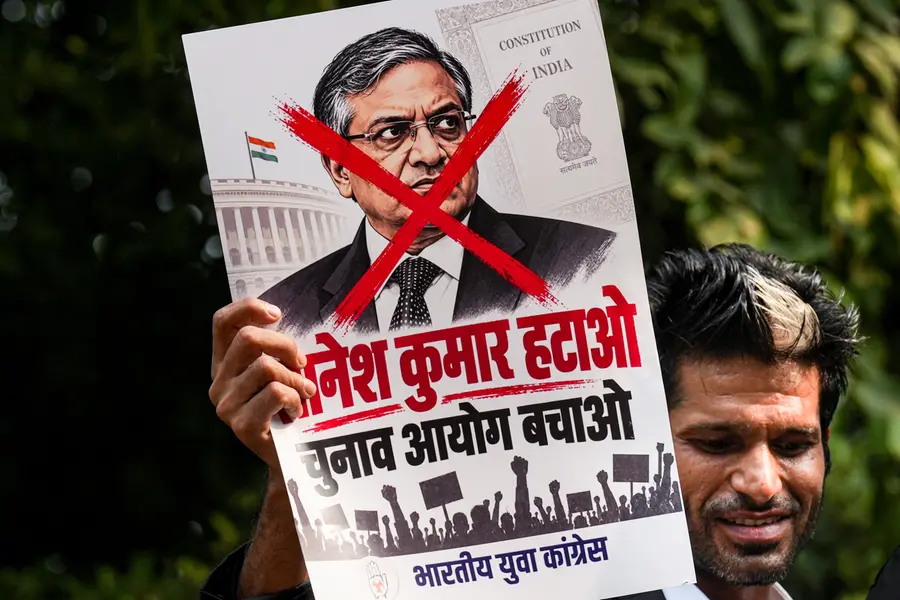
New Delhi: The Supreme Court is set to examine a contentious question surrounding the Election Commission’s Special Intensive Revision (SIR): could key decisions of the poll body have been taken without the concurrence of its other two Election Commissioners?
A three-judge bench headed by Chief Justice of India Surya Kant, along with Justice Joymalya Bagchi and Justice V Mohana, will hear two writ petitions on October 5. The pleas target Chief Election Commissioner Gyanesh Kumar and challenge a series of decisions allegedly taken during the SIR exercise despite objections from Election Commissioners Sukhbir Singh Sandhu and Vivek Joshi.
According to the petitions, Sandhu and Joshi recorded objections to at least 14 decisions between October 2025 and August 2026. The central issue before the court is whether the three-member Election Commission can take decisions without the concurrence of its other members.
Why the 14 objections matter
The petitioners want the Supreme Court to examine the Election Commission’s original records and determine whether the disputed decisions were taken within the constitutional and statutory framework governing the poll body.
The allegations are linked to the wider SIR exercise. The petitions claim that 13 crore names were deleted from electoral rolls across 30 States and Union Territories, and seek scrutiny of how those changes were authorised and implemented.
A challenge to the Election Commission’s decision-making
One petition, filed by Ramesh Kumar Singh, seeks a declaration that the powers of the Election Commission, as a multi-member body, cannot be exercised unilaterally by the Chief Election Commissioner.
Singh has also sought the suspension of Gyanesh Kumar as CEC while the matter is considered.
The second petition, filed by advocate Shaildendra Mani Tripathi, seeks the quashing of the 14 disputed decisions and calls for an independent Judicial Inquiry Commission or Special Investigation Team headed by a retired Supreme Court judge.
The proposed inquiry would include cybersecurity and IT experts and examine the ECINet and ERONet electoral-roll databases.
What do the petitions allege about voter data?
The pleas raise questions about the handling of electoral-roll databases during the SIR process.
The allegations include unauthorised changes to Form 6, centralisation of electoral-roll databases and failure to restore eligible voters through the ECINet system.
The petition also refers to 16.10 lakh appeals in West Bengal challenging the inclusion of voters, allegedly in the name of the Election Commission.
The petitioners want these actions, along with the deletion of voter names, to be investigated.
Section 32 invoked against officials
The second petition invokes Section 32 of the Representation of the People Act, 1950, which provides for punishment for specified breaches of official duty relating to the preparation, revision or correction of electoral rolls.
It seeks directions for complaints to be registered and prosecution initiated against Gyanesh Kumar, Senior Deputy Election Commissioner Maneesh Garg, Director General (IT) Seema Khanna and any other officials found responsible for the alleged breaches.
The petitioners have also sought preservation and examination of the Election Commission’s records relating to the disputed decisions.
The allegations are now before the Supreme Court, which will examine the challenge to the Election Commission’s decision-making process and the reliefs sought by the two petitioners.
Published: 04 Oct 2026, 06:24 pm IST
ABOUT THE AUTHOR

Disclaimer: Kindly avoid objectionable, derogatory, unlawful and lewd comments, while responding to reports. Such comments are punishable under cyber laws. Please keep away from personal attacks. The opinions expressed here are the personal opinions of readers and not that of Mathrubhumi.