
Speaking to a media outlet, he former Union Home Minister said, “The whole world descended upon Delhi to tell us, ‘don’t start a war’.”
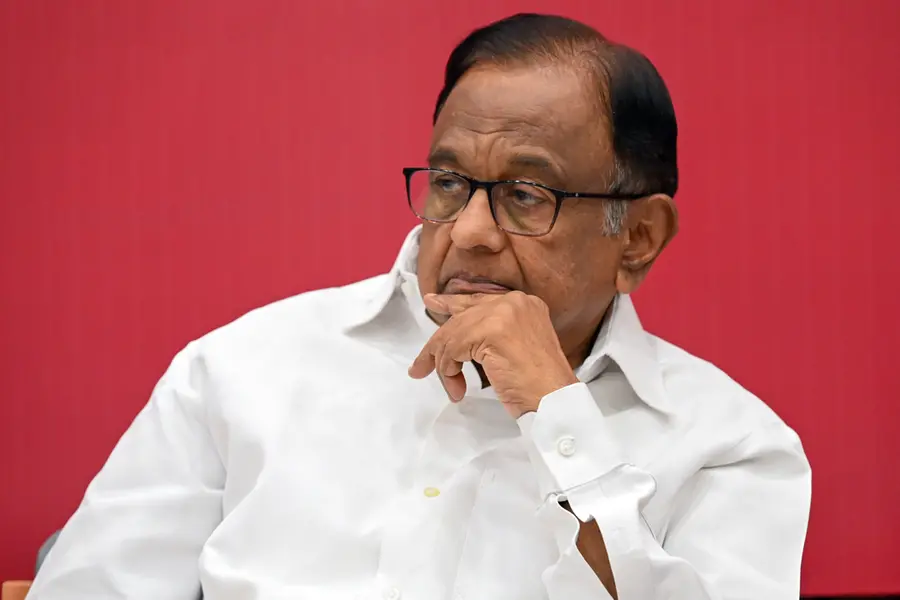
New Delhi: Former Union Minister P. Chidambaram has acknowledged that the United Progressive Alliance (UPA) government considered military retaliation against Pakistan following the 26/11 Mumbai terror attacks but ultimately chose restraint due to intense international pressure, particularly from the United States, and advice from senior diplomats.
Chidambaram, who took charge of the Home Ministry just days after the 2008 attacks, made the admission during an interview with ABP Live.
Also Read

“The whole world descended upon Delhi to tell us, ‘don’t start a war’,” he said, citing a direct intervention from then US Secretary of State Condoleezza Rice, who met with him and then Prime Minister Dr Manmohan Singh in the immediate aftermath of the attacks.
“Without disclosing any official secret, it did cross my mind that we should do some act of retribution,” Chidambaram said. However, he added that the Ministry of External Affairs and the Indian Foreign Service (IFS) advised against a military response, and that guidance heavily influenced the government's final decision.
The coordinated attacks, carried out by 10 Pakistan-based Lashkar-e-Taiba terrorists, left 166 people dead and over 300 injured, striking multiple iconic sites across Mumbai, including the Taj Mahal Palace Hotel, CST railway station, and Nariman House. The only attacker captured alive, Ajmal Kasab, was executed in 2012.
Chidambaram's remarks have sparked fierce criticism from the ruling Bharatiya Janata Party (BJP), which has long accused the UPA government of lacking resolve in matters of national security.
Union Minister Pralhad Joshi said Chidambaram had "confirmed what the nation already knew – that the UPA mishandled 26/11 under pressure from foreign powers." He described the revelation as "too little, too late."
BJP spokesperson Shehzad Poonawala escalated the criticism by questioning whether Sonia Gandhi or Manmohan Singh had overridden Chidambaram’s reported inclination toward retaliation. “Why was the UPA taking orders from Condoleezza Rice? Why did Sonia Gandhi prevail over the Home Minister?” he asked, adding that the Congress had historically given Pakistan a "clean chit" while promoting a “Hindu terror” narrative.
Poonawala also highlighted Chidambaram’s own admission that he was initially reluctant to take over the Home Ministry, having been moved from the Finance Ministry following the resignation of Shivraj Patil after the attacks. “I did not want to exit the finance ministry,” Chidambaram had said, recalling that the decision had been made collectively by the Congress leadership.
BJP leaders have contrasted the UPA’s response to 26/11 with what they describe as the “decisive” military actions under the Narendra Modi-led government, including the 2016 surgical strikes after the Uri attack, the 2019 Balakot air strike in response to Pulwama, and more recently, Operation Sindoor following the 2025 Pahalgam terror attack.
Published: 30 Sept 2025, 11:59 am IST
Disclaimer: Kindly avoid objectionable, derogatory, unlawful and lewd comments, while responding to reports. Such comments are punishable under cyber laws. Please keep away from personal attacks. The opinions expressed here are the personal opinions of readers and not that of Mathrubhumi.