
Rahul Gandhi’s remarks come as Marco Rubio prepares for talks on trade, energy cooperation and investment during his October 19–22 India visit.
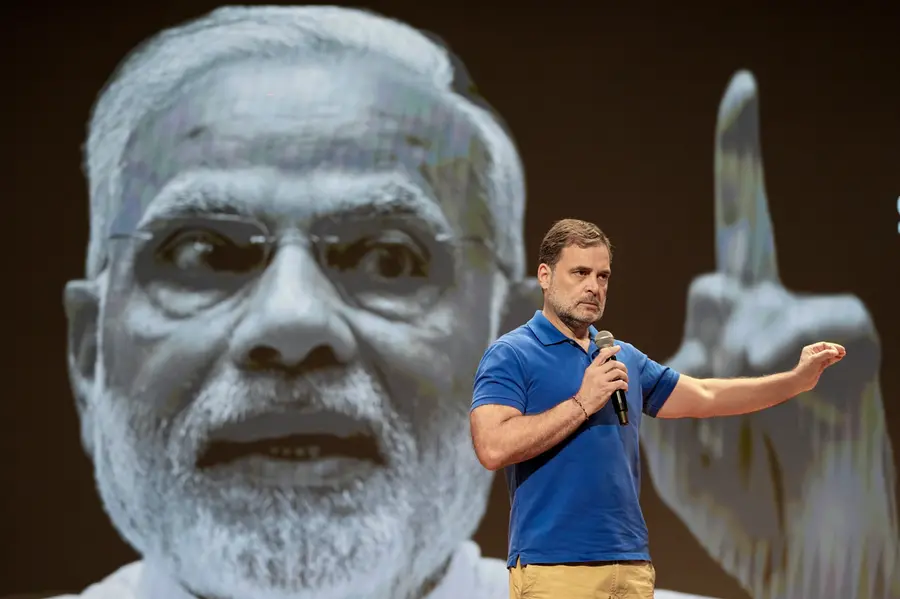
Congress leader Rahul Gandhi on Friday took a swipe at Prime Minister Narendra Modi over US Secretary of State Marco Rubio’s upcoming India visit, questioning the Ministry of External Affairs (MEA) over the trip as the American diplomat prepares to visit Mumbai and Jamnagar, skipping New Delhi.
“Mr Rubio has summoned his employee to Mumbai. Modi ji, your officials in the External Affairs Ministry are confused about what's going on. You might want to explain. Unless, of course, you want me to,” the Leader of the Opposition in the Lok Sabha said in a post on X.
Rubio’s visit is expected to focus on India-US energy cooperation, trade negotiations and investment, against the backdrop of tensions over tariffs and India’s purchases of Russian oil.
Why is Rahul Gandhi questioning Rubio’s visit?
The US Department of State announced that Rubio would visit India from October 19 to 22, following engagements in Samarkand, Uzbekistan. His India itinerary includes Mumbai and Jamnagar, but not New Delhi.
The decision to skip the national capital has drawn attention because Rubio is expected to hold official discussions with External Affairs Minister S Jaishankar in Mumbai.
When asked about the US announcement, MEA spokesperson Randhir Jaiswal said the government would announce the issues to be discussed “at the appropriate time” and provide details “as and when they happen”.
Jaiswal also said India had conveyed its concerns to Washington over US legislation concerning countries buying Russian oil.
Rahul did not specify in his post what he believed had caused confusion within the MEA. His remark about Rubio having “summoned his employee” was part of his political criticism of the government; the post did not provide further details explaining the reference.
Also read | ‘Democracy is no licence to spread anarchy’: Rajnath Singh warns Rahul Gandhi over anti-CEC protests
Jamnagar visit puts energy ties in focus
Rubio’s planned visit to Jamnagar is significant because the Gujarat city is home to Reliance Industries’ massive oil-refining complex, one of the world’s largest single-site refineries.
The refinery processes crude oil from different sources, including Russian supplies. India’s purchases of Russian oil have been a point of contention with Washington, which has threatened additional tariffs and sanctions-related measures against countries continuing to buy Russian energy.
The visit comes ahead of a key deadline under US legislation requiring the administration to propose additional tariffs as a sanctions measure against countries buying Russian oil and other sanctioned commodities.
The energy agenda also has a commercial dimension. In March, US President Donald Trump announced a proposed Reliance-backed refinery project in Brownsville, Texas, although details of the arrangement have not been fully disclosed.
The US State Department has said Rubio will discuss prospects for enhanced energy cooperation and meet business leaders to promote commercial investment and economic ties.
Also read | 'Someone wants to sell moongfali': SC defers plea over CJP protest as traders fear festival-season losses
Rubio’s second India visit this year
The upcoming trip will be Rubio’s second official visit to India in 2026. He last visited in May for the Quad Foreign Ministers’ meeting in New Delhi, where he met Jaishankar and other officials.
Before travelling to India, Rubio will attend the C5+1 Ministerial meeting in Samarkand and hold bilateral engagements with senior officials from Central Asian countries.
US Ambassador Sergio Gor has described the India visit as more business-focused, with trade, energy, technology partnerships and investment among the priorities.
The visit is taking place at a sensitive moment in India-US relations, with trade negotiations still underway and differences over Russian oil purchases and tariffs unresolved. Rubio’s meetings in Mumbai and Jamnagar are expected to provide an opportunity to discuss these issues alongside broader strategic cooperation.
Rahul Gandhi’s remarks have brought the itinerary into the domestic political debate, even as the two governments prepare for discussions on trade, energy and bilateral ties.
(With agency inputs)
Published: 16 Oct 2026, 12:24 pm IST
ABOUT THE AUTHOR

Related Topics
Disclaimer: Kindly avoid objectionable, derogatory, unlawful and lewd comments, while responding to reports. Such comments are punishable under cyber laws. Please keep away from personal attacks. The opinions expressed here are the personal opinions of readers and not that of Mathrubhumi.