
Several Indian companies are expected to participate in the Rafale manufacturing programme, including Tata, Mahindra, Dynamatic Technologies Limited
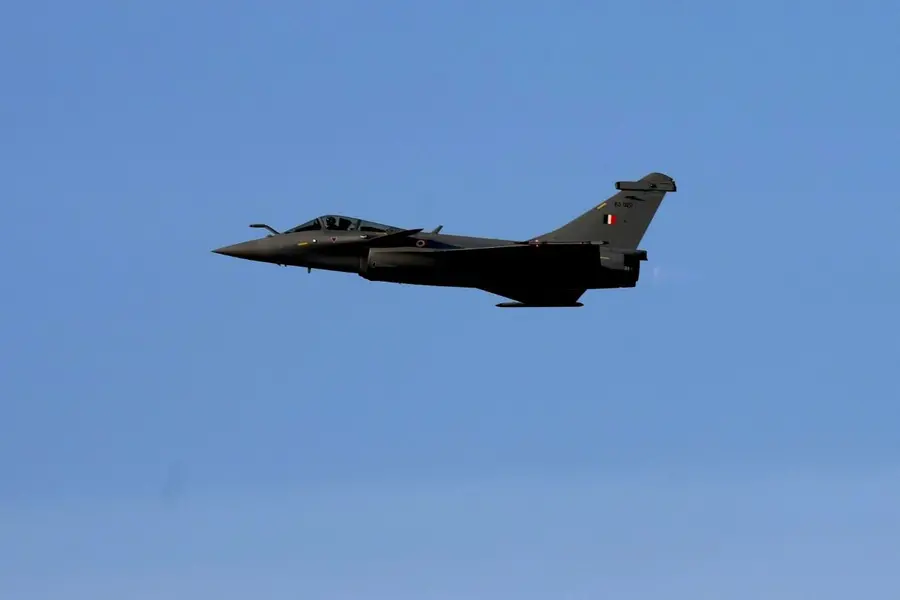
India is moving forward with plans to acquire 114 Rafale fighter jets from French aerospace major Dassault Aviation to address the Indian Air Force’s (IAF) falling squadron strength. However, the New Delhi has laid down strict and non-negotiable conditions related to technology transfer and indigenous integration.
According to reports, New Delhi has made it clear that all 114 aircraft must be capable of operating Indian weapons, missiles, and ammunition systems. Dassault will also be required to provide secure data links so that Indian radars and sensors can be seamlessly integrated with the aircraft. These requirements will involve modifications to the aircraft’s onboard software to ensure secure command, control, and data transmission.
The deal is estimated to be worth around INR 3.25 lakh crore, approximately $36 billion, making it one of India’s largest defence procurements. The Ministry of Defence is expected to finalise the contract after approvals from the Defence Acquisition Council, chaired by Defence Minister Rajnath Singh, and the Defence Procurement Board.
ALSO READ | Post-Operation Sindoor R-Day parade to feature first-ever army battle array
Manufacturing in India under ‘Make in India’
Most of the Rafale jets will be manufactured in India under the ‘Make in India’ programme, with Dassault Aviation partnering an Indian company. Of the 114 aircraft, around 18 will be delivered in fly-away condition, while the remaining 96 will be built in India.
Dassault will provide transfer of technology (ToT) for manufacturing airframes, and key suppliers such as Safran (engines) and Thales (avionics) will also participate in the technology transfer. Once the integration of Indian systems is complete, the jets are expected to achieve nearly 60 percent indigenous content.
In September last year, Dassault increased its stake in Dassault Reliance Aerospace Limited (DRAL) from 49% to 51%, making it a majority-owned subsidiary. The final assembly line for the Rafale jets is expected to be set up at DRAL’s facility in Nagpur, which will become Dassault’s second global manufacturing hub.
India’s existing fleet of 36 Rafale jets, currently in the F3-R plus configuration, will be upgraded to the F4 standard as part of the new contract. The new batch of aircraft will be delivered in the F4 Star (F4*) configuration, which will include additional India-specific enhancements, especially to the Spectra electronic warfare system.
ALSO READ | There is a reason why India bought 26 Rafale-M fighters not 25 or 27
The F4 standard focuses on improving the aircraft’s connectivity through new satellite and intra-flight links, software radios, and advanced communication servers. These upgrades are designed to improve the aircraft’s effectiveness in network-centric warfare and prepare it for integration into future combat systems.
The contract will also include an option to upgrade Indian Rafale jets to the F5 version when it becomes available.
Timeline
If the deal is signed by early 2027, deliveries of the first 18 fly-away aircraft are expected to begin from 2030. The remaining aircraft manufactured in India will follow in phases.
India and France have already agreed on the broad framework of the deal, and formal procedures are expected to be completed by the end of 2026 or early 2027. An official announcement may be made during the upcoming visit of French President Emmanuel Macron, similar to the announcement made during Prime Minister Narendra Modi’s visit to France in 2015.
ALSO READ | ‘Unforgettable experience’: President Droupadi Murmu after Rafale sortie in Ambala
Industry Participation and Production Capacity
Several Indian companies are expected to participate in the Rafale manufacturing programme, including Tata, Mahindra, Dynamatic Technologies Limited, and more than three dozen other firms. Tata Advanced Systems Limited has already signed an agreement with Dassault Aviation to manufacture Rafale fuselage sections at a new facility in Hyderabad, with production expected to begin in the 2028 financial year.
Dassault Aviation currently produces around 25 Rafale jets per year and plans to increase this to 50. The Indian final assembly line is expected to have a capacity of 24 aircraft per year and may also cater to future global Rafale orders.
As of 31 December 2025, Dassault had a backlog of 220 Rafale aircraft, including 175 export orders and 45 for the French Air Force.
Officials have clarified that the Rafale deal will not affect India’s indigenous fighter aircraft programmes, including the Advanced Medium Combat Aircraft (AMCA) and the LCA Tejas Mk-II. These programmes will continue as planned to strengthen India’s long-term air power.
Earlier in April, the government had also approved the purchase of 26 naval variants of the Rafale for the Indian Navy at a cost of around INR 64,000 crore.
The 114 Rafale deal is aimed at quickly bridging the IAF’s fighter squadron shortfall while strengthening India’s domestic defence manufacturing ecosystem. With high levels of technology transfer, Indian weapon integration, and local production, the programme is expected to significantly boost India’s self-reliance in advanced combat aircraft manufacturing and support the long-term readiness of the Indian Air Force.
Published: 17 Jan 2026, 07:35 pm IST
Related Topics
Disclaimer: Kindly avoid objectionable, derogatory, unlawful and lewd comments, while responding to reports. Such comments are punishable under cyber laws. Please keep away from personal attacks. The opinions expressed here are the personal opinions of readers and not that of Mathrubhumi.
