
France has formally submitted its proposal to India for 114 Rafale fighter jets. The proposed deal could strengthen the Indian Air Force while giving India's defence manufacturing industry a major boost.
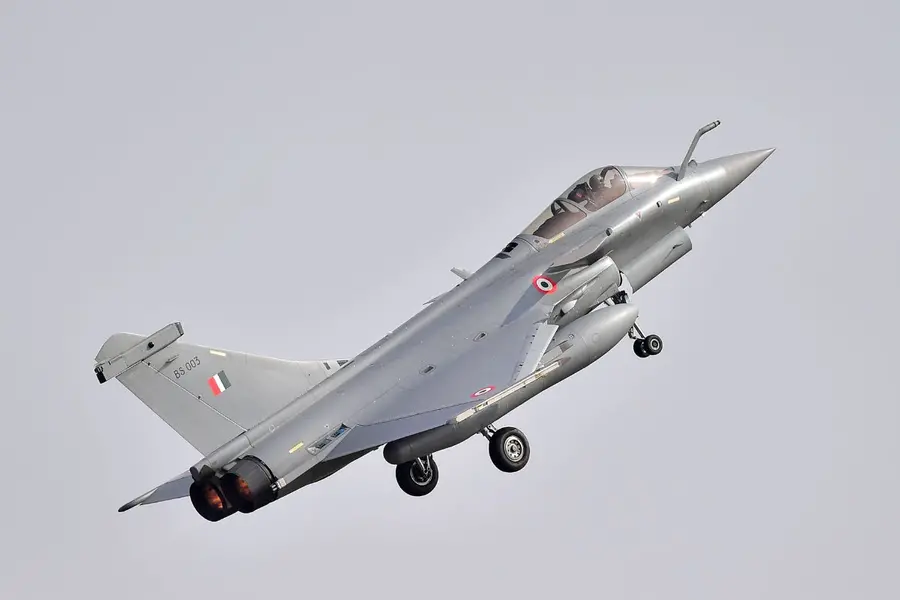
India is moving closer to what could become one of its biggest defence aircraft purchases. France has formally submitted a technical and commercial proposal to India for 114 Rafale multirole fighter jets. The proposal follows India's Letter of Request issued earlier this year and is now being examined by the Defence Ministry and the Indian Air Force.
The reported value of the proposed package is around ₹3.25 lakh crore, making it one of the country's largest defence procurement programmes. However, the figure is not the final contract value and could change during negotiations.
What makes this proposal particularly important is that France is offering a major Indian manufacturing component. Reports indicate that 94 of the 114 aircraft could be built in India, with the remaining aircraft supplied from France. For India, therefore, the proposal is about much more than buying fighter jets.
It is about strengthening the country's air power while also expanding its ability to manufacture advanced defence equipment at home.
Why does India need 114 more fighters?
The Indian Air Force has been facing a shortage of fighter aircraft for several years. The sanctioned strength of the IAF is 42 fighter squadrons, but its actual strength is significantly lower. At the same time, several older aircraft are reaching the end of their operational lives.
India is also developing its own fighter aircraft, including the Tejas and future advanced fighter programmes. But developing and producing a completely new fighter takes many years. This creates a gap. India needs additional modern aircraft now while its indigenous programmes continue to mature.
The Rafale provides one possible answer because it is already in service with the Indian Air Force and has an established operating and support ecosystem in the country. The proposed purchase would therefore add significantly to an aircraft type that India already operates rather than introducing an entirely new fighter into the fleet.
What is the Rafale?
The Rafale is a twin-engine fighter aircraft developed by French aerospace company Dassault Aviation. It is known as a multirole fighter, meaning that it can perform several different missions. It can be used for air defence, air-to-air combat, ground attacks, precision strikes, reconnaissance and other missions.
The aircraft can fly at speeds of around Mach 1.8, or nearly 1,900 km per hour at high altitude. It is powered by two Safran M88 engines and can carry a large weapons load.
The Rafale is generally classified as a 4.5-generation fighter. It does not have the same stealth characteristics as newer fifth-generation aircraft such as the F-35, but it combines advanced radar, electronic warfare systems, sensors and weapons with high manoeuvrability and the ability to perform different missions.
This flexibility is one of the aircraft's biggest strengths. India already operates the Rafale The proposed 114-aircraft purchase is not India's first Rafale deal. The Indian Air Force already operates 36 Rafales, which were purchased from France under an earlier agreement. India has also moved ahead with the acquisition of 26 Rafale Marine aircraft for the Indian Navy for deployment from its aircraft carriers. The proposed 114-aircraft programme would therefore create a much larger Rafale fleet across India's armed forces.
This common aircraft family could provide advantages in areas such as training, infrastructure, weapons, spares and operational experience.
Why is the new proposal different?
The most important difference is where the aircraft would be made. India does not simply want to purchase completed aircraft from France. Under the proposal, reports indicate that around 94 of the 114 Rafales would be manufactured in India, while approximately 20 would be supplied directly from France.
This would represent a major step in India's effort to increase domestic defence production. Dassault Aviation, along with French companies such as Safran, Thales and MBDA, would work with Indian industry on the programme. The idea is to create a larger manufacturing network inside India rather than simply importing the aircraft.
What does 'Make in India' mean in this deal?
Building an aircraft in India can mean different things. At the simplest level, it could involve assembling aircraft using parts manufactured elsewhere. But India's larger objective is to gradually increase the amount of work carried out by Indian companies.
That could include manufacturing aircraft structures, components, electronics and other systems. It could also create opportunities for Indian engineers, technicians and aerospace suppliers to work with some of the world's leading defence companies. This is strategically important because modern fighter aircraft are extremely complex machines.
They involve thousands of components and sophisticated systems, from engines and radar to communications, electronic warfare equipment and weapons. The more of this ecosystem India can develop domestically, the less dependent it becomes on foreign suppliers over time.
The Astra missile connection
Another important part of the proposal is the possible integration of Indian-made weapons onto the Rafale. One system attracting particular attention is the Astra air-to-air missile, developed in India. Indian evaluators are expected to examine how effectively Indian weapons and systems can be integrated with the French aircraft.
This matters because the value of a modern fighter does not come from the aircraft alone.
Its effectiveness depends on the combination of aircraft, radar, sensors, missiles, electronic warfare systems and secure communications. If India can successfully integrate more of its own systems into the Rafale, it could gain greater flexibility in future upgrades and reduce dependence on foreign weapons suppliers.
A boost for Indian industry
The proposed programme could also create opportunities for Indian companies. Reports suggest that the domestic industrial participation could generate opportunities worth around ₹1.6 lakh crore for Indian defence companies. Companies such as Tata and Larsen & Toubro are among those expected to benefit from increased aerospace manufacturing activity. But the benefits could extend much further.
A large fighter programme requires a network of suppliers providing everything from specialised materials and precision components to electronics, software and engineering services. For smaller Indian companies, becoming part of such a supply chain could provide an opportunity to develop capabilities that can later be used in other defence and civilian aerospace programmes.
Why France?
France has emerged as one of India's most important defence partners. Unlike some other major defence relationships, the India-France partnership has continued across governments and political changes. The Rafale programme is now another major pillar of that relationship.
France is also offering India a significant manufacturing role, which fits closely with New Delhi's push for greater domestic production. For France, the deal would secure a major long-term customer for the Rafale and strengthen its position in India's growing defence market. For India, it offers access to a proven fighter while simultaneously expanding domestic aerospace capabilities.
It is therefore a relationship where both countries have strong strategic interests.
Why the deal matters beyond the Air Force
The proposed Rafale purchase is important for India's security, but its impact could extend into the economy and manufacturing sector. A programme of this size could create new investments in factories, engineering centres and supply chains. It could generate demand for highly skilled workers and encourage Indian companies to develop expertise in advanced manufacturing. It could also help India become a larger exporter of aerospace components and defence equipment in the future. This is particularly important as India tries to reduce its dependence on imported defence equipment. The government has increasingly focused on building a domestic defence industry rather than relying mainly on imports.
The Rafale programme could become an important test of this.
The bigger challenge is building India's own capabilities There is, however, an important distinction. Manufacturing a foreign-designed aircraft in India does not automatically make India an independent aerospace power. The real test will be how much technology, engineering knowledge, manufacturing capability and decision-making responsibility moves into the country. India will need to ensure that domestic companies do not remain limited to lower-value manufacturing tasks. The long-term objective should be to develop Indian companies capable of designing, engineering, manufacturing and eventually developing advanced aircraft systems themselves. That is where the Rafale programme could have its greatest value.
A bridge to India's future fighters
The proposed Rafale purchase should also be viewed alongside India's indigenous fighter programmes. The country is developing the Tejas Mk1A and working towards more advanced fighter platforms. These programmes will take time to reach the required scale.
The Rafale can therefore provide additional capability while India's own fighter industry develops. In other words, the French fighter could serve as a bridge between India's immediate defence requirements and its longer-term ambition of becoming self-reliant in fighter aircraft development.
What happens next?
France has now submitted its proposal, but the deal is far from being final. India will examine the technical and financial details before negotiations move forward. Issues such as price, delivery schedules, local manufacturing, technology transfer, indigenous weapons integration and industrial participation will all be important. The final agreement will also require the necessary approvals before a contract can be signed. But the submission of the proposal is an important milestone.
More than just 114 fighter jets
The Rafale proposal comes at a time when India is trying to strengthen its military capabilities while simultaneously building a stronger domestic defence industry. That makes the proposed deal strategically significant. For the Indian Air Force, it could mean 114 additional modern fighters at a time when squadron strength remains a concern.
For Indian industry, it could mean a major opportunity to participate in advanced aerospace manufacturing. And for the broader India-France relationship, it could deepen a strategic partnership that has already expanded well beyond traditional defence purchases.
The biggest question, therefore, is not simply whether India will buy 114 Rafales. It is whether India can use the programme to build long-term aerospace capability at home.
If that happens, the Rafale deal could be remembered not only as a major fighter acquisition, but also as an important step in India's journey towards becoming a stronger global aerospace and defence manufacturing power.
Published: 12 Aug 2026, 08:14 pm IST
ABOUT THE AUTHOR

Related Topics
Disclaimer: Kindly avoid objectionable, derogatory, unlawful and lewd comments, while responding to reports. Such comments are punishable under cyber laws. Please keep away from personal attacks. The opinions expressed here are the personal opinions of readers and not that of Mathrubhumi.