
Consumer Affairs Minister Pralhad Joshi announced on Friday that strict action will be taken against companies levying such hidden charges.
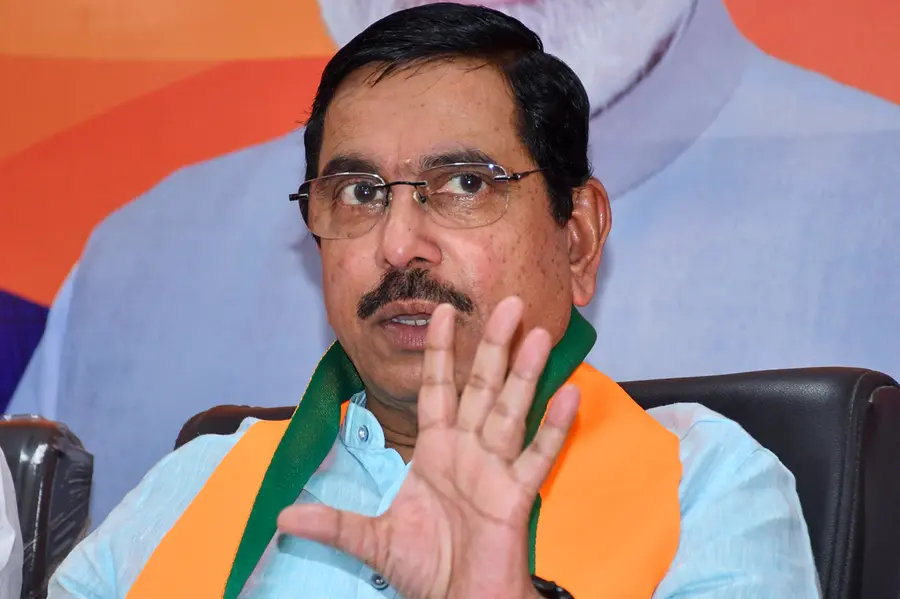
New Delhi: The Indian government has launched a formal investigation into e-commerce platforms that impose additional fees on cash-on-delivery (CoD) orders, a practice described by Consumer Affairs Minister Pralhad Joshi as a deceptive “dark pattern” that misleads and exploits consumers.
Minister Joshi announced on Friday that strict action will be taken against companies levying such hidden charges, after mounting complaints and social media backlash drew attention to the issue.
“The Department of Consumer Affairs has received multiple complaints about platforms charging extra for CoD — a practice classified as a dark pattern,” Joshi said in a post on X (formerly Twitter). “A detailed investigation has been initiated, and any violations of consumer rights will be met with strict action. The goal is to ensure transparency and uphold fair practices in India’s growing e-commerce sector.”
Dark patterns refer to manipulative digital design tactics that nudge consumers into making purchases or disclosing personal information without fully realising it. These include misleading pricing, hidden fees, countdown timers, or confusing terms at checkout.
The latest probe was triggered by a viral social media post in which a user criticised Flipkart for charging multiple add-on fees totalling ₹226, including an “Offer Handling Fee” of ₹99, a “Payment Handling Fee” of ₹48, and a “Protect Promise Fee” of ₹79, on a discounted item priced at ₹24,999. The user sarcastically referred to the charges as a “masterstroke,” drawing comparisons with the controversial “rain fee” imposed by some food delivery apps.
“Forget the rain fee by Zomato, Swiggy, or Zepto,” the post read. “Flipkart now charges for giving a discount, for letting me pay, and for protecting me from… satisfaction?”
The user went on to emphasise how this practice is not exclusive to Flipkart. Numerous platforms are making extra charges a norm, with Amazon introducing similar fees, BookMyShow adding a so-called ‘festival fee’, Lenskart imposing a ‘fitting fee’, and the list keeps goes on.
Such practices, officials say, may fall under "drip pricing", one of 13 dark patterns formally defined by the government in 2023. Other examples include “basket sneaking” which automatically adds items to a shopping cart, “subscription traps”, and fake scarcity warnings like “only two items left”.
The Consumer Affairs Ministry has previously held meetings with major e-commerce players to warn them against employing dark patterns and is in the process of drafting stricter legislation to regulate online consumer transactions.
Authorities are also monitoring how platforms handle Goods and Services Tax (GST) reductions. The National Consumer Helpline has resolved 3,981 GST-related complaints, while the Central Consumer Protection Authority (CCPA) is examining whether online retailers are properly passing on tax benefits on essential goods.
Minister Joshi emphasised that the government’s dual focus is to protect consumers from hidden digital charges and ensure that economic reforms such as GST rate cuts are being implemented in full. “We are committed to guaranteeing transparency, protecting consumers from misinformation, and ensuring the benefits of reforms reach every citizen,” he said.
India’s GST collections rose to ₹1.89 lakh crore in September — a 9.1% increase year-on-year — driven in part by stronger consumer spending. Officials believe ensuring fair pricing online will support domestic demand and contribute to broader economic growth.
(With IANS inputs)
Published: 04 Oct 2025, 09:08 am IST
Related Topics
Disclaimer: Kindly avoid objectionable, derogatory, unlawful and lewd comments, while responding to reports. Such comments are punishable under cyber laws. Please keep away from personal attacks. The opinions expressed here are the personal opinions of readers and not that of Mathrubhumi.
