
Prime Minister Narendra Modi cautioned that those opposing the women’s reservation bill could face long-term political consequences, as Parliament debated major constitutional changes during a special session.
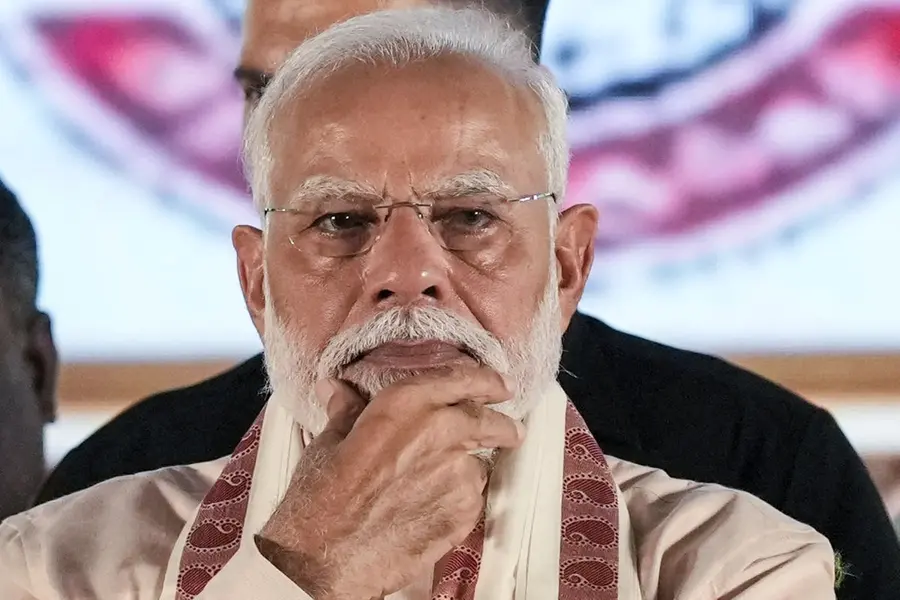
New Delhi: Addressing the Lok Sabha on Thursday, Prime Minister Narendra Modi said the women’s reservation bill should not be given a political colour and called for unanimous support.
Opening his remarks, he framed the moment as historically significant, stating, “We have been given a sacred opportunity to add a new dimension,” and described the move as a step towards including “half of the country’s population in the decision-making process of nation-building.”
Also Read

He framed the legislation as a national reform aimed at strengthening democracy and expanding participation, stating that credit should not go to any single party. ‘Those who opposed giving this right to women have not been forgiven by the women of this country’: PM Modi
‘The need was that 25–30 years ago… we should have implemented it right then’: PM Modi continued.
A central theme of the speech was his appeal to avoid politicising the legislation. “There is no need to give it a political colour,” Modi said, urging members across party lines to support the bill unanimously.
He reinforced this position by stating, “Today I have come to appeal to you not to weigh this on the scales of politics; this is a decision in the national interest.”
Highlighting collective responsibility, he added, “If we all come together, history is witness, it won’t go in favour of any one political side. It will go in favour of the country’s democracy.”
Seeking to position the bill as a collective achievement, Modi stated, “I don’t want credit,” adding that the success of the legislation should not be attributed to any individual or political party.
He reiterated this idea by saying, “This will not go in favour of any one political party, but in favour of the country’s democracy.”
What the bill proposes
The debate centres on implementing the Nari Shakti Vandan Adhiniyam, which guarantees 33 per cent reservation for women in the Lok Sabha and state assemblies.
To enable this, the government introduced the Constitution (131st Amendment) Bill, 2026, along with the Delimitation Bill and amendments related to Union Territories. A key proposal is to expand the Lok Sabha from 543 seats to a maximum of 850, with 815 seats for states and up to 35 for Union Territories. The expansion is intended to accommodate women’s reservation without reducing existing seats.
Delimitation becomes the core flashpoint
The most debated aspect is the proposed change in delimitation rules. The bill allows Parliament to decide which census data will be used to redraw constituencies, removing the earlier requirement linking the process to a fixed census timeline.
Supporters argue that this provides flexibility and avoids delays in implementing women’s reservation. They also maintain that no state will lose representation and that consultations will be held before final decisions.
Critics, however, view this as a significant structural shift. Opposition parties, including the Indian National Congress, have raised concerns that population-based redistribution could favour states with higher population growth, potentially altering the federal balance.
Concerns over representation and fairness
Opposition leaders have also questioned the absence of caste-based data in the delimitation framework, arguing that it may weaken representation for marginalised communities such as OBCs, Dalits, and Adivasis.
Some leaders described the proposal as a potential route to “gerrymandering”, while others warned that southern and smaller states could see their relative political influence reduced despite better population control outcomes.
At the same time, the government has argued that proportional representation will remain intact and that reforms are necessary to modernise the electoral system.
Political reactions and regional pushback
The proposals have triggered strong political responses across states. M. K. Stalin, Chief Minister of Tamil Nadu, publicly opposed the delimitation plan, warning it could disadvantage southern states and intensify regional imbalance.
Within Parliament, debates have reflected a broader divide: while there is near-unanimous support for women’s reservation, there is clear disagreement over how and when it should be implemented.
Why this matters
The outcome of the special session could have long-term implications for India’s electoral structure. The combination of women’s reservation, Lok Sabha expansion, and changes to delimitation rules represents one of the most significant proposed shifts in representation in decades.
While the bill aims to increase women’s participation in politics, the accompanying structural changes have raised complex questions about fairness, federal balance, and the future distribution of political power across the country.
Published: 16 Apr 2026, 04:01 pm IST
Disclaimer: Kindly avoid objectionable, derogatory, unlawful and lewd comments, while responding to reports. Such comments are punishable under cyber laws. Please keep away from personal attacks. The opinions expressed here are the personal opinions of readers and not that of Mathrubhumi.