
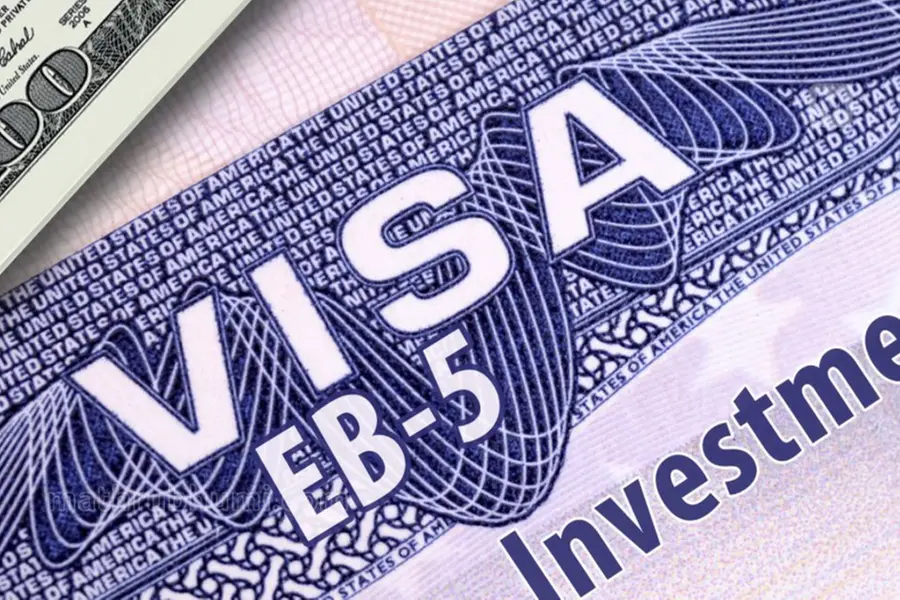
The EB-5 Immigrant Investor Program offers a green card to foreign nationals to become US permanent residents (green card holders).
Four months ago, on February 226, 2025, US President Donald Trump announced his plan to sell a ‘gold card’ visa. “I happen to think it’ll sell like crazy. It’s a market,” Mr. Trump said. “But we’ll know very soon,” he had said.
During the same meeting, Commerce Secretary Howard Lutnick told the press that this initiative would replace the EB-5 program, which offers US visas to investors who spend about $1 million on a company that employs at least 10 people.
Aftermath: In light of the recent restrictions on student visas, several Indian students in the US, as well as those thinking about attending college there, are looking into the EB-5 option. Immigration attorneys have reported that over the last four to five months, during Donald Trump's second term as President, there has been more than a cent per cent hike in EB-5 applications from Indian students.
What is the programme: The EB-5 Immigrant Investor Program offers a green card to foreign nationals to become US permanent residents (green card holders) by investing at least $800,000 (or $1,050,000 if the investment is not in a Targeted Employment Area) in a qualified American business or government-approved regional center or preserves at least 10 full-time jobs for US workers. This programme aims to boost and strengthen the US economy through foreign investment and job creation.
Hike in interest: The increase in interest in EB-5 visas coincides with heightened scrutiny and limitations on F-1 student visas. Recent regulations implemented during Donald Trump's second term have created more challenges for international students seeking to remain and work in the US after completing their studies. The F-1 visa permits students to pursue full-time education at American schools, but it provides only a few employment opportunities both during and after their academic programs.
Annual limit: The US has an annual limit of approximately 700 EB-5 visas for individuals from India. In 2024, there are over 86,000 Indian students studying at American universities, resulting in a demand that significantly exceeds the supply, leading to intense competition.
The F-1 visa for non-immigrants allows international students to come to the US for full-time academic programs, with some restrictions on work. Since January, USIF has seen a 100 per cent rise in F-1 visa holders applying for EB-5 visas compared to 2024.
Published: 01 Jun 2025, 05:30 pm IST
Related Topics
Disclaimer: Kindly avoid objectionable, derogatory, unlawful and lewd comments, while responding to reports. Such comments are punishable under cyber laws. Please keep away from personal attacks. The opinions expressed here are the personal opinions of readers and not that of Mathrubhumi.
