
Pakistan President Zardari refused a bunker during Operation Sindoor, revealing Pakistan`s panic. India`s decisive strike followed a terror attack. Click for details!
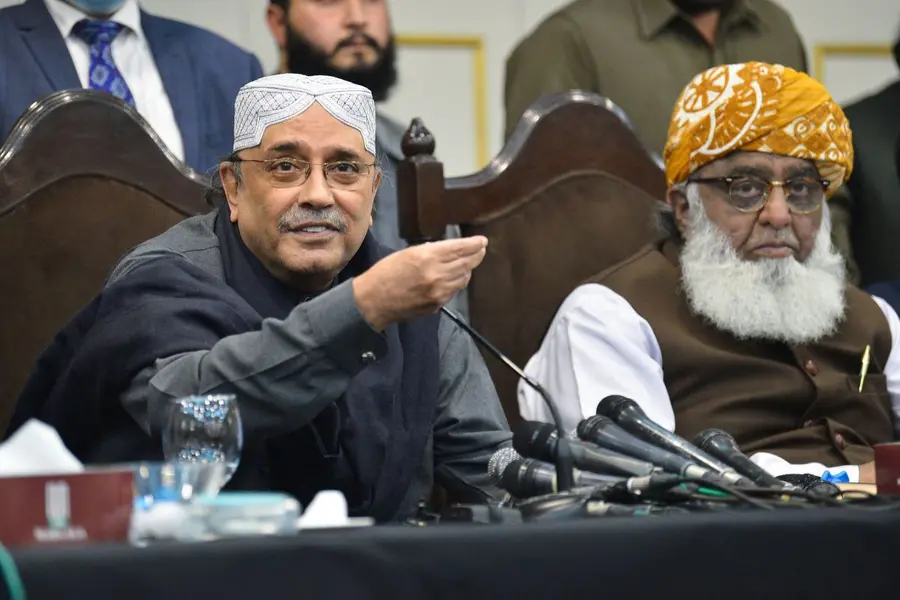
New Delhi: Pakistan President Asif Ali Zardari has revealed that during Operation Sindoor in May, he was advised by his military secretary to take shelter in a bunker for his safety, a move he refused, saying leaders should face danger on the battlefield.
Speaking at a rally marking the death anniversary of his wife and former Prime Minister Benazir Bhutto, Zardari said, “If martyrdom is to come, it will come here. Leaders don’t die in bunkers; they die on the battlefield. They don’t die sitting in bunkers.” He added that Pakistan Peoples Party workers were ready to sacrifice their lives for the nation.
Also Read

The revelation stresses the level of fear and panic in Pakistan during India’s Operation Sindoor, carried out on the night of May 6–7 in retaliation for the Pahalgam terror attack that killed 26 civilians. The operation targeted nine terror facilities in Pakistan. Following Pakistan’s counteractions, Indian forces struck several Pakistani air force bases before a ceasefire was negotiated on May 10.
Commenting on Zardari’s statement, former DGP SP Vaid noted that images and reports from Pakistan show the widespread panic among its leadership and military during the strikes. He cited examples of top Pakistani officers taking extreme precautions, “images have also emerged of 'Fraud Marshal', Asim Munir, addressing senior army officers at the army headquarters while standing behind bulletproof glass and wearing a bulletproof jacket. Earlier, we also saw Azhar Masood in tears. All these three incidents coming out of Pakistan clearly show the level of fear and panic, not just among terrorists, but also among their sponsors and across the entire 'Terroristan'...”
Pakistan's President also addressed a remark by Indian Prime Minister Narendra Modi, who had warned Pakistan with, “Roti khao, varna meri goli toh hai hi.” Zardari countered, saying that in a war, it would be Pakistan that fires the bullets, while questioning India’s “courage” to fight despite its economic advantage.
Operation Sindoor, India maintains, has only been halted temporarily and could be resumed if required, showing the country’s continued readiness and strategic reach deep into hostile territory.
Published: 28 Dec 2025, 03:07 pm IST
Related Topics
Disclaimer: Kindly avoid objectionable, derogatory, unlawful and lewd comments, while responding to reports. Such comments are punishable under cyber laws. Please keep away from personal attacks. The opinions expressed here are the personal opinions of readers and not that of Mathrubhumi.