
They also raised concerns about increased financial burden on states. The government defended the Bill, stating it modernizes rural employment, increases guaranteed workdays to 125, and aligns with Gandhi's principles
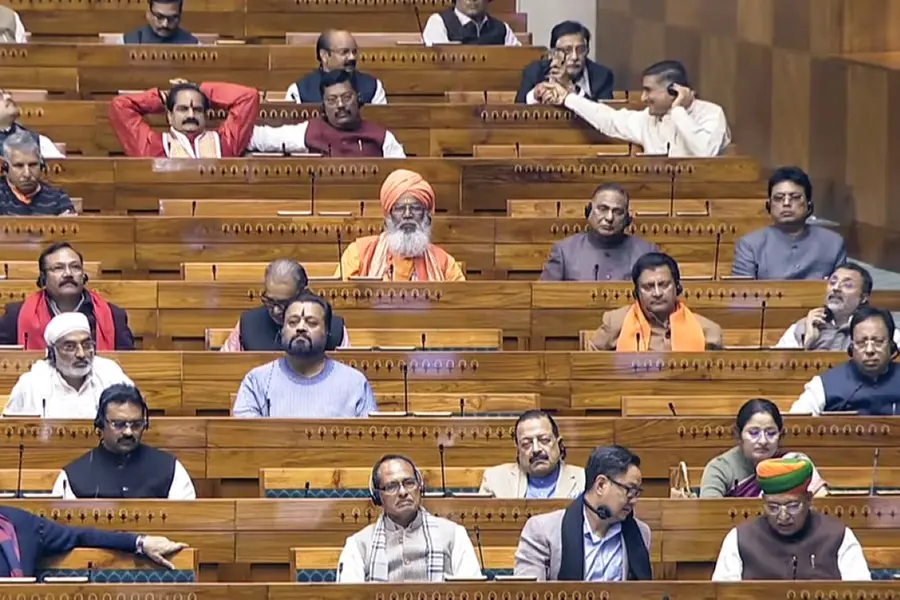
New Delhi: The Lok Sabha on Tuesday saw sharp exchanges between the Treasury benches and the Opposition after the Viksit Bharat Guarantee for Rozgar and Ajeevika Mission (Gramin), or VB-G RAM G Bill, 2025, was tabled. The proposed legislation seeks to replace the Mahatma Gandhi National Rural Employment Guarantee Act of 2005, commonly known as MGNREGA.
What sparked the confrontation in the Lok Sabha?
Several Opposition MPs strongly objected to the Bill, alleging that it was an attempt to remove Mahatma Gandhi’s name from the rural employment scheme. Congress leaders Priyanka Gandhi Vadra and KC Venugopal, Samajwadi Party MP Harendra Malik, and Trinamool Congress MP Mahua Moitra were among those who raised objections.
The Gandhi scion urged that the Bill be referred to the Parliament’s Standing Committee so that it could be examined in detail and discussed further in the House.
Harendra Malik went a step further, alleging that the Bill aimed to replace Mahatma Gandhi’s name with Nathuram Godse’s.
Mahua Moitra echoed similar concerns and opposed the legislation, stating, “We’ll not tolerate insults against Gandhi — the Father of the Nation.”
Why is the Opposition calling the Bill retrograde?
Congress MP Shashi Tharoor criticised the Union government, saying the new Bill “represents a deeply regrettable and retrograde step” for the country.
Opposition members also highlighted concerns about the financial structure of the new framework. They pointed out that, unlike MGNREGA where the Centre bore most of the costs, the proposed Bill would increase the financial burden on state governments.
How did the government respond to the allegations?
Union Rural Development Minister Shivraj Singh Chouhan questioned the Opposition’s claims and asked whether the Congress, by earlier renaming the Jawahar Rozgar Yojana, had shown disrespect to former Prime Minister Jawaharlal Nehru.
He asserted that the Central government firmly believes in Mahatma Gandhi and follows his principles.
“Mahatma Gandhi ji lives in our hearts,” Chouhan said. He added, “It was both Gandhi ji and Pandit Deendayal Upadhyaya that resolved to address on priority the welfare of the most downtrodden. We believe in their principles and are conducting many poverty alleviation schemes based on their thoughts.”
BJP MP Kangana Ranaut also countered the Opposition’s criticism, rejecting claims that the renaming insulted Mahatma Gandhi, who had united the country with his rendition of ‘Raghupati Raghav Raja Ram’.
“This renaming was done to fulfill his vision,” she said.
What does the VB-G RAM G Bill propose?
The VB-G RAM G Bill aims to modernise India’s rural employment framework by replacing MGNREGA. It reflects the Union government’s intention to align rural employment policy with present-day economic realities.
Under the proposed legislation, the guaranteed number of workdays would rise from 100 days under MGNREGA to 125 days per financial year for adult members of rural households who volunteer for unskilled manual work.
What are the key concerns around implementation?
The new Bill shifts a significant portion of wage and implementation costs to state governments, which has raised concerns among Opposition parties about the added financial pressure.
It also allows for a pause in work during peak agricultural seasons. While this is intended to reduce disruptions to farming activities, it introduces additional complexities in delivering employment guarantees.
The Bill further proposes tighter digital oversight and greater use of technology to improve transparency, accountability and efficiency in implementation.
What lies ahead for the rural employment policy?
Overall, the VB-G RAM G Bill, 2025, represents an ambitious attempt to update India’s rural employment policy. By expanding work guarantees and promising improved governance, it seeks to adapt to changing rural socio-economic conditions.
However, the increased financial responsibilities for states, political controversy and administrative challenges are likely to play a decisive role in determining how effectively the new framework safeguards rural livelihoods in practice.
IANS inputs
Published: 16 Dec 2025, 07:19 pm IST
Related Topics
Disclaimer: Kindly avoid objectionable, derogatory, unlawful and lewd comments, while responding to reports. Such comments are punishable under cyber laws. Please keep away from personal attacks. The opinions expressed here are the personal opinions of readers and not that of Mathrubhumi.
