
IAF Group Captain Shukla’s quote on Earth from space features in new NCERT Class 5 textbook
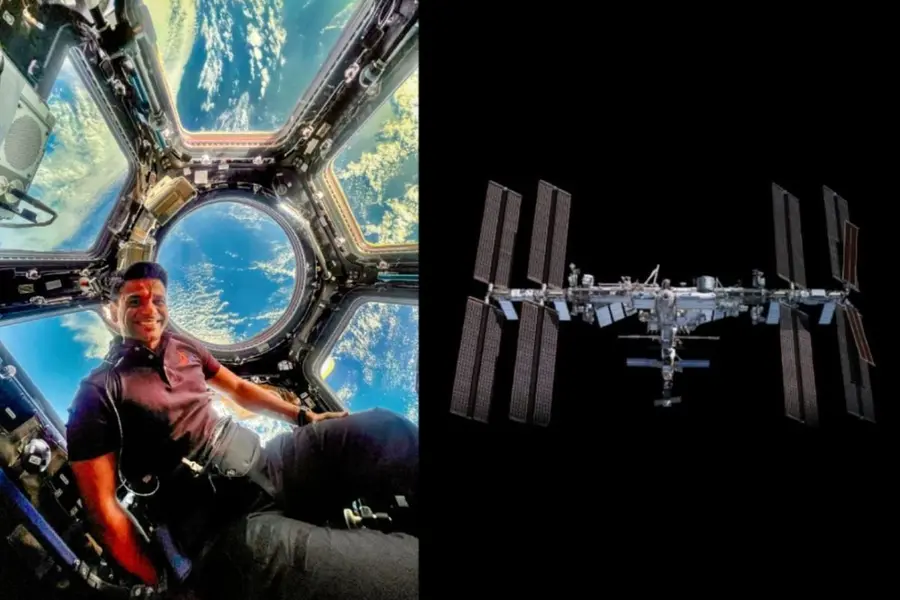
New Delhi: “The Earth looks completely one; no border is visible from outside” — these striking words by Group Captain Shubhanshu Shukla, the first Indian to reach the International Space Station, have been featured in a new Class 5 Environmental Studies textbook published by NCERT.
The quote, part of a conversation between Group Captain Shukla and Prime Minister Narendra Modi, appears in the chapter Earth, "Our Shared Home" in the Environmental Studies book, "Our Wondrous World".
Reflecting on his view of Earth from space, Shukla said, “It seems that no border exists, no state exists, no countries exist. We all are part of humanity, and the Earth is our one home, and all of us are in it.”
Shukla recently concluded an 18-day mission aboard the International Space Station on July 15, becoming the first Indian in more than 40 years to visit the orbital outpost.
The new textbook, part of the Grade 5 curriculum under the TWAU (The World Around Us) textbook, represents a shift in teaching methods inspired by the National Education Policy (NEP) 2020. It combines Science, Social Science and Environmental Studies into a single, integrated narrative to promote observation, curiosity, and ethical thinking.
It presents a unified approach to teaching science, social science and environmental studies through stories, hands-on activities, and real-world connections.
Among the content featured in the book is DIGIPIN, a digital address system that assigns a unique 10-character code to every location in India, helping postmen, ambulances, and delivery agents locate even remote homes or schools more easily.
In Chapter 2, students embark on a geographical journey along the Godavari River, learning about the Brahmagiri Hills, Coringa Wildlife Sanctuary, and initiatives such as the Namami Gange Programme. Flood safety tips appear in another section, equipping students with essential life skills.
Chapter 3 introduces students to microbes, food preservation methods such as drying, pickling and refrigeration, and health concepts like oral hygiene and choking hazards.
In the chapter Our Vibrant Country, students explore India's rich culture through national symbols, traditional dress, monuments, regional dances, and a currency note activity that helps decode cultural elements.
The textbook also brings in inspirational stories of national icons like APJ Abdul Kalam, Bhagat Singh, Rani Lakshmibai and Chhatrapati Shivaji.
A chapter titled "Some Unique Places" takes students on a travelogue across India, highlighting the Sundarbans, North-East India, eco-friendly architecture, local innovations, and biodiversity.
It mentions Bhut Jolokia from Assam, coir crafts from Kerala, and the Kailashnatha temple in Maharashtra. Side notes throughout the book provide nuggets of general knowledge, from Wular Lake in Kashmir and the Statue of Unity to Hiware Bazar in Maharashtra and Majuli Island in Assam.
With a blend of nature walks, interviews, model-making and journal-writing, the book promotes inquiry-led learning.
Students are guided to observe, hypothesise, test and conclude, while understanding the interdependence of people and nature. The textbook also encourages them to document seasonal changes and reflect on their experiences, while appreciating India's diversity and the unity of the planet.
ANI
Published: 22 Jul 2025, 05:33 pm IST
Disclaimer: Kindly avoid objectionable, derogatory, unlawful and lewd comments, while responding to reports. Such comments are punishable under cyber laws. Please keep away from personal attacks. The opinions expressed here are the personal opinions of readers and not that of Mathrubhumi.
