
Nationwide strike draws mixed response across India, disrupting banking, transport and port operations in several states while normalcy prevails in others.
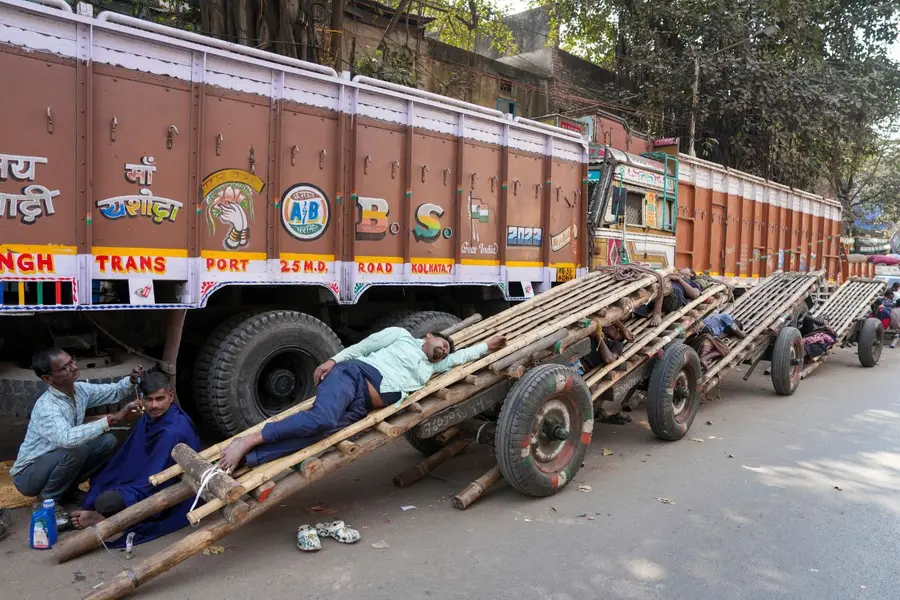
New Delhi: Daily life remained largely unaffected across the country despite the nationwide strike called by a joint forum of central trade unions on Thursday, aimed at protesting the alleged “anti-worker, anti-farmer and anti-national pro-corporate policies of the Central Government.”
Reports indicate a mixed response in several states, including Odisha, Kerala, Tamil Nadu, Goa, Jharkhand, Chhattisgarh, Madhya Pradesh and Punjab.
In Odisha, normal life was disrupted due to a 12-hour agitation. Public transport, markets, schools and business establishments faced interruptions as national and state highways were blocked. The bandh’s impact was felt in Bhubaneswar, Cuttack, Balasore, Berhampur and Sambalpur.
In Jharkhand, sectors such as banking, insurance and coal were affected, with Bank of India Employees’ Union deputy general secretary Umesh Das confirming participation. Left parties and the Congress also extended their support to the strike.
In Chhattisgarh, several nationalised banks remained closed, while employees of insurance companies, post offices, labourers and farmers joined the agitation. Mining activities were partially affected. However, transport services largely operated normally, and shops and businesses remained open. Normal operations continued in Durg district, including at the Bhilai Steel Plant.
Tamil Nadu’s port operations were impacted, with protests staged in Thoothukudi and Chennai. Sriperumbudur, a major industrial hub, saw workers holding gate meetings and demonstrations. While production in key automobile and electronics facilities continued with reduced staff, goods movement faced delays due to limited transport.
In Kerala, government offices observed a dies non, and office attendance remained low due to suspended transport services. Shops and private businesses were also expected to remain closed, with travellers impacted as KSRTC and private buses stayed off the roads. Auto-rickshaw unions similarly suspended operations.
Punjab’s ruling party, AAP, announced its support, with its cadre joining workers and farmers across the state. In Goa, the response was mixed, with banks affected but essential services continuing.
Over 25,000 civilian employees in Madhya Pradesh reported to work an hour late to support the strike, while markets, schools and colleges remained open. West Bengal, Tripura and Gujarat reported minimal to no impact, with offices, educational institutions, markets and public transport operating normally.
The joint forum of trade unions claims that 30 crore workers are participating in the strike against the new Labour Codes, among other issues.
All India Trade Union Congress General Secretary Amarjeet Kaur told PTI that the general strike has started across the country on Thursday morning, and that she has received reports of agitation from states, including Assam, Tamil Nadu, Pondicherry, Kerala, Odisha and Bihar.
Kaur added, “Banking, insurance, postal, transport, health, coal and non-coal mines, gas pipeline and electricity sectors will be affected by the strike,” and noted that farmers’ unions are also holding protests in their respective areas.
The trade unions are demanding the scrapping of four Labour Codes and related rules, withdrawal of the Draft Seed Bill and Electricity Amendment Bill, and the “Sustainable Harnessing and Advancement of Nuclear Energy for Transforming India (SHANTI) Act.” They are also seeking restoration of MGNREGA and the repeal of the Viksit Bharat – Guarantee for Rozgar and Ajeevika Mission (Gramin) Act, 2025. The joint forum includes INTUC, AITUC, HMS, CITU, AIUTUC, SEWA, AICCTU, LPF, and UTUC.
PTI
Published: 12 Feb 2026, 05:01 pm IST
Disclaimer: Kindly avoid objectionable, derogatory, unlawful and lewd comments, while responding to reports. Such comments are punishable under cyber laws. Please keep away from personal attacks. The opinions expressed here are the personal opinions of readers and not that of Mathrubhumi.
