
RSS chief revisits Congress origins, terms it a British ‘safety valve’
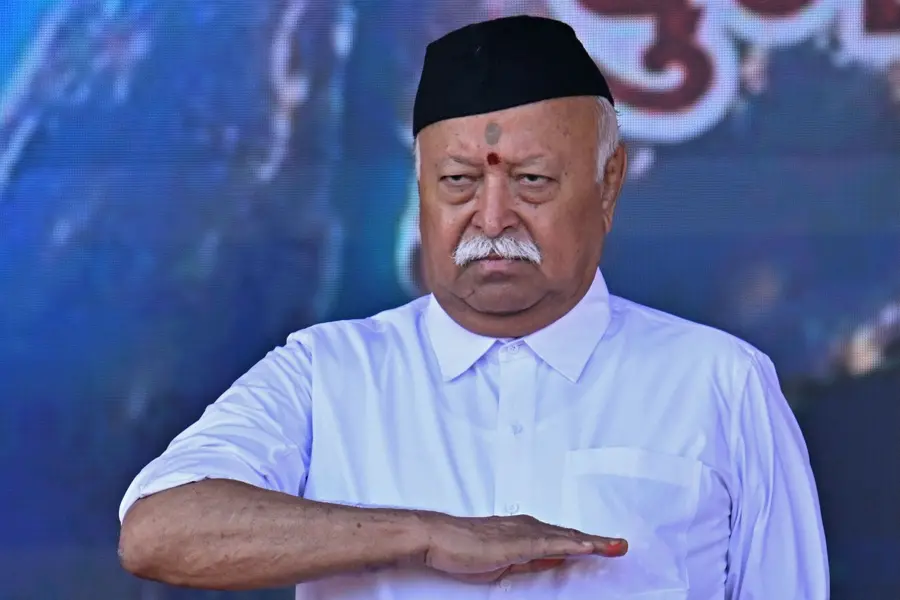
Rashtriya Swayamsevak Sangh (RSS) chief Mohan Bhagwat on Saturday said that the Indian National Congress was initially established by the British as a “safety valve” to manage rising political discontent, but was later reshaped by Indian leaders into a formidable vehicle of the freedom movement.
Speaking at a public event in Mumbai, Bhagwat referred to the historical context of the Congress’s formation in 1885, a period marked by growing political awareness and nationalist sentiment among Indians. He cited the view held by some historians that the British administration supported the creation of the Congress as a controlled platform to channel political demands and prevent unrest.
Also Read

However, Bhagwat said that over time, Indian leaders transformed the organisation into a mass movement that played a central role in the struggle for independence. He noted that figures associated with the freedom movement expanded the Congress’s reach and made it a representative force against colonial rule.
RSS chief Mohan Bhagwat said that the Rashtriya Swayamsevak Sangh (RSS) is not against anyone and works solely for the nation. Addressing the “100 Years of RSS – New Horizons” programme in Mumbai, he asserted that the organisation does not seek power or popularity and was not formed in competition with any group.
Speaking at the event, Bhagwat said, “The Sangh is not against anyone, but works for the nation. The Sangh’s work is unique.” He added that the organisation carries out its activities without opposing any individual or institution.
The Congress, founded in December 1885, went on to lead several major movements against British rule, including the Non-Cooperation Movement, Civil Disobedience Movement and Quit India Movement, before India attained independence in 1947.
The Rashtriya Swayamsevak Sangh (RSS) was founded in 1925 in Nagpur by K.B. Hedgewar during the later phase of British colonial rule. Unlike the Indian National Congress, which led mass political movements against the British, the RSS positioned itself primarily as a cultural and social organisation focused on Hindu unity, discipline and character-building. It did not directly participate in major anti-colonial movements such as the Non-Cooperation Movement, Civil Disobedience Movement or the Quit India Movement. The organisation expanded gradually through shakhas (local branches), emphasising ideological training and community mobilisation. During the colonial period, the RSS maintained that its work was centred on societal reform and nation-building at a cultural level, while critics have argued that it remained largely absent from the frontline of the political freedom struggle.
Published: 07 Feb 2026, 05:34 pm IST
Disclaimer: Kindly avoid objectionable, derogatory, unlawful and lewd comments, while responding to reports. Such comments are punishable under cyber laws. Please keep away from personal attacks. The opinions expressed here are the personal opinions of readers and not that of Mathrubhumi.