
Modi says India supports efforts for lasting peace as Trump announces Gaza plan
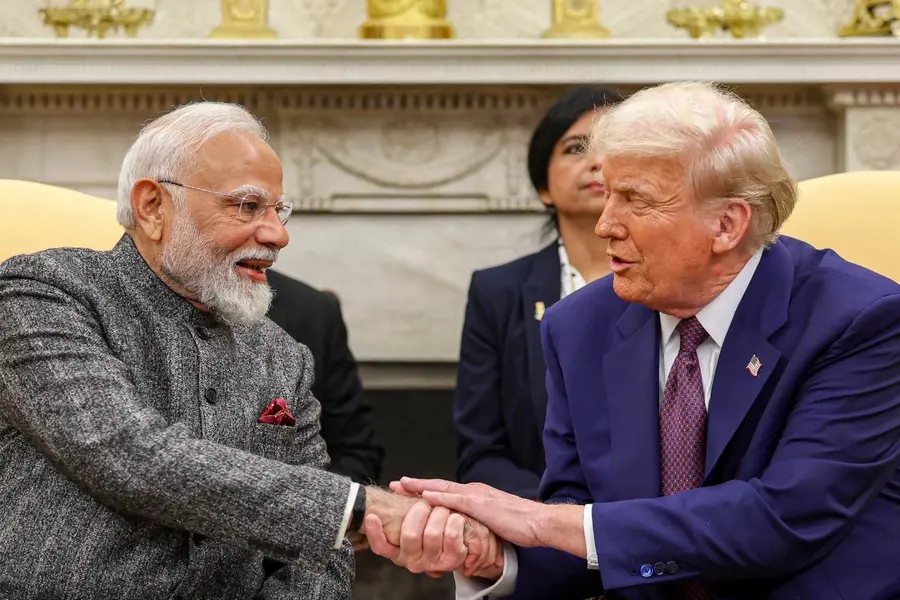
New Delhi: On Saturday, Prime Minister Narendra Modi posted on his X account, “We welcome President Trump’s leadership as peace efforts in Gaza make decisive progress,” echoing the United States initiative unveiled by President Donald Trump at the White House alongside Israeli Prime Minister Benjamin Netanyahu.
Tagging the US president, Modi added, “India will continue to strongly support all efforts towards a durable and just peace.”
Also Read

Relations between Modi and Trump have drawn international attention in recent years. During Trump’s first presidency (2017–2021), the two leaders publicly displayed close ties through large-scale diaspora events such as the “Howdy Modi” gathering in Houston in 2019 and the “Namaste Trump” rally in Ahmedabad in 2020.
Trump frequently described India as a “great friend” and praised Modi’s leadership, while also pressing New Delhi to reduce trade imbalances and allow greater US market access. At the same time, both countries aligned on counterterrorism, Indo-Pacific security, and shared concerns about China’s regional influence. Trump’s second term has continued this mix of public camaraderie and hard bargaining, including tensions over India’s ties with Russia and the imposition of US tariffs.
Also read: Trump on Hamas' promise to release all hostages
What Trump’s plan proposes
The new plan, announced Monday, sets out a framework aimed at ending the ongoing Gaza conflict. Key elements include:
- An immediate ceasefire if both sides agree, with Israel withdrawing troops to facilitate hostage releases.
- Prisoner exchanges, including the release of 250 life-sentence prisoners and 1,700 Gazans detained after October 7, 2023.
- Expanded humanitarian aid and infrastructure rebuilding, coordinated by UN agencies and international partners.
- Creation of a “Board of Peace,” chaired by Trump, to oversee Gaza’s governance until the Palestinian Authority (PA) completes internal reforms.
- Demilitarisation of Gaza under independent monitoring, with Hamas excluded from governance.
- Deployment of an International Stabilisation Force to secure Gaza and train Palestinian police vetted by international authorities
The overlooked realities
While Washington has presented the plan as a “decisive peace framework,” analysts highlight several issues:
- Limited Palestinian autonomy: Gaza’s governance would fall under a foreign-led technocratic committee, reducing direct Palestinian control.
- Exclusion of Hamas: The group would be required to dissolve or disarm, with members given amnesty or safe passage abroad.
- International trusteeship: The Board of Peace would direct funding and governance until PA reforms are completed, raising concerns of external dominance.
- Security conditions: Israel’s withdrawal is conditional on strict benchmarks, leaving it in control of Gaza’s borders until demilitarisation is verified.
- Aid dependence: Reconstruction is tied to international funding and economic zones, with no immediate pathway to full Palestinian sovereignty.
Also read: Will peace finally reach Gaza? Hamas to review Trump’s plan before response
Hostages and humanitarian urgency
Hamas signalled on Friday that it was prepared to enter talks on freeing Israeli hostages and discussing an end to the nearly two-year war. The conflict has devastated Gaza, leaving civilians in a humanitarian crisis. Families of Israeli hostages cautiously welcomed the proposal but stressed that any progress depends on mutual trust and enforceable commitments.
(With agency inputs)
Published: 04 Oct 2025, 08:19 am IST
Disclaimer: Kindly avoid objectionable, derogatory, unlawful and lewd comments, while responding to reports. Such comments are punishable under cyber laws. Please keep away from personal attacks. The opinions expressed here are the personal opinions of readers and not that of Mathrubhumi.