
Families of more than 30 people missing since the 2023 Manipur violence have renewed their demand for justice and urgent government action
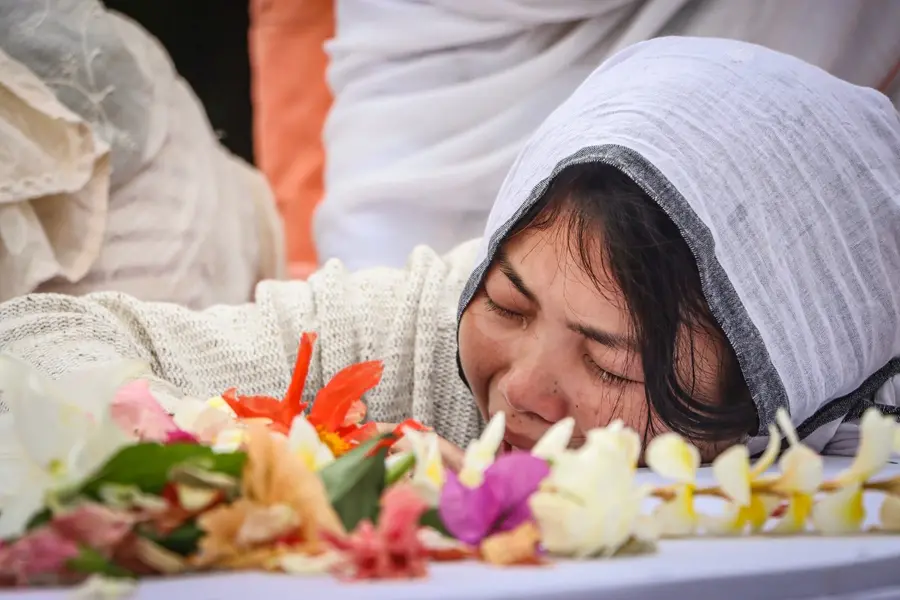
Imphal/Guwahati: Three years after ethnic violence broke out in Manipur on May 3, 2023, families of those who went missing have once again appealed for justice, accountability and urgent intervention by the government.
In a statement issued on Saturday, the families said that more than 30 individuals from valley areas who disappeared during the peak of the crisis remain untraceable. They described the past three years as a period marked by “unbearable silence, uncertainty and endless waiting” as they continue to seek clarity on the fate of their loved ones.
Missing during peak of violence
According to the families, many of those who went missing disappeared during the early phase of the unrest while attempting to return home, escape danger or survive amid the turmoil.
They said that despite lodging first information reports, approaching various authorities and even seeking relief through the Manipur High Court with the support of lawyers and rights activists, there has been no significant progress in locating those who vanished.
Legal hurdles add to hardship
The families have urged the state government to fulfil its constitutional duty and ensure that these cases are not overlooked. They also pointed to ongoing legal and procedural challenges that have worsened their situation.
Under existing rules, a missing person can only be officially declared dead after seven years. This makes it impossible for families to obtain death certificates before that period. Without such documentation, many are unable to access government schemes, compensation or employment benefits that had been promised.
Families speak of ongoing struggle
Kabita Devi, whose husband has been missing since the violence began, said her family continues to live in uncertainty.
“My husband was a central government employee. After this incident, we still don’t know where he is. The government had promised jobs and support, but nothing has been given,” she said.
“They are asking us to show the death certificate as without it we cannot access the benefits that are our rights. We have been told to wait for seven years, but how can we live like this without answers?” she added, questioning the requirement.
Another family member, Ranjita Devi, whose husband also disappeared during the violence, said the prolonged lack of clarity has had a devastating impact.
“My husband has been missing since that day. We don’t know whether he is alive or not. We have been asking for help, but there has been no concrete response,” she said.
She added that the family is struggling to manage daily life and care for children. “We just want the government to find our loved ones and give us justice.”
Appeal to authorities and society
The families stressed that those who are missing should not be reduced to numbers, but recognised as individuals whose loved ones are still waiting for answers.
“Help us bring truth, justice and dignity to the missing and their families. Until they are found, our struggle will continue,” the statement said.
Meitei Alliance calls situation deeply troubling
In a separate statement, the Meitei Alliance described the situation in Manipur, which shares a border with Myanmar, as a deeply troubling phase.
The organisation said that widespread propaganda during the violence has led to misleading interpretations of both the causes and consequences of the conflict. It noted that the initial outbreak has often been narrowly framed as a unified tribal response to the Meitei demand for Scheduled Tribe status, particularly following a recommendation by the Manipur High Court to consider the issue.
According to the Alliance, such narratives reduce a complex situation into simplified divisions such as tribal versus non-tribal, majority versus minority, hill versus valley, or Hindu versus Christian. It said these interpretations overlook deeper structural tensions, historical grievances and political complexities, thereby distorting public understanding.
Concerns over portrayal and underlying issues
The Meitei Alliance also stated that one-sided portrayals have suggested that the BJP-led government in Manipur primarily supported Meitei interests at the cost of Kuki communities, while presenting the Meitei population in a negative light.
It argued that these views fail to capture the broader realities, emphasising that the conflict must be seen within a wider framework shaped by long-term economic, political and social developments.
The statement referred to factors such as uneven development, persistent underdevelopment, corruption, political manipulation, illicit economic activities, demographic pressures, environmental strain and patterns of marginalisation.
Cycle of violence and efforts at dialogue
The organisation added that failure to adequately safeguard lives, property and livelihoods has increased insecurity, prompting communities to organise for self-defence and, in some cases, retaliation. This, it said, has further intensified cycles of violence and mistrust.
The Meitei Alliance is one of two groups, the other being the Thadou Inpi Manipur, that came together on a shared platform after the outbreak of violence. The meeting held on March 8, 2025 was described by both sides as a significant and historic moment aimed at working towards a common goal.
Published: 03 May 2026, 11:43 am IST
Related Topics
Disclaimer: Kindly avoid objectionable, derogatory, unlawful and lewd comments, while responding to reports. Such comments are punishable under cyber laws. Please keep away from personal attacks. The opinions expressed here are the personal opinions of readers and not that of Mathrubhumi.
