
A suspected food poisoning incident at a Mumbai wedding has left 27 people ill. The development comes as Maharashtra FDA steps up inspections over expired flour and food adulteration ahead of Diwali.
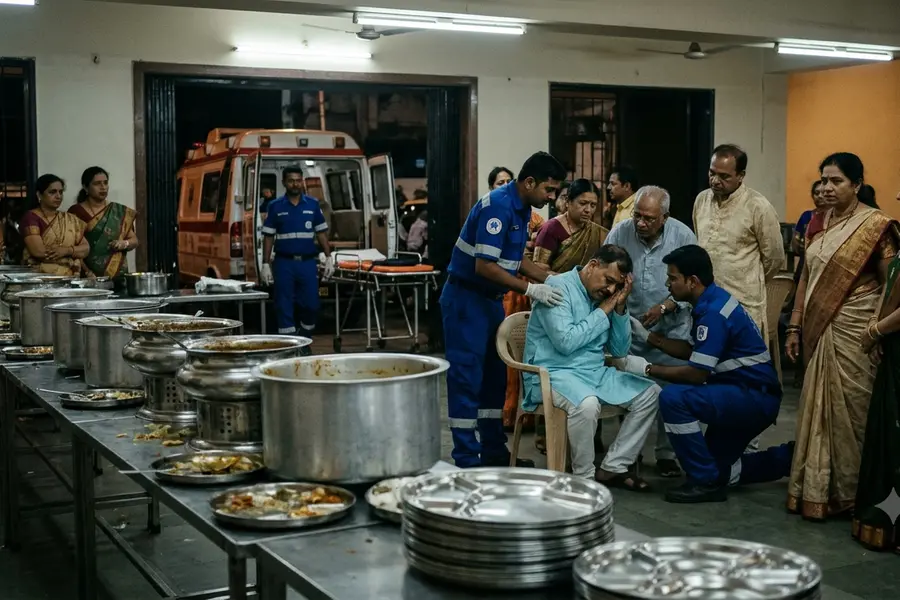
Mumbai: At least 27 people, including four children, reportedly fell ill after consuming food at a wedding in Mumbai's Nahur West, prompting the Bhandup Police to alert the Maharashtra Food and Drug Administration (FDA), headed by Commissioner Tukaram Mundhe.
The incident comes as the state food safety department intensifies inspections ahead of Diwali following reports of expired packaged flour and food adulteration.
At least 27 people, including four children, fell ill after allegedly consuming contaminated food at a wedding function in Nahur West, Mumbai, on Sunday, November 1.
The incident took place at Nalanda Buddha Vihar hall, where approximately 500 people had gathered to attend the wedding.
According to the Bhandup Police, the affected individuals had consumed food served in the final batch at the event before developing symptoms of suspected food poisoning.
All 27 people were rushed to a nearby hospital for treatment. Police said that no casualties had been reported and that all the hospitalised patients were stable and out of danger.
The Bhandup Police have alerted the Maharashtra Food and Drug Administration (FDA), led by Commissioner Tukaram Mundhe, regarding the incident.
Authorities are awaiting stomach wash reports to establish the possible cause of the illness. The findings are expected to help determine the next course of action and whether legal proceedings are required.
Police have said that an investigation is underway and appropriate legal action will be initiated based on the findings.
Maharashtra FDA intensifies food safety inspections ahead of Diwali
The wedding-related illness comes amid an intensified food safety enforcement drive across Maharashtra ahead of Diwali.
The FDA has expanded inspections after receiving information that expired packaged flour was allegedly being sold for preparing festive foods such as poli and bhakri.
Commissioner Tukaram Mundhe announced that officials had been instructed to inspect flour stocks across retail shops, wholesale markets, dealers and semi-dealer outlets.
The department had initiated its festive-season enforcement campaign 21 days earlier and issued standard operating procedures for inspections. The latest instructions aim to accelerate checks across the food supply chain.
Mundhe said the inspections were intended to identify adulteration and violations of food safety regulations rather than unnecessarily trouble traders.
He also warned that strict action would continue against businesses found selling adulterated or unsafe food products.
FDA seizes cooking oil and spices during inspections
According to the report, the Maharashtra FDA has seized approximately 28,000 quintals of cooking oil and nearly 20,000 quintals of spices during its recent enforcement operations.
The department has also detected instances of adulteration involving edible oil and spices.
The latest alert over expired packaged flour has prompted officials to widen their inspections, particularly at establishments supplying ingredients used in festive food preparation.
The department will also examine snacks and other food products sold through retail outlets and special Diwali sales centres.
Tukaram Mundhe responds to traders' allegations
The intensified inspections have also triggered objections from some traders' organisations and Shiv Sena leader Sanjay Raut, who alleged that FDA officials were unnecessarily troubling businesses.
Responding to these allegations, Mundhe said traders facing harassment or demands for money should submit evidence and file formal complaints with the department.
However, he clarified that routine inspections conducted by FDA officials should not automatically be treated as harassment.
The commissioner also acknowledged that the department does not have sufficient staff in proportion to Maharashtra's population.
He appealed to consumers to report suspected food adulteration and cooperate with the authorities in identifying unsafe products.
Why the wedding incident and Diwali inspections matter
The Mumbai wedding incident has brought renewed attention to food safety monitoring at large gatherings, where meals are often prepared and served in multiple batches.
The fact that the affected individuals reportedly consumed food from the final batch makes the investigation into food handling, storage, preparation and serving conditions important.
However, the exact cause of the illness has not yet been established. The authorities are awaiting medical reports before determining whether the food served at the wedding was contaminated.
Meanwhile, the FDA's statewide enforcement drive highlights concerns about adulteration and the sale of expired food products during the festive season, when demand for packaged ingredients, cooking oil, spices and snacks increases.
Published: 02 Nov 2026, 02:54 pm IST


ABOUT THE AUTHOR

Related Topics
Disclaimer: Kindly avoid objectionable, derogatory, unlawful and lewd comments, while responding to reports. Such comments are punishable under cyber laws. Please keep away from personal attacks. The opinions expressed here are the personal opinions of readers and not that of Mathrubhumi.