
Iranian officials have welcomed India’s diplomatic efforts to de-escalate regional frictions, emphasizing the strong cultural ties and mutual reliance between the two nations for energy and regional stability.
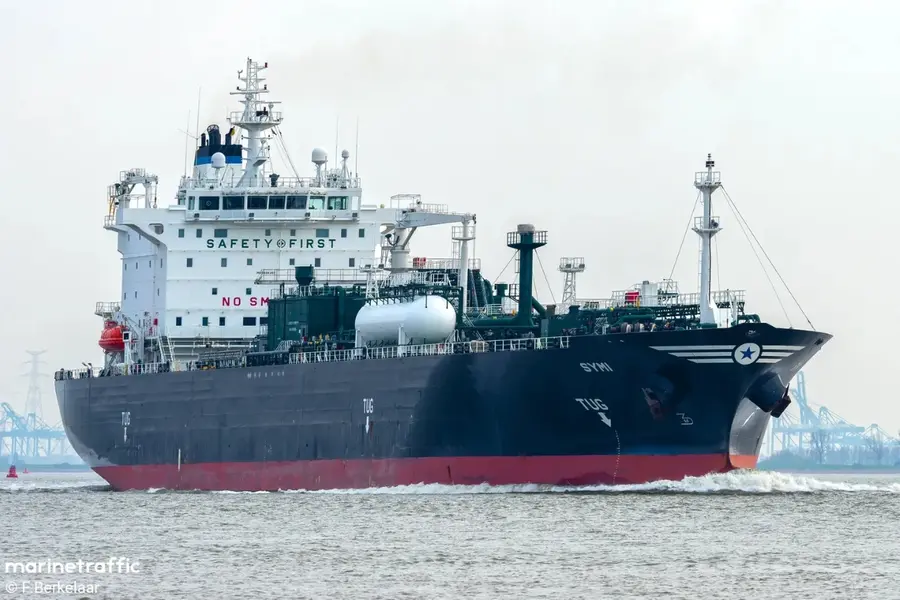
Kachchh: A Marshall Islands-flagged tanker transporting roughly 20,000 tonnes of liquefied petroleum gas (LPG) has docked at Kandla Port in the Kachchh district of Gujarat.
The vessel, identified as the "Symi," navigated the strategically vital Strait of Hormuz on May 13 prior to its arrival at the Indian port facility.
The delivery of the energy shipment occurs during a period of intense global focus on maritime navigation through the Strait of Hormuz, an essential international energy transit corridor that links the Persian Gulf to global commercial shipping routes.
The arrival follows a Friday diplomatic meeting between Iranian Foreign Minister Seyyed Abbas Araghchi and Indian External Affairs Minister S. Jaishankar, during which Araghchi reassured that allied states could depend on Iran to maintain mercantile security.
Araghchi emphasised that Iran intends to uphold its traditional role as a guardian of stability within the Hormuz region.
"In fruitful engagement with my host, External Affairs Minister S Jaishankar, discussed regional developments and clarified that Iran will always carry out historical duty as protector of security in Hormuz. Iran is a reliable partner of all friendly nations, who can rely on safety of commerce," Araghchi stated in a social media publication on X.
Escorted Energy Shipments
Prior to this development, official sources reported on May 13 that another India-bound LPG transport vessel, the MV Sunshine, was navigating the Strait of Hormuz under comprehensive security protocols to guarantee its safe passage toward the subcontinent.
According to those sources, the MV Sunshine represented the 15th India-bound LPG cargo vessel to be successfully escorted out of the Persian Gulf. The ship continues its transit toward India, assisted by a multi-agency security effort that includes active support from the Indian Navy.
Meanwhile, Kazem Gharibabadi, Iran's Deputy Foreign Minister for Legal and International Affairs, remarked on Wednesday that operational conditions inside the Strait of Hormuz would improve significantly upon the realisation of regional stability.
In an interview with news agency ANI, Gharibabadi contended that the United States has failed to engage in meaningful diplomatic efforts.
"Strait of Hormuz situation will be better than before once peace is established. There will be transparency. There will be no discrepancy. We will not go beyond international law. If peace is established, it will have more safety and security than before," Gharibabadi said.
Bilateral Ties and Regional Diplomacy
Iran announced Tuesday that it remains open to any diplomatic interventions by India to mitigate geopolitical volatility in West Asia. Gharibabadi commended New Delhi for its balanced diplomatic stance ahead of the upcoming BRICS Foreign Ministers' meeting in New Delhi.
"India has always supported peace and is always in favour of peace," Gharibabadi told journalists during a press briefing in the capital city.
Underscoring the historical connections linking the two states, Gharibabadi characterised India and Iran as "two nations with one culture."
"Both countries are proud of their culture. There are many commonalities, and we attach great importance to people-to-people contacts between India and Iran," he noted.
The Iranian official reiterated that Tehran remains receptive to any diplomatic strategies proposed by New Delhi to de-escalate regional frictions.
"Any initiative coming from India will be welcomed," Gharibabadi affirmed during his pre-BRICS conference engagements.
With inputs from ANI
Published: 17 May 2026, 10:50 am IST
Related Topics
Disclaimer: Kindly avoid objectionable, derogatory, unlawful and lewd comments, while responding to reports. Such comments are punishable under cyber laws. Please keep away from personal attacks. The opinions expressed here are the personal opinions of readers and not that of Mathrubhumi.
