
Lok Sabha clears Amaravati as Andhra capital while FCRA bill sparks sharp political confrontation.
New Delhi: The Lok Sabha on Wednesday passed the Andhra Pradesh Reorganisation (Amendment) Bill, 2026, officially declaring Amaravati as the sole capital of Andhra Pradesh, even as sharp political exchanges erupted over the controversial Foreign Contribution (Regulation) Amendment Bill.
The Bill was introduced earlier by Minister of State for Home Affairs Nityanand Rai and seeks to amend Section 5 of the Andhra Pradesh Reorganisation Act, 2014.
The original law had designated Hyderabad as the joint capital of Andhra Pradesh and Telangana for a period not exceeding 10 years following the bifurcation of the state.
Amaravati declared Andhra Pradesh’s sole capital
With the passage of the amendment, the law now formally recognises Amaravati as the capital of Andhra Pradesh, replacing the earlier provision that vaguely stated “there shall be a new capital” after the transition period.
The amendment substitutes this phrase with “and Amaravati shall be the new capital,” providing legal clarity and implementing a resolution passed by the Andhra Pradesh Legislative Assembly on March 28, urging the Centre to formalise the decision.
The move is seen as a major political and administrative milestone, particularly for the ruling alliance in Andhra Pradesh.
The Bill also aligns with demands from key NDA ally Telugu Desam Party (TDP) and Chief Minister N Chandrababu Naidu, who has consistently backed Amaravati as the state’s sole capital.
Further reinforcing this position, the Lok Sabha also took up for passing the Jan Vishwas (Amendment of Provisions) Bill, 2026, which includes provisions aimed at preventing any future reversal of the capital decision, an apparent reference to earlier attempts by the previous government led by YS Jagan Mohan Reddy to propose a three-capital model.
FCRA row intensifies; Rijiju says ‘not political’
Even as the Andhra Pradesh Bill sailed through, the FCRA Amendment Bill continued to remain a flashpoint between the government and the Opposition.
Amid protests in the Lok Sabha, Union Parliamentary Affairs Minister Kiren Rijiju defended the government’s handling of the legislation, asserting that it was not a political issue.
“This is not a political issue. Many bills have been introduced, but they are taken up for consideration seeing the situation. The bill relating to Andhra Pradesh was taken up today as it was an urgent matter. Don’t go by what the Opposition alleges, but according to reality. We always follow the rules,” Rijiju told reporters outside Parliament.
The government had earlier deferred taking up the FCRA Amendment Bill in the House following disruptions, signalling its attempt to manage legislative priorities amid a charged political environment.
However, Opposition leaders continued to mount sharp criticism. Samajwadi Party MP Pushpendra Saroj alleged that the Bill was aimed at targeting minorities and weakening regional political forces.
“This bill is being introduced keeping in mind states where minorities have influence. It is about weakening communities and regional parties, which is why we protested,” Saroj said.
The FCRA amendment has been a contentious issue, with Opposition parties expressing concerns over tighter regulations on foreign funding and its potential impact on NGOs and civil society organisations.
Railways data, LPG concerns and ATF duty add to heat
The day’s proceedings also saw multiple other issues being raised, adding to the intensity of the session.
Union Railway Minister Ashwini Vaishnaw informed the Lok Sabha that Indian Railways ran a record 76,352 special trains during the financial year 2025–26, highlighting the scale of operations and increased capacity.
He said that around 25,000 trains are currently operating daily, while freight loading reached a record 1,670 million tonnes.
Notably, the Railways also recorded the lowest number of consequential accidents in 50 years, just 16, along with the production of 1,914 locomotives.
Vaishnaw credited the government’s increased budgetary allocation under Prime Minister Narendra Modi for the expansion and modernisation of the railway network, stating that the benefits were reaching poor and middle-class passengers across the country.
Meanwhile, Opposition MPs raised concerns over rising LPG prices, demanding a dedicated discussion in the Lok Sabha.
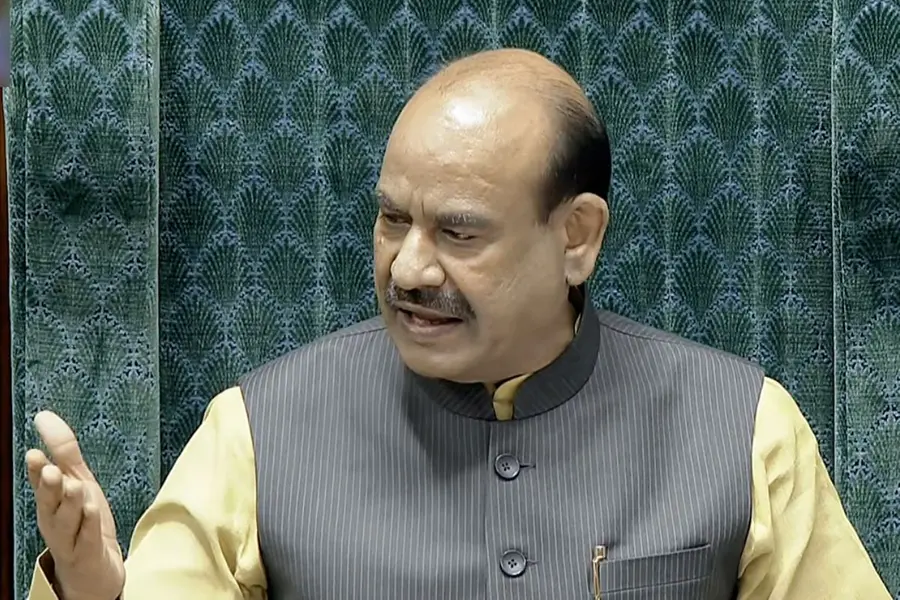
Speaker Om Birla assured members that the issue would be taken up later, but the demand added to the friction between the treasury and Opposition benches.
Earlier in the day, Minister of State for Finance PP Chaudhary also moved a resolution seeking approval for a Special Additional Excise Duty of ₹50 per litre on Aviation Turbine Fuel (ATF), further fuelling debate over rising energy costs.
The proceedings reflected a Parliament in high gear but marked by sharp divisions, where significant legislative business, such as the Andhra Pradesh capital bill, moved forward, even as contentious issues like the FCRA amendment triggered protests and political sparring.
With the Budget Session set to conclude on April 2, the government appears focused on pushing through priority legislation, while the Opposition continues to challenge key proposals, setting the stage for more confrontations in the final days of the session.
Published: 01 Apr 2026, 10:29 am IST
Related Topics
Disclaimer: Kindly avoid objectionable, derogatory, unlawful and lewd comments, while responding to reports. Such comments are punishable under cyber laws. Please keep away from personal attacks. The opinions expressed here are the personal opinions of readers and not that of Mathrubhumi.
