
The Centre plans two key Bills to fast-track 33% women's reservation by expanding the Lok Sabha to 816 seats through an expedited delimitation process.
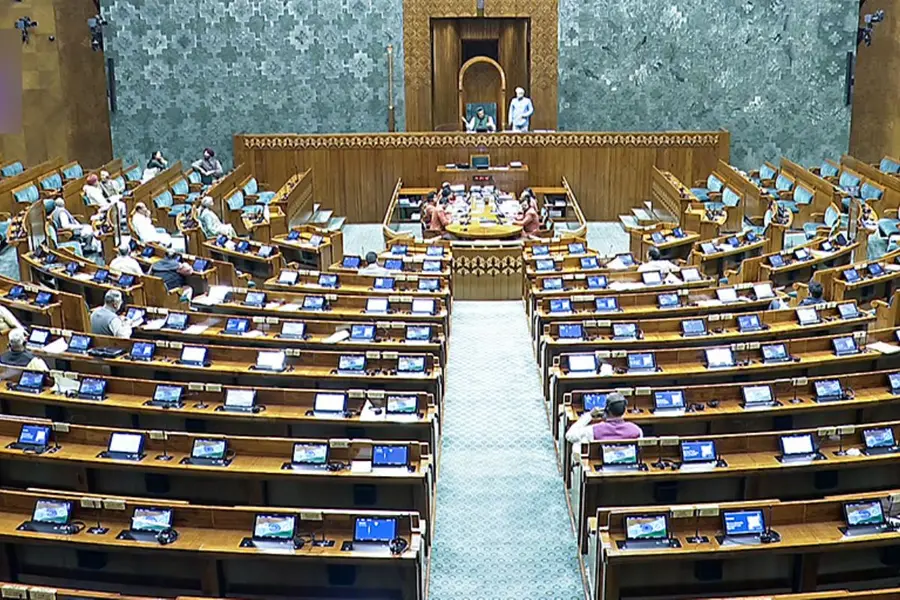
New Delhi: The Union Government has indicated its willingness to introduce two pivotal Bills during the current Budget session of Parliament. The move aims to ensure the implementation of the women’s reservation law prior to the completion of the delimitation process for Lok Sabha and State Assembly constituencies, sources reported on Monday.
Union Home Minister Amit Shah conducted separate consultative meetings with floor leaders from the NDA and various non-Congress opposition parties to build a political consensus. Should an agreement be reached, sources suggest the Bills could be tabled as early as this week.
Prominent opposition figures in attendance included P V Midhun Reddy (YSRCP), Dimple Yadav (SP), Supriya Sule (NCP-SP), Manoj Jha (RJD) and Asaduddin Owaisi (AIMIM). The Home Minister is expected to hold similar discussions with the Congress party in the near future.
The legislative strategy
While the constitutional amendment providing 33 per cent reservation for women has already been passed, its activation is currently tied to the conclusion of the delimitation exercise. The government’s new plan involves two distinct legislative actions:
- Constitutional Amendment Bill: To modify the Nari Shakti Vandan Adhiniyam (the Women’s Reservation Law).
- Ordinary Bill: To amend the Delimitation Act.
If approved, these laws would take effect on March 31, 2029. This timeline would facilitate the reservation of seats for the subsequent Lok Sabha elections, as well as assembly polls in Odisha, Arunachal Pradesh, Sikkim and Andhra Pradesh.
Restructuring the Lok Sabha
Under the proposed framework, the total number of Lok Sabha seats is expected to rise from 543 to 816. Within this expanded House, 273 seats would be reserved for women. The reservation will be implemented on a "vertical basis”, ensuring specific allocations for Scheduled Castes (SC) and Scheduled Tribes (ST). A similar pro-rata reservation model will be applied to state legislative assemblies.
The role of a neutral commission
Government sources emphasised that a Delimitation or Boundary Commission remains a "neutral" entity. Its mandate to redraw constituency boundaries is final and cannot be contested, even in the Supreme Court.
Addressing why the Election Commission (EC) would not lead this process, a government functionary noted, "At best, it can carry out delimitation of one or a few states, as it carried out the delimitation in Assam recently."
A dedicated commission is seen as essential to maintaining public trust in a nationwide exercise. Beyond population-based seat earmarking, the government is also considering a rotation system to determine which constituencies are reserved for women, the functionary added.
Background and process
The Nari Shakti Vandan Adhiniyam, officially the Constitution (106th Amendment) Act, received President Droupadi Murmu’s assent in September 2023. Although the Act is not yet in force, Parliament retains the authority to amend it through a fresh Constitutional Amendment Bill.
While the original Bill saw near-unanimous support in the Lok Sabha and unanimous approval in the Rajya Sabha, it stipulated that the earmarking of seats would depend on the next Census and the following delimitation. The quota is currently set for a 15-year duration, subject to parliamentary extension. While the law includes a "quota within a quota" for SC and ST women, Opposition parties continue to advocate for the inclusion of Other Backward Classes (OBCs) in the reservation benefit.
PTI
Published: 24 Mar 2026, 09:53 am IST
Disclaimer: Kindly avoid objectionable, derogatory, unlawful and lewd comments, while responding to reports. Such comments are punishable under cyber laws. Please keep away from personal attacks. The opinions expressed here are the personal opinions of readers and not that of Mathrubhumi.
