
Social media erupted after passengers raised concerns over microwaved rotis served on trains, with users questioning IRCTC’s food safety standards
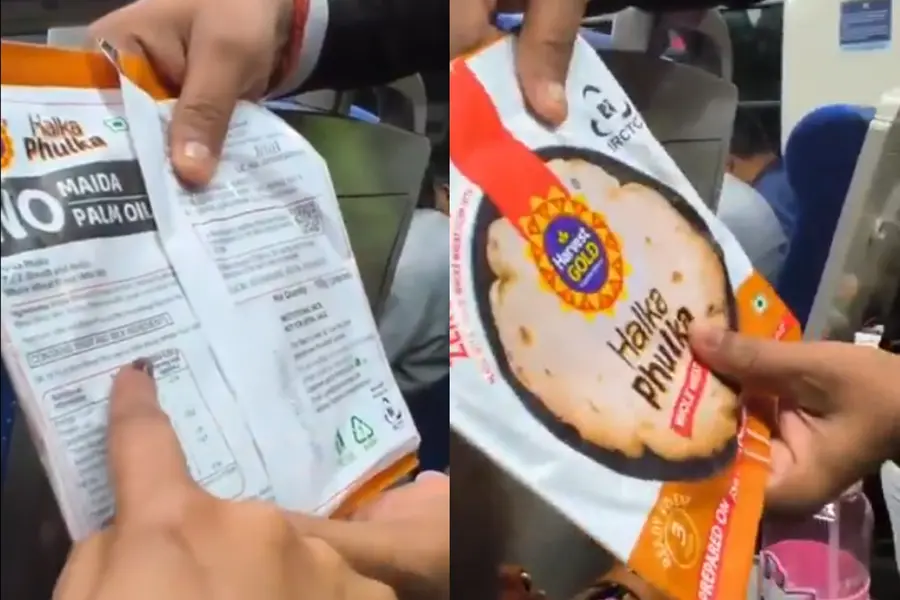
Several passengers and netizens shared experiences of being served rotis heated in plastic packaging during train journeys. The posts suggested that these rotis were microwaved without removing the plastic, sparking concerns over potential health hazards, including long-term exposure to harmful chemicals from plastic when heated. Some users labelled this a serious health risk, urging the Railway Ministry and IRCTC to take immediate corrective action.
Avani Bansal, a frequent traveller on these trains, highlighted a public health issue on X along with a viral video, describing how rotis and kachoris were heated directly in sealed packets. She noted that the packaging, labelled “Store in a cool & dry place,” made no mention of microwave heating or any “microwave safe” certification, yet passengers received visibly hot food.
Bansal explained that heating multilayer packaging without proper certification can increase chemical migration into food, posing health risks—especially when done repeatedly at scale. She emphasised that convenience should never compromise food safety.
Social media backlash
The debate quickly gained traction on X (formerly Twitter), with users offering varied reactions:
- Health concerns: Vivek CY called on Railway Minister Ashwini Vaishnaw and IRCTC officials to train staff on food safety and prevent possible hazards. Umesh Mhambrey suggested mandatory “microwave safe” icons or polypropylene (PP-5) labelling on food packets to ensure heat-resistant packaging.
- Scepticism and sarcasm: Some passengers questioned whether eating a single microwaved roti could realistically cause harm, pointing to larger environmental health risks like air and water pollution. Prabhjot remarked that eating such a roti once would not significantly affect overall health habits.
- Systemic issues: Emerging Buddha criticised the monopoly of big catering companies in railway catering. He argued that fresh food should be served at stations, but small towns lack proper kitchens, and new caterers are often blocked from operating there.
- Public outrage: Many users expressed frustration over the lack of transparency and accountability, with some calling the system lazy and inconsiderate. Others highlighted that complaints often do not reach the authorities effectively, except in cases involving high-profile figures.
Broader implications
The controversy has reignited discussions on food hygiene in Indian Railways. With millions of passengers using trains daily, maintaining safe, fresh, and properly handled food is essential. Experts suggest that improper microwave heating in plastic could release toxic chemicals, though the actual risk from occasional consumption remains debated.
Passengers and health advocates have urged IRCTC to:
- Ensure clear labelling of microwave-safe packaging.
- Train catering staff on safe heating practices.
- Introduce monitoring mechanisms to prevent monopolistic practices in small towns.
- Maintain transparency in handling public complaints related to food safety.
Official response
As of now, IRCTC has not issued a formal statement regarding the microwaved roti reports. The Railway Ministry and concerned officials are yet to clarify the measures being taken to safeguard passenger health.
The incident underscores the growing scrutiny of hygiene standards in Indian Railways, highlighting the need for better oversight, especially in catering services that reach remote regions.
Passengers continue to share their experiences online, keeping the issue in public view and pressing authorities for action.
Published: 19 Feb 2026, 10:57 am IST
Related Topics
Disclaimer: Kindly avoid objectionable, derogatory, unlawful and lewd comments, while responding to reports. Such comments are punishable under cyber laws. Please keep away from personal attacks. The opinions expressed here are the personal opinions of readers and not that of Mathrubhumi.
