
India's first Vande Bharat Freight EMU has entered month-long technical trials on the Kota-Nagda-Sawai Madhopur section, reaching 145 km/h and aiming to transform parcel, e-commerce and cold-chain logistics.
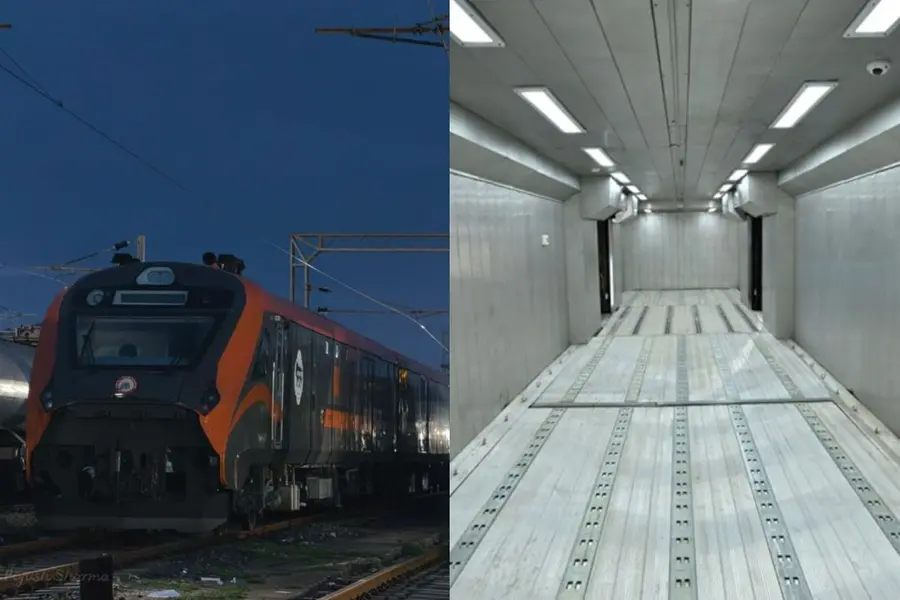
India has taken a significant step towards modernising rail-based cargo transport, with technical trials of the country's first Vande Bharat Freight EMU beginning on Wednesday in the Kota Division of Indian Railways' West Central Railway.
During the opening day of testing, the prototype freight train achieved a top speed of 145 km/h, marking the start of an extensive month-long evaluation before it can be considered for commercial operations.
Developed by the Integral Coach Factory (ICF) in Chennai, the 16-coach Freight Electric Multiple Unit (EMU) is built on the same platform that powers the Vande Bharat passenger trains. Unlike its passenger counterpart, however, this version has been designed specifically for transporting express parcels, refrigerated cargo and time-sensitive freight.
The trials are being conducted by the Research Designs and Standards Organisation (RDSO) on the Kota-Nagda-Sawai Madhopur section, a corridor frequently used by Indian Railways for high-speed testing because of its track quality and operating conditions.
On the first day, the rake departed Kota at 6 am for Mahidpur Road. It underwent non-recorded speed testing at 120 km/h before recorded runs at 120 km/h and 135 km/h. During the return journey to Kota, the train reached 145 km/h, the highest speed achieved on the opening day.
Officials said the prototype will undergo comprehensive technical evaluation for more than a month, with at least two round trips planned every day.
The test programme includes:
- Oscillation trials at speeds of 120, 130, 140 and 145 km/h
- Emergency Braking Distance (EBD) tests
- Coupler force evaluation
- Curve performance assessment
- Traction, braking and ride quality tests
- Regenerative energy performance
- Signal and telecom interference checks
- Automatic door and safety system validation
- Static testing of CCTV, lighting and onboard electrical systems
The results will help determine whether the train meets Indian Railways' operational and safety standards before entering service.
Built for faster freight movement
The Freight EMU consists of 16 coaches, including 12 parcel coaches, two refrigerated (reefer) vans, and two non-driving trailer coaches.
According to railway officials, it offers:
- Payload capacity of more than 397 tonnes
- Axle load exceeding 20 tonnes
- Refrigerated storage for temperature-sensitive goods
- Forced ventilation system
- Pneumatic retractable roller flooring
- Advanced propulsion and braking technology
The train is expected to improve the movement of high-value, time-sensitive cargo such as e-commerce shipments, pharmaceuticals, perishables and express parcels by reducing transit times compared with conventional freight services.
Safety features
The prototype is equipped with KAVACH, Indian Railways' indigenous automatic train protection system designed to reduce the risk of collisions.
Additional safety measures include automatic door locking once the train exceeds 5 km/h. The system also prevents the train from operating unless every door is securely closed.
Indian Railways has increasingly focused on modernising freight transportation alongside its expansion of passenger Vande Bharat services. A high-speed Freight EMU could help shift more parcel traffic from road to rail, offering quicker, scheduled deliveries for logistics companies and businesses that rely on time-bound transportation.
If the current testing programme is completed successfully, the Vande Bharat Freight EMU is expected to become a key part of Indian Railways' strategy to strengthen express freight, cold-chain logistics and e-commerce distribution across the country.
With PTI inputs
Published: 29 Jul 2026, 10:30 pm IST
ABOUT THE AUTHOR

Related Topics
Disclaimer: Kindly avoid objectionable, derogatory, unlawful and lewd comments, while responding to reports. Such comments are punishable under cyber laws. Please keep away from personal attacks. The opinions expressed here are the personal opinions of readers and not that of Mathrubhumi.