
In response, the Iranian Embassy in New Delhi lowered its flag. The escalating tensions have reportedly disrupted flights and raised concerns in India.
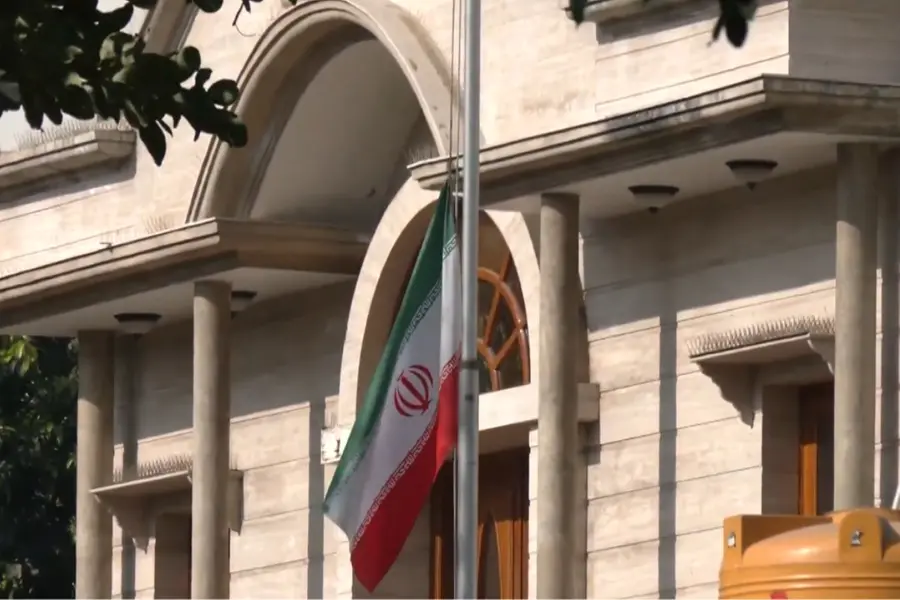
New Delhi: The Iranian Embassy in New Delhi lowered its national flag to half-mast on Sunday, a somber gesture following the confirmed death of Supreme Leader Ayatollah Ali Khamenei in a joint U.S.-Israeli military operation.
The diplomatic mission in the Indian capital joined other Iranian embassies worldwide in observing the 40-day national mourning period declared by Tehran. The 86-year-old leader, who had held absolute power since 1989, was killed on Saturday in a massive aerial bombardment that President Donald Trump described as a "noble mission" to eliminate the threat of a nuclear-armed Iran.
Global Mourning and Local Impact
The scene in New Delhi mirrors the atmosphere in Tehran, where state television has broadcast continuous footage of mourners and religious chants against a black backdrop.
- State Mourning: Iran has declared a seven-day public holiday and 40 days of mourning to honor the slain leader.
- Diplomatic Fallout: The embassy’s move comes as India’s Ministry of External Affairs monitors the situation closely. External Affairs Minister S. Jaishankar reportedly held discussions with Gulf counterparts regarding the safety of millions of Indian expatriates as the conflict spreads.
- Regional Disruption: The escalations have already impacted Indian interests, with hundreds of flights to and from New Delhi’s IGI Airport canceled due to the closure of Iranian and regional airspace.
Retaliation and Unrest
While the embassy in Delhi observes the formal protocols of grief, the situation on the ground in the Middle East remains explosive. The Islamic Revolutionary Guard Corps (IRGC) has vowed "devastating" revenge for the killing of Khamenei and several members of his family, including his daughter and grandson.
In Jammu and Kashmir, security has been tightened in parts of Srinagar and Budgam, where members of the Shia community gathered Sunday to mourn the Ayatollah. Protesters held portraits of the late leader, decrying the U.S. and Israeli strikes as a "grave crime."
Published: 01 Mar 2026, 10:36 am IST
Disclaimer: Kindly avoid objectionable, derogatory, unlawful and lewd comments, while responding to reports. Such comments are punishable under cyber laws. Please keep away from personal attacks. The opinions expressed here are the personal opinions of readers and not that of Mathrubhumi.
