
Earlier peace talks in Islamabad collapsed after U.S. involvement, though Iran maintains it remains open to a peaceful resolution if conditions are met.
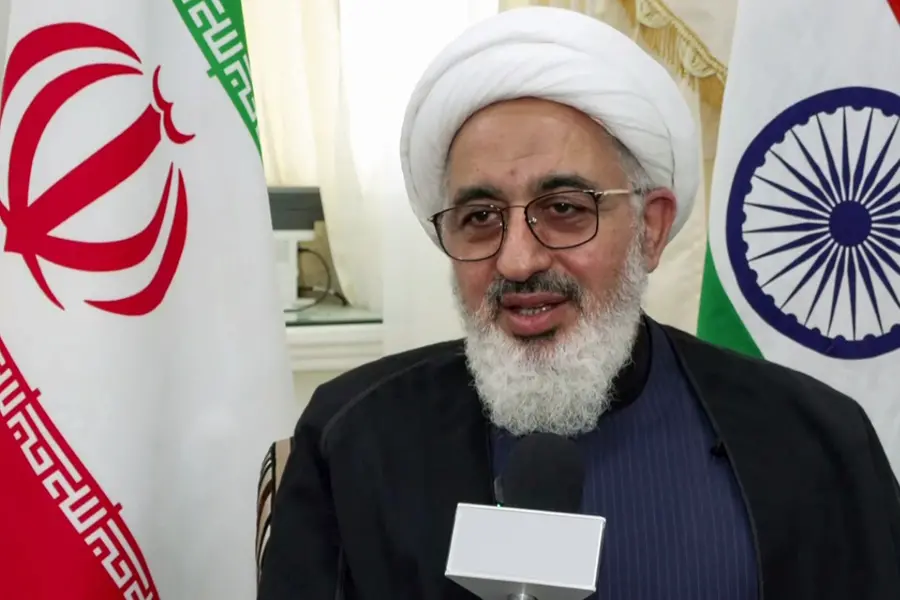
Hyderabad: Dr Abdul Majid Hakeem Ilahi, the representative of Iran’s Supreme Leader in India, reaffirmed the enduring partnership between Tehran and New Delhi on Sunday, even as regional tensions flared following a shooting incident involving two Indian-flagged vessels in the Strait of Hormuz.
While calling for an immediate de-escalation of hostilities, Ilahi emphasised that the bilateral bond remains a cornerstone of regional stability. "Our relationship with India is very strong," he told reporters. "India has benefited from the good relationship between Iran and India in getting their oil and tankers passing through the Strait of Hormuz."
The envoy highlighted recent diplomatic successes, noting that Prime Minister Narendra Modi and External Affairs Minister S. Jaishankar have maintained productive dialogues with Iranian President Masoud Pezeshkian and his foreign ministry counterparts.
"The relationship between Iran and India is rooted in 5,000 years of history," Ilahi added. "Iranians are connected to India by culture, civilisation, education, humanity, and philosophy. Our relationship is very strong and will continue to grow stronger."
ALSO READ: India summons Iranian envoy over firing at Indian tankers near Strait of Hormuz
Escalation in the Strait
Addressing the maritime disruption, Ilahi attributed the closure of the Strait of Hormuz to "imposed war" and critical security concerns. While expressing hope for a swift reopening, he acknowledged that the waterway remains a flashpoint.
"The Strait of Hormuz was open, and due to the imposed war against Iran, it was closed, because of the security issues, and we hope that very soon it will be open," he said.
However, his optimistic tone was met with a stark directive from Iran’s Revolutionary Guard Corps (IRGC). According to CNN, the IRGC announced the strait would be re-sealed effective Sunday evening, citing a failure by the United States to uphold ceasefire conditions.
"Due to the violation of the ceasefire conditions, the American enemy did not lift the naval blockade of Iranian vessels and ports," the IRGC stated. "Therefore, from this evening, the Strait of Hormuz will be closed until this blockade is lifted."
The military body issued a severe warning to international shipping, stating that any vessel approaching the strait would be viewed as collaborating with the enemy and subsequently targeted. The IRGC also dismissed recent statements from the White House regarding maritime freedom as having "no credibility."
Failed Peace Talks in Islamabad
Speaking later in Lucknow, Ilahi provided details on the collapse of peace negotiations recently held in the Pakistani capital. He revealed that while both parties had initially agreed to a 10-point framework proposed by Tehran, the discussions faltered once the American delegation arrived.
"They started demanding something else, and they refused to negotiate based on the 10-point plan," Ilahi explained. "So, the negotiation failed, and now Iran has received some other proposal from the US, and maybe they will negotiate later. But up to now, there is no achievement of that negotiation."
Despite the breakdown in talks and the renewed blockade, Ilahi maintained that Iran remains committed to a peaceful resolution if the opposing side reciprocates. "We don't want this war. We want peace," he said.
With inputs from ANI
Published: 19 Apr 2026, 06:24 am IST
Related Topics
Disclaimer: Kindly avoid objectionable, derogatory, unlawful and lewd comments, while responding to reports. Such comments are punishable under cyber laws. Please keep away from personal attacks. The opinions expressed here are the personal opinions of readers and not that of Mathrubhumi.
