
On her death anniversary, India remembers Indira Gandhi — the Iron Lady whose courage, reforms, and contradictions shaped a nation in transition.
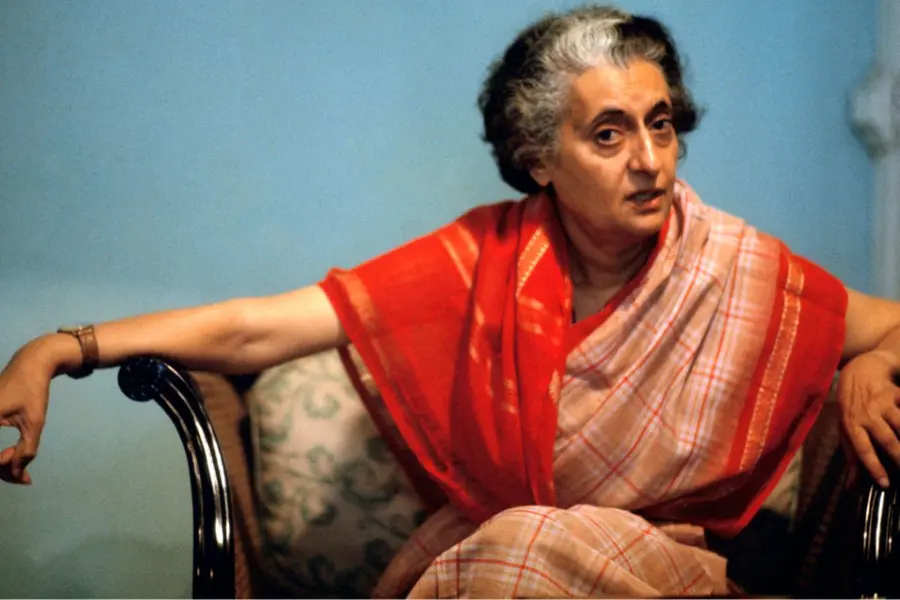
Today, on the 41st anniversary of her passing, we revisit the life and career of India’s only female Prime Minister, Indira Gandhi.
Her political journey is one of dramatic ascendancy, sweeping reform, contested power, and enduring influence — all the more remarkable given the backdrop of a newly independent nation grappling with economic, social, and security challenges.
Indira Gandhi’s rise to the top was neither straightforward nor inevitable. Born on 19 November 1917 to Jawaharlal Nehru and Kamala Nehru in Allahabad, she witnessed the struggle for India's independence. She later became deeply involved in public life, acquiring an education in India and abroad, and supporting her father’s international and domestic engagements.
In 1955, she entered the working committee of the Indian National Congress, and by 1959, she had been elected Congress President.
After the death of Prime Minister Lal Bahadur Shastri in January 1966, Indira was tapped to succeed him. On 19 January 1966, she took the office of Prime Minister.
As Prime Minister, she quickly asserted her authority, navigating internal party divisions, forging a distinct identity, and steering India through both opportunity and peril.
In 1969, she engineered a split in Congress, sidelining the old guard (“Syndicate”) and aligning with the socialist-populist wing of the party.
Her domestic agenda aimed at poverty alleviation (“Garibi Hatao”), nationalisation of banks and strategic industries, and strengthening India’s place in the world.
The bank nationalisations of July 1969 brought 14 major banks under public control to widen access to credit, rural outreach, and social equity.
She oversaw the Green Revolution’s advances, which transformed India from food-deficient to self-sufficient in grains.
On the foreign front, she led India into the 1971 war with Pakistan, resulting in the creation of Bangladesh — a profound moment in South Asia’s geopolitics.
However, alongside these successes lay growing criticism of her governance style.
In June 1975, following a High Court ruling against her election for electoral malpractice, Indira declared a national Emergency under Article 352, suspending civil liberties, censoring the press, and detaining thousands of political opponents.
The Emergency lasted until March 1977, and after calling elections and suffering a heavy defeat, she resigned from office.
Yet her political resilience ensured a return: in 1980 she became Prime Minister again, and held office until her assassination on 31 October 1984.
During her second stint, she faced great challenges — the 1984 assault at the Golden Temple in Amritsar, rising insurgency in Punjab, and deep communal tensions.
Her era ended abruptly when she was shot dead by two of her Sikh bodyguards in New Delhi.
October 31, 1984: The final day
On the morning of October 31, 1984, Prime Minister Indira Gandhi began her day as usual at her official residence at 1, Safdarjung Road in New Delhi. She was scheduled to be interviewed by British actor and filmmaker Peter Ustinov for a television documentary.
Dressed in an orange sari with a black border, she left her home a little after 9 am, walking through the garden path that connected her residence to the neighbouring 1 Akbar Road office, where the interview crew waited.
As she approached the gate, two of her Sikh bodyguards — Beant Singh and Satwant Singh — were stationed there. Beant Singh greeted her with a respectful “Good morning, Madam,” and as she acknowledged him with a smile, he pulled out his .38 revolver and fired three shots at her.
Satwant Singh immediately followed with his Sten gun, firing a burst of bullets that struck her multiple times. Indira Gandhi collapsed instantly, bleeding heavily on the walkway.
She was rushed in a white Ambassador car to the All India Institute of Medical Sciences (AIIMS), barely a few kilometres away. Doctors and surgeons made desperate attempts to revive her, but the injuries were too severe.
At 9.30 am, she was declared dead. News of her assassination spread rapidly, throwing the nation into chaos and grief. Beant Singh was shot dead by other security personnel moments after the attack, while Satwant Singh was captured alive and later tried.
The assassination came just months after Operation Blue Star, the controversial military action ordered by Indira to flush out militants from the Golden Temple in Amritsar, which had deeply angered sections of the Sikh community.
Her death triggered a tragic chain of events — including anti-Sikh riots that claimed thousands of lives — marking one of the darkest chapters in India’s post-independence history.
Reshaping India's destiny:
In her nearly sixteen years as Prime Minister, Indira Gandhi reshaped India’s political landscape: she sharpened the central authority of the Prime Minister’s
Office, elevated the role of state-led economic initiatives, and charted a foreign policy that sought strategic autonomy. She also left behind a complex legacy — inspiring millions through her vision for the poor and for science and agriculture, while also drawing censure for authoritarian turns.
Her story is a study in contradictions: a woman of immense power in a male-dominated era; a populist reformer who veered toward concentration of power; a leader who embodied the hopes of a young nation and also presided over one of its darkest democratic interludes.
In memoriam:
As we remember her today, the full weight of her achievements and missteps lies before us — a reminder that leadership in a democracy is never simple, and that legacy is seldom purely heroic or purely tragic.
On this day, we honour Indira Gandhi’s service, reflect on her impact, and think of the nation she helped shape. May her life continue to provoke, inspire, and teach, as India navigates its future
Published: 31 Oct 2025, 07:44 am IST
Related Topics
Disclaimer: Kindly avoid objectionable, derogatory, unlawful and lewd comments, while responding to reports. Such comments are punishable under cyber laws. Please keep away from personal attacks. The opinions expressed here are the personal opinions of readers and not that of Mathrubhumi.
