
Troops are also being trained in counter-drone operations, allowing the force to build a layered defence capable of both deploying and neutralising aerial threats.
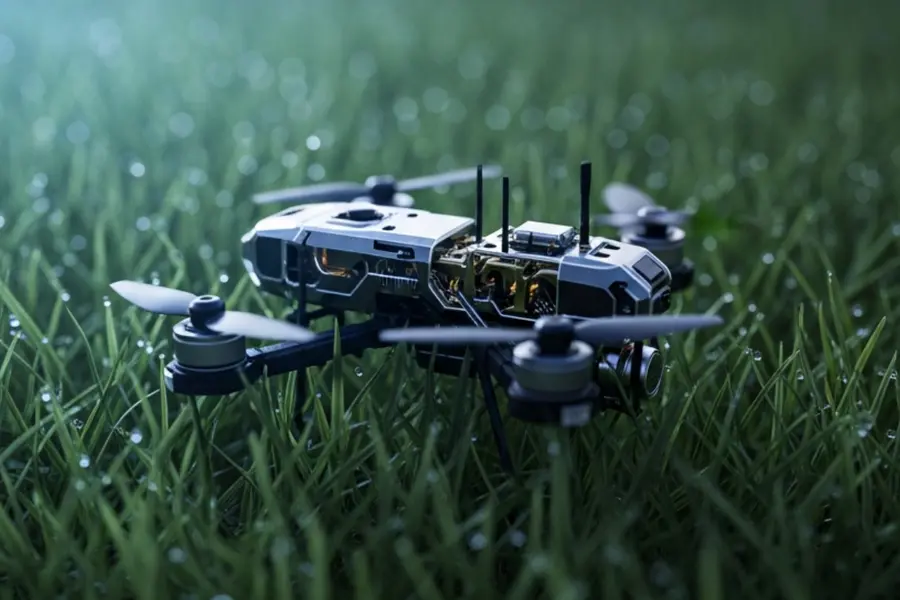
New Delhi: The Indian Army has rapidly advanced its shift towards next-generation warfare, transforming its personnel into ‘drone warriors’ within a year of Operation Sindoor and significantly enhancing its battlefield capabilities.
As the first anniversary of Operation Sindoor approaches, defence officials say drones have become among the most decisive tools in modern combat, prompting their systematic integration across Army formations.
The push gained momentum on Kargil Vijay Diwas last year, when Army Chief General Upendra Dwivedi announced the creation of specialised drone units called Ashni Platoons. These units have now been fully raised and deployed across infantry battalions, marking the completion of the first phase of the Army’s drone induction programme.
Officials said the initial phase focused on equipping all infantry soldiers with basic drone-handling skills at the unit level, a target that has now been achieved. The second phase, currently underway, involves advanced training at the formation level, where the most skilled operators are selected for intensive instruction.
This advanced training is conducted in two stages—simulator-based sessions lasting 15 to 20 hours, followed by field exercises under real-world conditions to prepare soldiers for operational challenges.
At dedicated training centres, batches of 20 to 25 personnel undergo rigorous programmes spanning two to three weeks. The Army has also extended such training to personnel from other services to enhance joint operational capability.
The training covers a wide range of applications, including surveillance drones, First Person View (FPV) systems, armed drones and logistics platforms. During Operation Sindoor, drones played a key role in reconnaissance, combat support and neutralising aerial threats, with Indian forces successfully countering hostile drones.
Alongside training, the Army is expanding its drone ecosystem by setting up specialised training nodes and accelerating the induction of advanced drone and counter-drone systems.
Each infantry battalion now has a dedicated Ashni Platoon, functioning as an in-house drone unit. Institutional capacity is also being strengthened, with training facilities established at the Indian Military Academy, the Infantry School in Mhow (Dr Ambedkar Nagar), and the Officers Training Academy.
The shift is not limited to troops, as officers are also undergoing extensive training, reflecting a broader doctrinal change.
Under its ‘Eagle in the Arm’ concept, the Army aims to make drones as essential to soldiers as their primary weapons, enabling their use across combat, surveillance, logistics and even medical evacuation roles.
Troops are also being trained in counter-drone operations, allowing the force to build a layered defence capable of both deploying and neutralising aerial threats.
Defence officials said the long-term goal is full integration of drone capabilities across the Army, with plans to ensure that 100 per cent of infantry personnel are proficient in drone operations by 2027.
Published: 05 May 2026, 09:26 pm IST
Related Topics
Disclaimer: Kindly avoid objectionable, derogatory, unlawful and lewd comments, while responding to reports. Such comments are punishable under cyber laws. Please keep away from personal attacks. The opinions expressed here are the personal opinions of readers and not that of Mathrubhumi.
