
The facility will be developed in partnership with Russia’s Almaz-Antey, the original equipment manufacturer (OEM) of the S-400, and is scheduled to be operational by 2028.
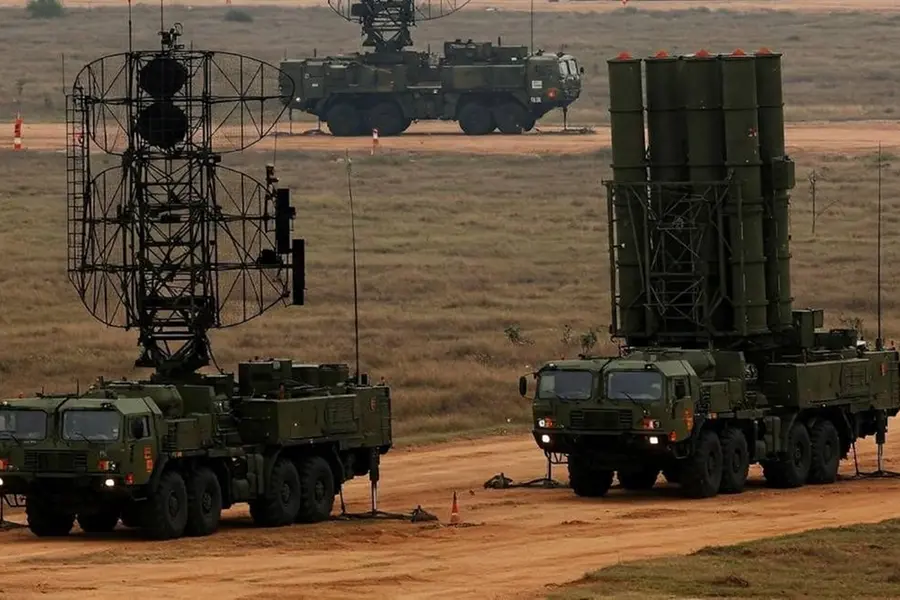
In a landmark move aligning with the vision of Atmanirbhar Bharat, the Ministry of Defence (MoD) has greenlit the establishment of India’s first indigenous Maintenance, Repair, and Overhaul (MRO) facility dedicated to the Russian-origin S-400 Triumf air defence system. This marks a significant leap in India’s long-term goal of achieving self-reliance in defence logistics and lifecycle support, especially for high-value strategic assets.
The facility will be developed in partnership with Russia’s Almaz-Antey, the original equipment manufacturer (OEM) of the S-400, and is scheduled to be operational by 2028. Senior defence officials confirmed that the selection process was rigorous, involving extensive technical capability assessments and strategic security clearances. Once functional, this MRO hub will not only reduce India’s reliance on foreign technical personnel but also ensure faster, cost-effective sustainment of one of the most advanced air defence platforms in the Indian arsenal.
India’s push to localise support for the S-400 gained urgency following the events of Operation Sindoor in May 2025. During this operation, the S-400 system demonstrated its critical role in intercepting multiple aerial threats launched from across the western border, thwarting what officials described as a high-intensity retaliatory attack by Pakistan.
On the night of May 7–8, Pakistan reportedly launched a coordinated drone and missile strike targeting over 15 Indian military and strategic installations. Deployed across sensitive sectors in Punjab and Rajasthan, the S-400 units played a decisive role in neutralising incoming threats, effectively protecting critical infrastructure. This real-time validation of the system’s effectiveness catalysed the Ministry’s decision to accelerate the MRO facility’s approval.
The upcoming MRO facility will carry out a full suite of support services like diagnostics, repairs, parts replacement, and eventually the overhaul of launcher vehicles and sophisticated radar components. Most importantly, it will eliminate logistical delays previously caused by having to fly equipment overseas for servicing, an issue magnified during the Russia-Ukraine conflict and associated Western sanctions on Russian defence entities.
“Operational readiness hinges on our ability to keep high-value systems battle-ready. In the current geopolitical landscape, waiting on foreign suppliers is a vulnerability India can no longer afford,” noted a senior MoD official. Over time, the facility is also expected to localise select spare parts production under Russian technical supervision, a key milestone in indigenising India’s long-range air defence ecosystem.
India signed a $5.43 billion agreement with Russia in 2018 for five S-400 squadrons, each comprising missile launchers, tracking radars, and command systems capable of targeting threats up to 400 km away. As of July 2025, three squadrons have been inducted and deployed across high-threat zones, including Jammu & Kashmir, Punjab, and Rajasthan. The remaining two squadrons are scheduled for delivery in 2026 and 2027, delayed from the original 2024 deadline due to Russia’s military obligations and global supply chain disruptions.
This deployment has strategically enhanced India’s missile shield, complementing existing indigenous systems like Akash and the jointly developed Indo-Israeli Barak-8, forming a comprehensive multi-layered air defence grid.
Buoyed by the system’s recent success, India is actively evaluating the procurement of two to three additional S-400 squadrons. Defence Secretary Rajesh Kumar Singh recently stated, “Once the remaining units are delivered and operationalised, we may consider further acquisitions based on threat assessments and operational requirements.”
The S-400, designated Sudarshan Chakra in Indian service, stands as a cornerstone of India’s air defence strategy. With its ability to track 300 aerial targets and engage 36 simultaneously, its layered radar and missile architecture provides formidable protection against a wide spectrum of threats, from drones and stealth aircraft to ballistic missiles.
Establishing an in-country MRO facility for such a system is more than a logistical upgrade; it is a strategic enabler. In the age of hybrid warfare and evolving regional threats, India’s capability to independently sustain its most advanced missile systems is essential to ensuring uninterrupted deterrence.
Bottom of Form
Published: 11 Jul 2025, 05:13 pm IST
Related Topics
Disclaimer: Kindly avoid objectionable, derogatory, unlawful and lewd comments, while responding to reports. Such comments are punishable under cyber laws. Please keep away from personal attacks. The opinions expressed here are the personal opinions of readers and not that of Mathrubhumi.
