
India has dropped further in the 2026 World Press Freedom Index, ranking below Pakistan amid a broader global decline in media freedom.
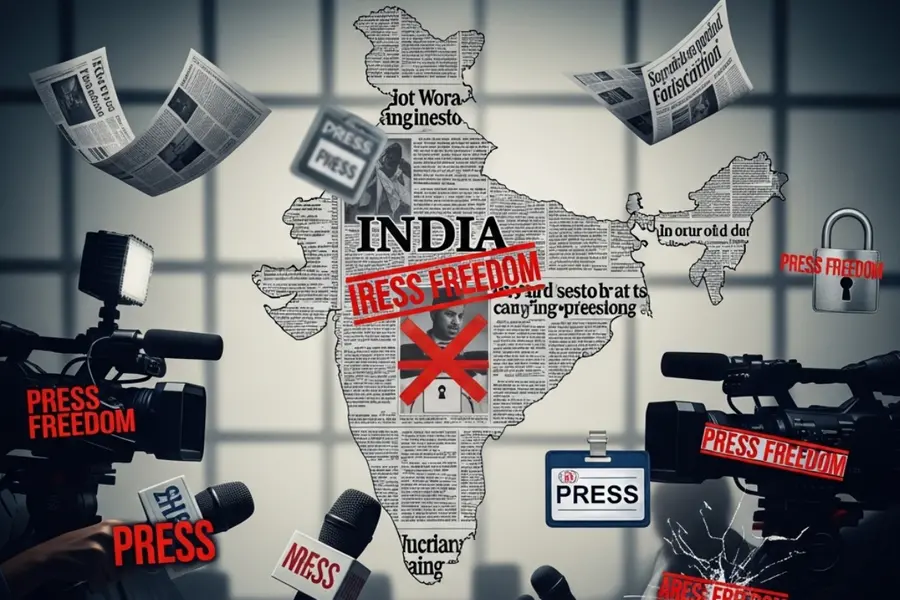
India has slipped further in the 2026 World Press Freedom Index released by Reporters Without Borders (RSF), ranking 157th out of 180 countries and placing below Pakistan, which stands at 153rd.
The latest report highlights a broader global decline in media freedom, with more than half of the countries now classified under “difficult” or “very serious” conditions for journalism.
Also Read

India’s ranking: What does the latest report show?
India has been placed 157th out of 180 countries in the 2026 World Press Freedom Index released by Reporters Without Borders (RSF). This marks a drop of six positions compared to the previous year, continuing a downward trend in its global ranking.
Pakistan, in comparison, is ranked 153rd, placing it slightly ahead of India. However, both countries remain in the “difficult” category for press freedom, according to the report.
Which countries rank higher in the region?
India’s position is lower than several of its South Asian neighbours. Bangladesh is ranked 152nd, Bhutan 150th, Sri Lanka 134th, and Nepal stands significantly higher at 87th.
At the global level, Norway continues to top the index, followed by the Netherlands, Estonia, Denmark and Sweden, all of which are noted for strong protections for journalists and relatively independent media environments.
Why is press freedom declining globally?
RSF reports that press freedom has worsened in 100 out of 180 countries. A key concern is the increasing criminalisation of journalism, along with weakening legal protections for media professionals.
The report also highlights that more than half of countries now fall into “difficult” or “very serious” categories, indicating a global decline in safe working conditions for journalists.
What factors are affecting India’s ranking?
In India’s case, RSF points to several concerns. These include the growing use of national security laws, legal pressure on journalists, and rising challenges in accessing official information.
The report also notes concerns about media ownership concentration and economic dependence on advertising, which can influence editorial independence.
It further states that journalists continue to face safety risks, including violence and fatalities linked to their work.
Globally, the decline in press freedom is not limited to India or South Asia. Countries across regions, including the Americas and parts of Europe, have also recorded drops in rankings.
The report suggests that political pressure, legal restrictions, and economic constraints are collectively reshaping the media landscape worldwide.
What does World Press Freedom Day highlight?
World Press Freedom Day is observed on 3 May each year to underline the importance of independent journalism. It also draws attention to the risks faced by journalists, including censorship, imprisonment, and physical threats.
It serves as a reminder of the role of free media in democracy and accountability, especially at a time when global press freedom indicators are declining.
Published: 03 May 2026, 08:02 am IST
Disclaimer: Kindly avoid objectionable, derogatory, unlawful and lewd comments, while responding to reports. Such comments are punishable under cyber laws. Please keep away from personal attacks. The opinions expressed here are the personal opinions of readers and not that of Mathrubhumi.