
Chief Justice of India Surya Kant slammed sections of the media for falsely reporting that he refused to list a plea on police action against student protesters, clarifying that no writ petition had been filed before the Supreme Court.
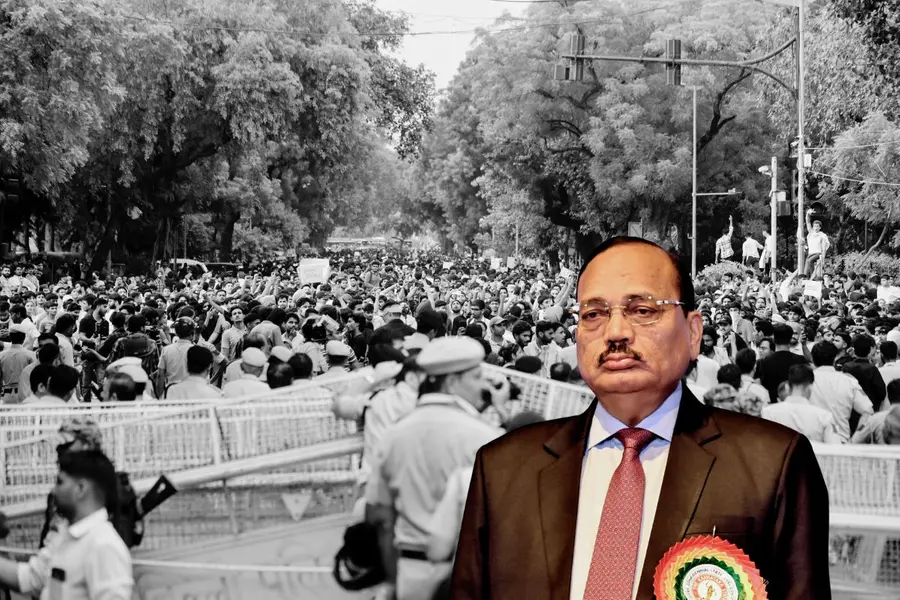
New Delhi : Chief Justice of India Surya Kant on Friday came down heavily on sections of the media for reporting that he had refused to list a petition challenging police action against student protesters, describing the reports as "completely false" and "reckless."
The CJI clarified that no such petition had ever been filed before the Supreme Court. According to him, a lawyer had only made a "letter representation" — not a formal writ petition — regarding the matter.
"In the last two days, a completely false statement was made that a matter was filed, and the media is absolutely free from all responsibility, falsely reporting that the Chief Justice refused to list the matter," the CJI said.
"Till morning 10 AM, not a single page has been filed. It was one representation... sent by that Mishra or someone. How can I treat the representation as a writ petition? And people start recklessly reporting this."
The Chief Justice's clarification followed widespread reports suggesting that the Supreme Court had refused to entertain a petition alleging police excesses against students protesting over the alleged NEET-UG 2026 paper leak. According to CJI Surya Kant, those reports were based on an incorrect premise because no writ petition had ever been filed before the court.
The controversy originated during proceedings on July 22, when a lawyer mentioned the issue before the Bench and sought urgent judicial intervention over the alleged use of force against protesters at Jantar Mantar. The counsel also raised concerns over the conduct of the NEET examination and sought directions for reforms in the National Testing Agency (NTA), citing repeated allegations of paper leaks.
ALSO READ: Supreme Court asks if NEET can go fully computer-based; Centre assures major exam reforms
During the mentioning, the Bench remarked, "Please don't waste our time and don't waste yours. Your time is more valuable than ours." The exchange was subsequently reported by sections of the media as the Supreme Court refusing to list a petition. On Friday, however, CJI Kant clarified that the court's observations were made during the oral mentioning of a letter representation and not in relation to any formally instituted writ petition.
According to the Chief Justice, advocate Narendra Mishra had only submitted a representation requesting the Supreme Court to take suo motu cognisance of the issue under Article 32 of the Constitution. Since no petition had been filed before the Registry, there was no question of the court refusing to list or hear the matter.
The representation had urged the apex court to examine allegations of excessive force against student protesters, investigate claims that unidentified persons in civilian clothes assaulted demonstrators in the presence of police personnel, and direct the preservation of electronic evidence, including CCTV footage, drone recordings, body-camera videos, wireless logs and social media clips relating to the protest.
Published: 24 Jul 2026, 12:48 pm IST
Related Topics
Disclaimer: Kindly avoid objectionable, derogatory, unlawful and lewd comments, while responding to reports. Such comments are punishable under cyber laws. Please keep away from personal attacks. The opinions expressed here are the personal opinions of readers and not that of Mathrubhumi.
