
India’s first DNA-based elephant survey shows an 18% population drop, with 22,446 wild elephants estimated.
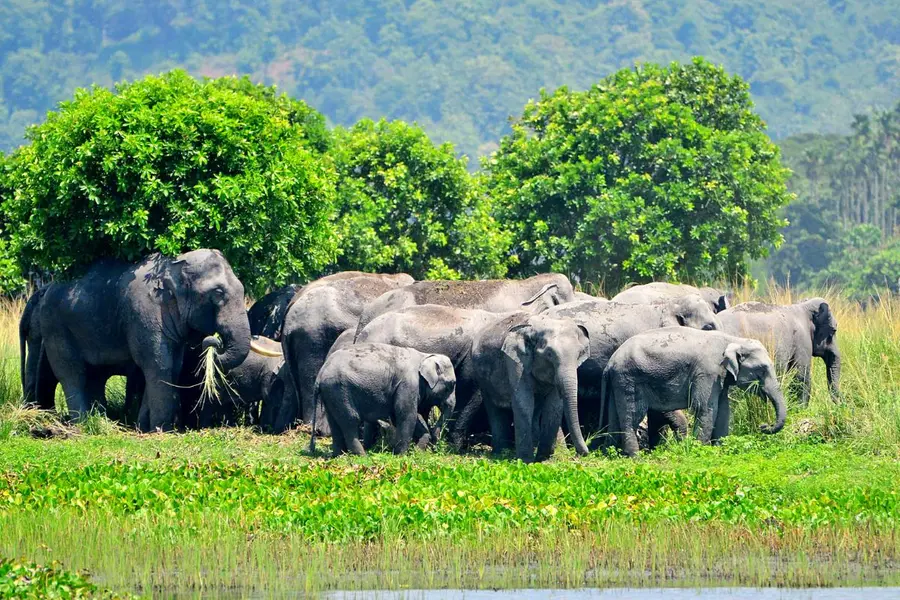
New Delhi: India's first DNA-based elephant census reveals a major decline in wild elephant numbers, estimating the population at 22,446, marking an 18% decrease from 27,312 recorded in 2017.
Conducted as part of the All-India Synchronous Elephant Estimation (SAIEE) 2025, the survey puts the elephant population between 18,255 and 26,645, with 22,446 as the average figure.
The Environment Ministry released the long-awaited report on Tuesday, nearly four years after the survey began in 2021. Officials cited the complexity of genetic analysis and verification as reasons for the delay.
The ambitious study relied on DNA fingerprinting, a method akin to human identification, using dung samples to estimate individual elephants. Field teams collected 21,056 dung samples from elephant habitats across India, covering 6.7 lakh km of forest trails and 3.1 lakh dung plots.
According to the data, the Western Ghats remain the species’ stronghold with 11,934 elephants, followed by the North Eastern Hills and Brahmaputra floodplains with 6,559.
Other regional estimates:
- Shivalik Hills and Gangetic Plains: 2,062 elephants
- Central India and Eastern Ghats: 1,891 elephants
Among individual states, Karnataka has the highest elephant population (6,013), followed by Assam (4,159), Tamil Nadu (3,136), Kerala (2,785) and Uttarakhand (1,792).
Other key numbers:
- Odisha: 912
- Chhattisgarh and Jharkhand combined: Over 650
- Arunachal Pradesh: 617
- Meghalaya: 677
- Nagaland: 252
- Tripura: 153
- Madhya Pradesh: 97
- Maharashtra: 63
The 2025 estimation, carried out jointly by the Environment Ministry, Project Elephant and the Wildlife Institute of India, introduces a new scientific benchmark for elephant monitoring and conservation.
The three-phase method included:
- Foot surveys using the M-Stripes app to record elephant signs.
- Satellite-based habitat mapping to evaluate environmental quality and human encroachment.
- Genetic analysis of dung to identify 4,065 individual elephants, later used to model the total population using the mark-recapture method.
India continues to harbour over 60% of the world’s remaining Asian elephants, but habitat degradation, infrastructure expansion and rising human-elephant conflict pose escalating threats to their survival.
PTI
Published: 14 Oct 2025, 07:01 pm IST
Related Topics
Disclaimer: Kindly avoid objectionable, derogatory, unlawful and lewd comments, while responding to reports. Such comments are punishable under cyber laws. Please keep away from personal attacks. The opinions expressed here are the personal opinions of readers and not that of Mathrubhumi.
