
India denies US President Trump`s assertion of mediating to avert a nuclear war with Pakistan, stating the conflict was conventional and trade wasn`t discussed.
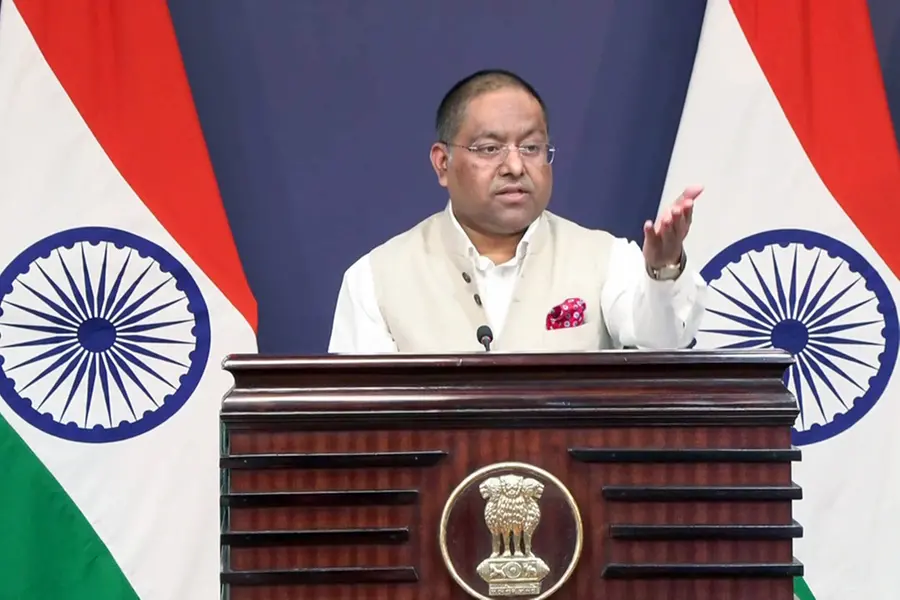
New Delhi: The Ministry of External Affairs (MEA) has firmly refuted United States President Donald Trump’s recent assertions about brokering peace and preventing a nuclear war between India and Pakistan. Responding to Trump’s claim that U.S. intervention helped avert a catastrophic conflict, the MEA clarified that India’s military actions were entirely conventional and bilateral in nature, and no discussion on trade had occurred during the critical exchanges.
Trump, speaking at the White House on Monday, suggested that his administration played a decisive role in de-escalating tensions following the recent border clashes between the two nuclear-armed neighbours. “We stopped a nuclear conflict. I think it could have been a bad nuclear war, millions of people could have been killed. So I'm very proud of that,” he told reporters, also adding that he had leveraged trade as a tool to bring both nations to the table.
“I said, ‘Come on, we’re going to do a lot of trade with you guys. Let’s stop it, let’s stop it. If you stop it, we’re doing trade. If you don’t stop it, we’re not going to do any trade.’ People have never really used trade the way I used it,” Trump added.
However, Indian officials have categorically denied these claims. “The issue of trade did not come up in any of these discussions,” said a senior Indian official, countering Trump’s version of events. The MEA confirmed that while leaders from India and the U.S. were in contact between May 7—when India launched Operation Sindoor targeting terror infrastructure in Pakistan and Pakistan-occupied Kashmir—and the cessation of hostilities on May 10, there was no mention of trade during any of those conversations.
MEA spokesperson Randhir Jaiswal further clarified India’s position during a press briefing on Tuesday, asserting, “Our military action was entirely in conventional domain.” He also addressed Trump’s suggestions of a potential nuclear standoff, noting that Pakistan’s own officials had denied any such escalation. “The military action was entirely in the conventional domain. There were some reports that Pakistan’s National Command Authority will meet on 10 May. But this was later denied by them. Pakistan FM has himself denied the nuclear angle on record," Jaiswal stated.
India has consistently maintained that all matters with Pakistan must be resolved bilaterally, without third-party involvement. This position was reiterated after U.S. Senator Marco Rubio hinted at international mediation, a suggestion New Delhi quickly dismissed. “There is no decision to hold talks on any other issue at any other place,” a senior official emphasised.
Trump had earlier attempted to revive his offer to mediate on the Kashmir dispute, even sharing a post to that effect on his Truth Social handle on May 11. But India, staying true to its longstanding policy, rejected such overtures.
Without directly naming the U.S., Prime Minister Narendra Modi had also underlined in his national address that no external influence guided India’s decision to halt hostilities with Pakistan. Jaiswal echoed this sentiment while warning against the dangers of indulging or encouraging “nuclear blackmail.”
“In conversations with various countries, we also cautioned that their subscribing to such scenarios could hurt them in their own region,” the MEA spokesperson said.
According to government sources U.S. Vice President JD Vance had a conversation with Prime Minister Modi on May 9, and trade was not among the topics discussed.
(With inputs from agencies)
Published: 13 May 2025, 07:06 pm IST
Related Topics
Disclaimer: Kindly avoid objectionable, derogatory, unlawful and lewd comments, while responding to reports. Such comments are punishable under cyber laws. Please keep away from personal attacks. The opinions expressed here are the personal opinions of readers and not that of Mathrubhumi.
