
Crucially, the policy is designed to bring Indian MSMEs and other technology partners directly into the military supply chain.
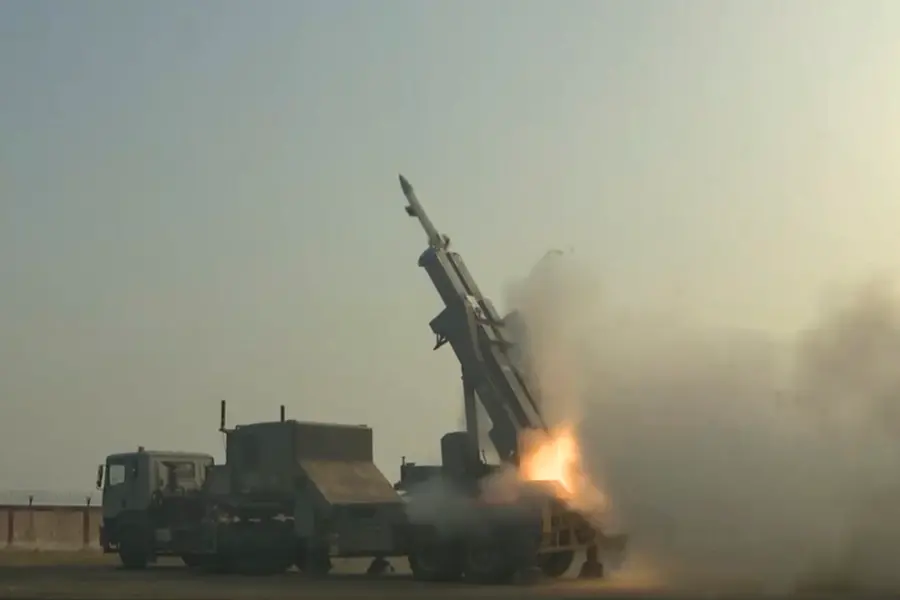
In a major move announced on Tuesday, August 25, India's Defence Minister Rajnath Singh approved a massive technology transfer. DRDO-developed designs for all conventional missile systems will now go directly to Indian industries. This means domestic private and public firms can now build advanced missiles right here in India.
The policy has a clear goal: build self-reliance. By letting local businesses build these complex systems, the government wants to strengthen the country's own defence production capabilities. It is not a free-for-all, though. Companies must still clear strict qualifications, certifications, and regulatory checks before turning on their factories.
Also Read

Opening the vault to local factories
This technology transfer—commonly called ToT—marks a major turning point. The Defence Ministry officially called it an "important milestone". Crucially, the policy is designed to bring Indian MSMEs and other technology partners directly into the military supply chain.
According to the Ministry of Defence, "The provision will enable successful transition of missile system development to industrial production, reflecting the continued efforts of DRDO to leverage the capabilities of the Indian industry for the development and manufacture of advanced defence systems."
The logic is straightforward. Instead of keeping research locked in state-run labs, the government wants to tap into the raw power of Indian factories. This initiative aims to increase domestic value, support the growth of the local manufacturing sector, and ensure India reduces its reliance on foreign imports.
Broadening the local defence basket
This missile decision does not stand alone. Just last week, the Department of Defence Production notified its sixth positive indigenisation list. It features 405 strategically important items. These parts must now be made inside India, creating an estimated business potential of Rs 3,070 crore for local firms.
What is on the list? It includes everything from warship missile systems—like Konkurs-M, Invar, and MRSAM—to radars, sonars, and high-explosive anti-tank ammunition.
To make sure local factories get work, defence public sector undertakings have already placed procurement orders worth approximately Rs 10,000 crore with domestic vendors up to March 2026. The strategy is already showing results. Over the last five years, India has successfully indigenised more than 15,700 defence items. That has saved an estimated Rs 9,000 crore in import costs.
What the military ledger shows
This national push for self-reliance, or 'Aatmanirbharta', is already showing up in the ledger books. Prime Minister Narendra Modi spoke about this massive expansion during his August 15 address, noting, "In the last 12 years, defence production has increased by four times."
The numbers tell a compelling story:
- Defence production rose by 15.6 per cent in the 2024-25 financial year.
- It has surged by 110 per cent compared to the Rs 84,643 crore recorded in the 2020-21 financial year.
- Private businesses are now major contributors, making up 24 per cent of total defence production in the 2025-26 financial year, while public entities make up the remaining 76 per cent.
Exports are also booming. In the 2025-26 financial year, India exported a record Rs 38,424 crore of defence goods to more than 80 countries. By 2029, the government is targeting a massive Rs 50,000 crore in exports.
Meanwhile, DRDO is already working on advanced hypersonic glide and cruise missile technologies. As the country steps into the future, the state-run research body noted that it "remains committed to working closely with Indian industry to facilitate the transfer and absorption of advanced defence technologies and to further strengthen the country's indigenous defence capabilities."
Published: 25 Aug 2026, 07:41 pm IST
Related Topics
Disclaimer: Kindly avoid objectionable, derogatory, unlawful and lewd comments, while responding to reports. Such comments are punishable under cyber laws. Please keep away from personal attacks. The opinions expressed here are the personal opinions of readers and not that of Mathrubhumi.