
Indonesia is set to import India’s indigenous Astra beyond‑visual‑range air‑to‑air missiles after their combat‑proven performance in Operation Sindoor, marking a major step in India–Indonesia defence ties and underlining New Delhi’s rise as a regional missile supplier in the Indo‑Pacific
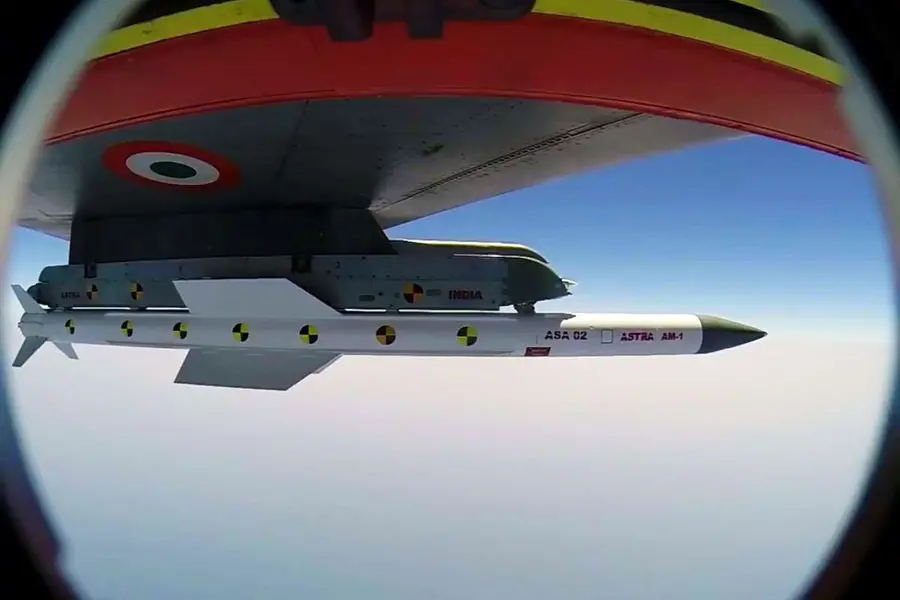
India's Astra air-to-air missile is set to gain a new foreign customer, with Indonesia moving to import the indigenous weapon after its demonstrated success in recent combat operations, signalling a significant deepening of defence ties between New Delhi and Jakarta and a growing global profile for India’s home-grown missile industry.
According to defence industry reports and official briefings, India has in recent months formally presented the Astra Mk‑1 beyond‑visual-range air-to-air missile to multiple Southeast Asian partners, including Indonesia and Vietnam, as part of a broader push to market indigenous systems abroad.
Indonesian defence planners, already in the process of acquiring India’s BrahMos supersonic cruise missile system, are now looking to add Astra to their inventory, attracted by its performance and compatibility with Su‑30‑class fighter aircraft in service with both air forces.
The move comes on the heels of India's recent Operation Sindoor, in which Indian air defence and air combat systems were credited with successfully neutralising hostile aerial threats from Pakistan through layered interception and electronic warfare, reinforcing confidence in domestically-developed missiles and sensors.
While public accounts of the operation focus largely on India's air defence network, defence commentary in India has highlighted the overall success of indigenous systems, bolstering the export pitch for weapons like Astra in friendly countries seeking reliable alternatives to Russian-standard equipment.
What is Astra and why it matters
Astra (“Weapon” in Sanskrit) is an all-weather, beyond‑visual‑range air-to-air missile developed by India’s Defence Research and Development Organisation (DRDO) for use on frontline fighter aircraft.
Designed to engage and destroy highly manoeuvring targets such as enemy fighters at ranges beyond the pilot’s visual line of sight, it gives the Indian Air Force and Navy a modern BVR capability previously reliant on imported missiles like the Russian R‑77.
The missile uses active radar guidance in its terminal phase, has mid‑course inertial guidance with datalink updates, and is engineered to withstand high‑g manoeuvres, making it suitable for modern air combat.
India has placed a major domestic order -- valued at around US$424 million -- for 400 Astra Mk‑1 rounds and associated equipment to equip Su‑30MKI, LCA Tejas and MiG‑29K aircraft, underscoring its central role in India’s future air combat doctrine.
For countries like Indonesia, which operate similar fighter platforms, Astra offers a plug‑compatible missile with a proven operational track record and the advantage of supplier reliability compared to Russia amid sanctions and supply-chain disruptions.
Strategic impact on India–Indonesia defence ties
Indonesia’s interest in Astra sits alongside its landmark deal to purchase BrahMos supersonic cruise missiles from India, making Jakarta one of New Delhi’s most important defence partners in Southeast Asia.
Analysts at Indian strategic institutes note that missile deals deepen interoperability between the two forces, improve Indonesia’s deterrence posture across the archipelago, and extend India’s defence industrial footprint into the wider Indo‑Pacific.
For India, the combination of BrahMos and Astra exports marks a shift from being primarily a weapons importer to becoming a competitive supplier of high‑end missile systems, especially for countries that field Soviet/Russian‑standard platforms but now seek diversified sources.
Successful exports also reinforce India’s “Aatmanirbhar Bharat” (self‑reliant India) narrative in defence manufacturing and can feed back into domestic R&D budgets and capability upgrades.
How Astra boosts Indonesia’s air combat prowess
If Jakarta goes ahead with Astra induction, the Indonesian Air Force would gain a BVR missile optimised for modern dogfighting and long‑range engagements, potentially replacing older Russian missiles and improving overall combat effectiveness.
Coupled with BrahMos in the maritime domain, this would contribute to a more credible layered deterrence -- anti‑ship at sea and air‑to‑air in the skies --across Indonesia’s vast island territories and contested maritime zones.
Operationally, an Astra‑equipped fleet could benefit from closer cooperation with Indian planners on doctrine, training and maintenance, as both sides would operate similar weapons on comparable platforms.
In the longer term, such partnerships can pave the way for joint exercises, technology sharing in areas like electronic warfare, and greater coordination in maintaining security in key sea lanes across the Indo‑Pacific.
Wider implications for regional security
India’s emergence as a missile supplier to Southeast Asian states is seen by regional analysts as part of a broader rebalancing, where smaller and middle powers seek diversified defence ties beyond traditional suppliers.
As questions grow about Russian reliability and delivery timelines due to the Ukraine war and sanctions, countries operating Russian‑origin platforms are looking at Indian systems that are compatible with their existing hardware but backed by more predictable supply chains.
For New Delhi, exporting missiles like Astra and BrahMos also carries diplomatic weight: each deal embeds India more deeply into the security architecture of Southeast Asia, complements its Act East policy, and signals to other partners that India can offer high‑end kit, not just training or low‑tech equipment.
Published: 07 Jul 2026, 11:05 am IST
Related Topics
Disclaimer: Kindly avoid objectionable, derogatory, unlawful and lewd comments, while responding to reports. Such comments are punishable under cyber laws. Please keep away from personal attacks. The opinions expressed here are the personal opinions of readers and not that of Mathrubhumi.
