
From Astra and BrahMos missiles to EVM technology, Sabang Port and critical minerals, here's what Indonesia is seeking from India as Prime Minister Narendra Modi visits Jakarta to deepen strategic ties.
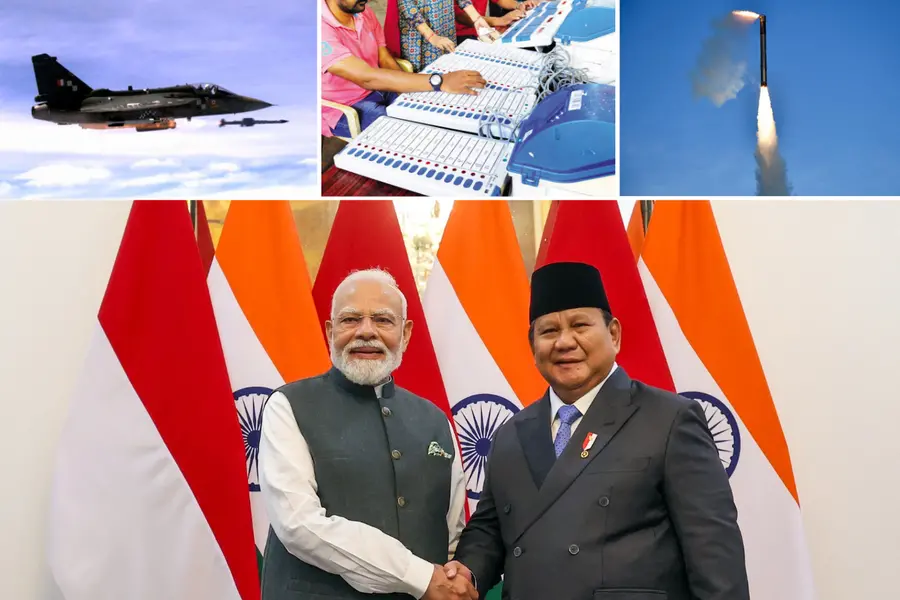
As Prime Minister Narendra Modi visits Indonesia, defence cooperation may grab headlines, but missiles are only part of a much broader story. From indigenous weapon systems and election technology to strategic ports and critical minerals, Indonesia is looking to deepen ties with India across several sectors that are becoming increasingly important in the Indo-Pacific region.
The discussions between Prime Minister Modi and Indonesian President Prabowo Subianto are expected to focus on strengthening the Comprehensive Strategic Partnership, with defence, maritime security, digital governance, trade and resource security emerging as key areas of cooperation.
Astra Missile:
Among the biggest developments expected during the visit is Indonesia's move to procure India's indigenous Astra air-to-air missile system following the demonstrated effectiveness of India's missile capabilities during Operation Sindoor.
Developed by the Defence Research and Development Organisation (DRDO), Astra is India's Beyond-Visual-Range Air-to-Air Missile (BVRAAM), designed to engage enemy aircraft at long distances. The missile has become a symbol of India's growing defence manufacturing capabilities and is increasingly drawing international attention.
Indonesia's reported interest comes as Indian-made defence systems gain visibility globally, highlighting New Delhi's push to emerge as a major defence exporter.
More BrahMos missiles on the table
Indonesia is also expected to expand its inventory of BrahMos supersonic cruise missiles, one of India's most successful defence exports.
Known as the world's fastest operational supersonic cruise missile, BrahMos can be launched from land, sea and air platforms and strike targets at high speeds. Additional missile batteries could form part of the discussions, further strengthening defence cooperation between the two countries.
The move would add Indonesia to the growing list of nations looking at Indian-made strategic defence systems.
Indonesia eyes India's election technology- EVM
Defence is not the only area attracting Indonesian interest.
India is expected to support the development of Indonesia-specific Electronic Voting Machines (EVMs), reflecting confidence in India's experience of conducting elections on a massive scale.
If the proposal moves forward, it would mark a major example of India's governance and technology expertise being adapted for use abroad.
Sabang Port and maritime strategy
The two countries are also expected to advance plans related to Sabang Port, a strategically located deep-water port near the Strait of Malacca.
Situated off the northern tip of Sumatra, the port is located around 100 miles from India's Great Nicobar port project. Its location makes it an important component of India-Indonesia maritime cooperation.
Greater collaboration at Sabang could strengthen connectivity, trade and security coordination in the Indo-Pacific.
Critical minerals and industrial investments
Another major area of discussion is likely to be critical minerals and industrial cooperation.
Indonesia is one of the world's leading producers of nickel and other strategic minerals essential for electric vehicles, batteries and advanced manufacturing. India is expected to explore investments in sectors such as steel, nickel processing and rare earth permanent magnet manufacturing.
Such cooperation could help both countries strengthen supply chains at a time when critical minerals have become increasingly important to economic and national security strategies worldwide.
The Modi-Prabowo talks are expected to review progress under the Comprehensive Strategic Partnership established in 2018 and identify new opportunities for collaboration.
While defence cooperation through Astra and BrahMos may attract the most attention, the broader picture points to an expanding relationship that now spans technology, infrastructure, maritime security, digital governance and resource security.
With IANS inputs
Published: 07 Jul 2026, 11:32 am IST
Related Topics
Disclaimer: Kindly avoid objectionable, derogatory, unlawful and lewd comments, while responding to reports. Such comments are punishable under cyber laws. Please keep away from personal attacks. The opinions expressed here are the personal opinions of readers and not that of Mathrubhumi.
