
Hindustan Aeronautics Limited (HAL) will collaborate with private and global partners to share production responsibilities and accelerate output.
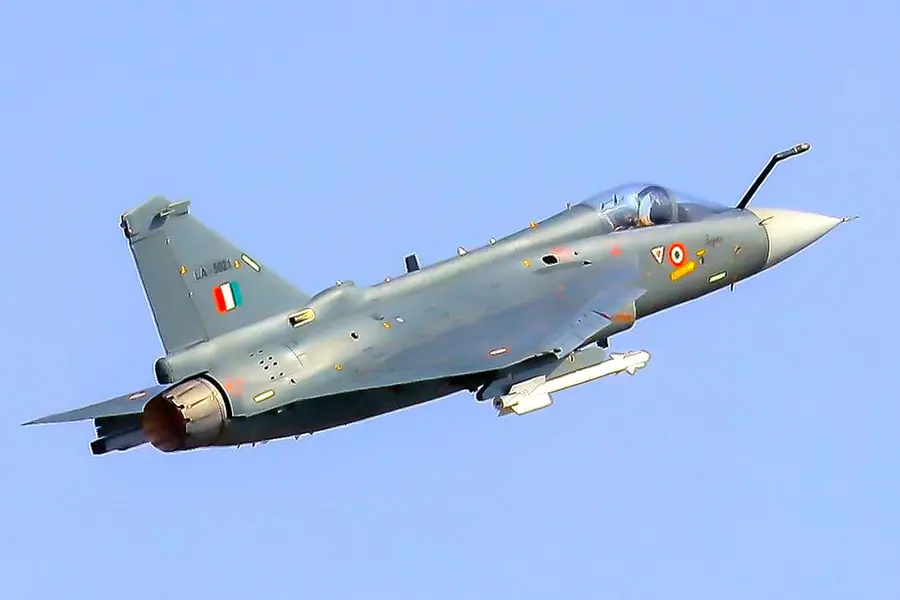
New Delhi: India is preparing to take a giant leap toward aerospace self-reliance with plans to invest nearly ₹65,400 crore ($7.44 billion) in developing and producing indigenous fighter jet engines by 2035.
According to a Times of Oman report, the ambitious programme seeks to make India self-sufficient in one of the most critical areas of defence — aircraft propulsion. The move marks a decisive step toward reducing reliance on imports and developing advanced engines to power the next generation of Indian fighter jets.
From the advanced Tejas Mk2 to the stealthy AMCA (Advanced Medium Combat Aircraft), and from upgraded fighters to unmanned combat aircraft, India plans to produce around 1,100 engines over the next decade.
S. V. Ramana Murthy, Director of the Gas Turbine Research Establishment (GTRE), is spearheading the mission to design homegrown engines capable of competing on the global stage.
“The focus is on creating a strong ecosystem that includes government research, private industry, and global partnerships,” said Murthy.
The Indian Air Force (IAF) is aligning its long-term plans with this transformation. It aims to expand its strength to 42 squadrons by 2035, adding around 450 new fighter jets, many of which are expected to fly with indigenous engines.
This initiative is seen as a major boost to India’s defence preparedness and a milestone in its pursuit of technological independence.
One of the key projects within this roadmap is the Tejas Mk2, building on the success of the existing Tejas aircraft. Discussions are ongoing with US-based General Electric (GE) for its F414 engine, along with a technology transfer agreement, to help India build world-class engines domestically.
India’s Kaveri engine programme, which has faced repeated delays in the past, is being revived with renewed focus. Its upgraded versions could soon power unmanned combat aircraft.
International collaborations are expected to play a significant role in this mission. Global engine manufacturers such as France’s Safran, Britain’s Rolls-Royce, and the US’s GE are in talks to co-develop a fifth-generation engine for the AMCA project, which is slated to roll out its first prototype by 2028.
For the first time, India is also inviting private companies to participate in fighter jet development, opening new opportunities for innovation and industrial growth within the aerospace sector.
Hindustan Aeronautics Limited (HAL) will collaborate with private and global partners to share production responsibilities and accelerate output.
Aligned with Prime Minister Narendra Modi’s “Atmanirbhar Bharat” (Self-Reliant India) initiative, the government is encouraging global defence manufacturers to establish production bases within the country.
The move signifies a strategic shift — from India being a buyer of defence technology to becoming a builder and partner in advanced aerospace manufacturing.
Experts say this large-scale engine development programme will not only enhance India’s defence capabilities but also stimulate the economy by creating jobs, fostering exports, and positioning India as a key global player in aerospace technology. IANS
Published: 03 Nov 2025, 10:44 pm IST
Related Topics
Disclaimer: Kindly avoid objectionable, derogatory, unlawful and lewd comments, while responding to reports. Such comments are punishable under cyber laws. Please keep away from personal attacks. The opinions expressed here are the personal opinions of readers and not that of Mathrubhumi.
