
India maintains a 60-day ATF reserve, ensuring supply security despite geopolitical tensions.
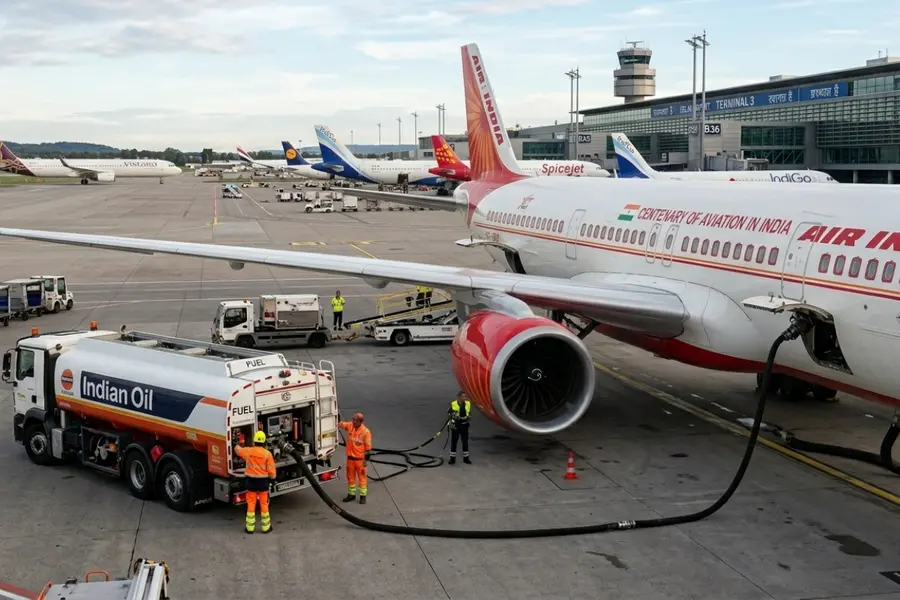
New Delhi: India’s aviation sector has received a critical buffer as the government opted for a calibrated increase in Aviation Turbine Fuel (ATF) prices, aiming to balance airline viability with passenger affordability during a period of heightened global energy uncertainty.
Civil Aviation Minister Ram Mohan Naidu Kinjarapu confirmed that public sector oil marketing companies have implemented only a partial and staggered increase in jet fuel prices for domestic operations. Instead of a steep surge, domestic ATF prices will rise by about 25%, approximately ₹15 per litre, even as airlines operating international routes will continue to bear the full market-linked increase.
The decision comes against the backdrop of significant global disruptions, particularly tensions in West Asia and the closure of the Strait of Hormuz, a critical artery for global oil supplies. These developments had triggered expectations of a sharp spike in fuel prices, with projections indicating a potential increase of over 100% from April 1.
The Ministry of Petroleum and Natural Gas clarified that ATF prices in India have been deregulated since 2001 and are revised monthly based on international benchmarks. However, given the “extraordinary situation in global energy markets,” the government opted for a moderated approach to limit the direct pass-through of rising global prices into domestic airfares.
From a strategic standpoint, this intervention reflects a targeted effort to stabilise a sector where fuel accounts for nearly 40% of airline operating costs. A full pass-through of global price increases could have led to a sharp rise in ticket prices, weakening demand, and potentially forcing airlines to rationalise capacity in an already constrained market.
The calibrated pricing mechanism also highlights a dual-track policy approach, shielding the domestic aviation market, which is critical for connectivity and economic activity, while allowing international operations to absorb market realities. This ensures that fiscal discipline is maintained without placing disproportionate pressure on domestic travellers.
The move comes at a time when Indian carriers are already facing elevated operating costs. Airspace restrictions over parts of West Asia have forced airlines to operate longer international routes, leading to higher fuel burn and increased operational complexity. In this context, even partial relief on domestic fuel pricing provides airlines with some degree of financial breathing room.
Reinforcing confidence in supply stability, the minister informed Parliament that India currently has sufficient ATF reserves for at least 60 days without any disruption. Under the existing supply structure, nearly half of the country’s ATF production is consumed domestically, while the remainder is exported. This assurance is significant in the current geopolitical climate, where concerns over fuel availability could otherwise add to industry uncertainty.
Beyond pricing and supply, the government has also emphasised its continued focus on safety oversight. The minister noted that the frequency of airline audits has been increased, with multiple inspections being conducted to ensure compliance. This comes amid a broader push to strengthen regulatory vigilance following a series of safety and operational challenges faced by the aviation sector over the past year.
The intervention has also been positioned as a coordinated effort across ministries, with the Civil Aviation Ministry working closely with the Petroleum Ministry. The minister acknowledged the leadership of Prime Minister Narendra Modi and Petroleum Minister Hardeep Singh Puri in enabling a timely and balanced response.
Looking ahead, the effectiveness of this approach will depend on the trajectory of global energy markets. While the partial hike provides immediate relief, prolonged volatility could continue to test both airline economics and policy flexibility. Nonetheless, the current decision signals a clear intent to support the aviation sector through external shocks while preventing a direct and immediate burden on passengers.
At a time when the industry is navigating cost pressures, operational disruptions, and capacity constraints, this measured intervention could play a crucial role in maintaining equilibrium across India’s aviation ecosystem.
Published: 01 Apr 2026, 07:48 pm IST
ABOUT THE AUTHOR

Related Topics
Disclaimer: Kindly avoid objectionable, derogatory, unlawful and lewd comments, while responding to reports. Such comments are punishable under cyber laws. Please keep away from personal attacks. The opinions expressed here are the personal opinions of readers and not that of Mathrubhumi.