
The move comes shortly after new BIS standards for E22, E25, E27 and E30 fuels were introduced, signalling India's preparations for higher ethanol adoption
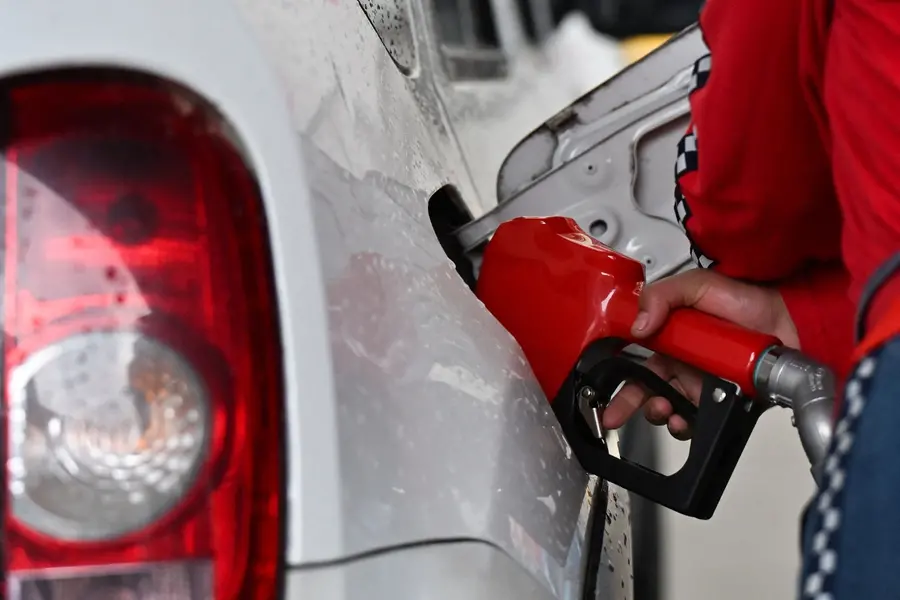
New Delhi: The Centre has expanded excise-duty exemptions for petrol blended with higher levels of ethanol, signalling a new phase in India's biofuel strategy as the country moves beyond its long-standing E20 target.
Under a recent government notification, petrol containing between 22 percent and 30 percent ethanol will be exempt from excise duty. The move covers fuel variants including E22, E25, E27 and E30, making it the first significant tax incentive introduced for ethanol blends above the current E20 benchmark.
The decision forms part of the government's broader effort to cut reliance on imported crude oil while encouraging the use of cleaner fuels produced within the country.
A signal beyond E20
While the excise-duty exemption may appear to be a technical policy change, it points to a larger shift in India's fuel roadmap.
For several years, the ethanol blending programme was centred on achieving 20 percent ethanol content in petrol. With that objective now close to being achieved, the latest policy move indicates that authorities are already laying the foundation for higher blending levels in the years ahead.
The tax relief follows another key development. Earlier this year, the Bureau of Indian Standards (BIS) introduced formal fuel-quality specifications for E22, E25, E27 and E30 petrol blends under IS 19850:2026.
The standards came into force on May 15, 2026, and set out detailed requirements covering ethanol concentration, octane ratings, sulphur limits, testing protocols and safety parameters.
Taken together, the BIS standards and the new excise-duty exemption provide both the regulatory and financial support needed for wider adoption of higher ethanol blends in the future.
How India's ethanol programme has progressed
India's ethanol blending initiative has advanced more quickly than originally expected.
The National Policy on Biofuels was first introduced in 2018 and later amended in 2022. One of the key changes was the decision to bring forward the target of achieving 20 percent ethanol blending in petrol from 2030 to the Ethanol Supply Year (ESY) 2025-26.
The programme has recorded steady progress since then.
Public sector oil marketing companies reached the milestone of 10 per cent ethanol blending in June 2022, achieving the target five months ahead of schedule.
Blending levels continued to rise in subsequent years:
- 12.06 percent in ESY 2022-23
- 14.60 percent in ESY 2023-24
- 17.98 percent in ESY 2024-25, up to February 28, 2025
The increase has reduced dependence on conventional fossil fuels while creating greater demand for domestically produced ethanol.
Why the government is backing ethanol
India continues to rely heavily on imported crude oil, making fuel imports one of the country's largest expenses. Policymakers view ethanol blending as an important way to reduce that dependence.
Speaking recently about India's alternative-fuel strategy, Union Road Transport and Highways Minister Nitin Gadkari underlined both the economic and environmental benefits of the programme.
The government's argument is straightforward. Every additional litre of ethanol blended into petrol can help reduce crude oil imports while simultaneously supporting domestic agriculture and ethanol production.
Questions around higher ethanol blends
Despite the rapid rollout of ethanol-blended petrol, the programme has faced criticism and questions from some vehicle owners.
As E20 fuel became more widely available, concerns were raised about vehicle compatibility, fuel efficiency and long-term engine performance.
The issue eventually reached the Supreme Court. In September 2025, the court dismissed a petition challenging the nationwide implementation of E20 petrol.
During the proceedings, the Centre maintained that the transition had been carefully studied and would also provide economic benefits to sugarcane farmers.
The government also opposed demands for the continued supply of unblended petrol alongside E20 fuel, arguing that the shift had been introduced after extensive evaluation.
Industry representatives later attempted to address public concerns. The Society of Indian Automobile Manufacturers said that while certain older vehicles could experience a slight drop in fuel economy when using E20, the fuel does not create any safety concerns.
Gadkari has likewise defended ethanol-based fuels on multiple occasions. He recently pointed to the growing availability of flex-fuel motorcycles capable of operating on both petrol and ethanol.
The minister also rejected claims that ethanol is an inferior fuel, stating that its performance characteristics are comparable to those of conventional fuels.
The pricing challenge
One of the most common questions surrounding ethanol-blended petrol relates to its cost.
Many consumers assume that fuel containing ethanol should be cheaper than conventional petrol. However, government figures suggest that this is not always the case.
Last year, the Petroleum Ministry noted that the weighted average procurement cost of ethanol had exceeded the cost of refined petrol.
As of July 31, 2025, the average procurement price of ethanol for ESY 2024-25 stood at Rs 71.32 per litre, including transportation charges and GST.
That has complicated calls for lower retail fuel prices even as ethanol blending levels continue to increase.
E85 fuel marks another step forward
The announcement on excise-duty exemptions comes only days after the launch of E85 fuel, one of the highest ethanol-content fuels currently available in India.
Petroleum and Natural Gas Minister Hardeep Singh Puri unveiled the fuel on World Environment Day, June 5, in New Delhi.
E85 contains 85 percent ethanol and is intended for use in flex-fuel vehicles specifically designed to operate on high-ethanol blends.
The initial rollout covers 48 fuel stations operated by public sector oil marketing companies across the country.
The fuel is also being offered at a lower price. According to Puri, state-run oil companies will sell E85 at approximately Rs 20 per litre less than E20 petrol.
At present, E85 can only be used in vehicles equipped with flex-fuel engines.
With agency inputs
Published: 11 Jun 2026, 10:17 am IST
Related Topics
Disclaimer: Kindly avoid objectionable, derogatory, unlawful and lewd comments, while responding to reports. Such comments are punishable under cyber laws. Please keep away from personal attacks. The opinions expressed here are the personal opinions of readers and not that of Mathrubhumi.
