
India has voiced concern over rising civilian casualties in Lebanon as the Israel–Hezbollah conflict intensifies
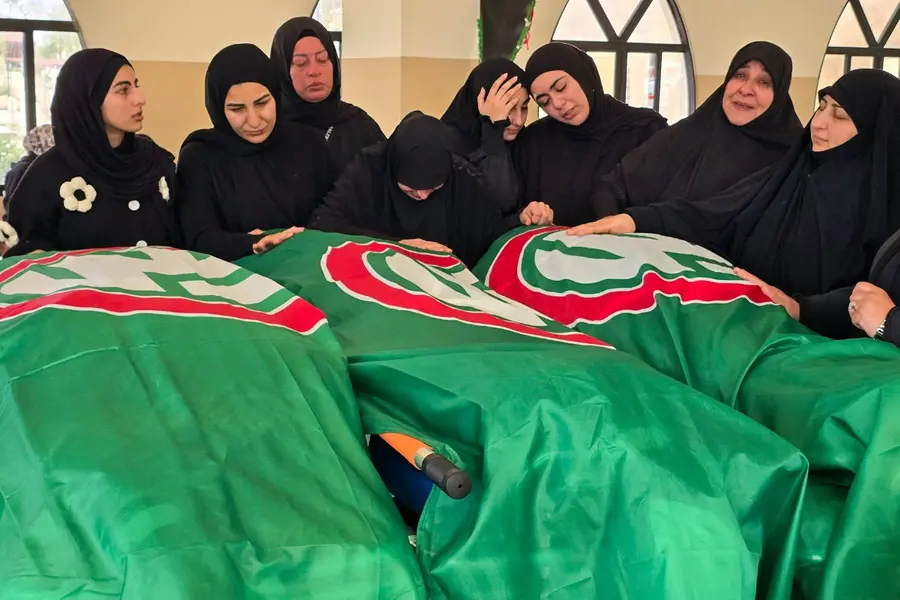
Port Louis: India on Friday voiced deep concern over the “large number of civilian casualties” in Lebanon following sustained Israeli military strikes over the past month. New Delhi stressed the importance of protecting civilians and urged all parties to respect international law and the sovereignty of states.
Israeli troops reportedly entered southern Lebanon after destroying key infrastructure, including bridges, following rocket attacks launched by Hezbollah against Israel on March 2.
The military campaign has resulted in significant casualties, with reports indicating 1,800 deaths and 5,873 injuries in Lebanon. A particularly intense wave of strikes on Wednesday alone is said to have killed 303 people, raising fears that the fragile ceasefire framework between Iran and the United States could collapse.
Israeli forces also reportedly struck more than 100 targets across Lebanon within a span of 10 minutes on Wednesday. This escalation came despite ceasefire arrangements linked to Iran-US understandings, with officials stating the agreement included Lebanon as part of the broader regional framework.
The latest wave of violence, which killed 303 people and injured 1,150 others, has been described as the deadliest since the end of Lebanon’s civil war in 1990. Iranian President Masoud Pezeshkian has said the strikes violated the US-Iran truce and risk undermining ongoing negotiations. More than 1.1 million people have reportedly been displaced due to the continuing military action.
India urges respect for international law
Addressing a media briefing, Ministry of External Affairs spokesperson Randhir Jaiswal said India was deeply concerned by reports of widespread civilian casualties in Lebanon.
“We are deeply concerned by reports of a large number of civilian casualties that have been reported in Lebanon,” he said.
He added that India, as a troop contributing nation to the United Nations Interim Force in Lebanon (UNIFIL), which remains engaged in supporting peace and stability in the region, views the situation as extremely worrying.
Although Israel was not directly named in the remarks, the statement was widely seen as a rare expression of concern regarding its military actions in the region.
Jaiswal highlighted that adherence to international law and respect for the sovereignty and territorial integrity of nations is essential. He also reiterated that India has consistently prioritised the protection of civilians as a key principle in conflict situations.
Indian community in Lebanon under watch
The Indian embassy in Beirut is maintaining close contact with the Indian community in Lebanon, which consists of around 1,000 nationals, to ensure their safety and well-being.
India monitoring West Asia developments closely
Jaiswal also stated that India is closely tracking developments in West Asia and is actively engaging with countries in the region.
As part of these diplomatic efforts, Petroleum Minister Hardeep Puri visited Qatar on April 9 and 10, while External Affairs Minister S Jaishankar travel to the United Arab Emirates from April 11 to 12 to strengthen bilateral ties and safeguard India’s energy interests.
During the Qatar visit, Puri conveyed India’s message of solidarity and cooperation to Qatar’s leadership, including Amir Sheikh Tamim bin Hamad Al Thani and Prime Minister Mohammed bin Abdulrahman bin Jassim Al Thani. Qatar’s energy minister reaffirmed the country’s commitment to remain a reliable energy supplier and deepen energy cooperation with India.
Energy security and regional support initiatives
Qatar continues to be India’s largest supplier of liquefied natural gas (LNG) and liquefied petroleum gas (LPG), providing 11.19 million metric tonnes worth $6.39 billion in LNG and 4.89 million metric tonnes worth $3.21 billion in LPG in 2024–25.
While strengthening its own energy security, India is also extending support to neighbouring countries. Officials noted that India has supplied 38,000 metric tonnes of fuel to Sri Lanka and is finalising a government-to-government arrangement for oil and gas supplies to Mauritius.
Repatriation of Indian nationals from Iran
Additional Secretary (Gulf) in the Ministry of External Affairs, Aseem Mahajan, informed reporters that 2,180 Indian nationals have been brought back safely from Iran so far.
This includes 981 students and 657 fishermen, who were evacuated via Armenia and Azerbaijan as part of ongoing repatriation efforts.
With agency inputs
Published: 10 Apr 2026, 10:04 pm IST
Related Topics
Disclaimer: Kindly avoid objectionable, derogatory, unlawful and lewd comments, while responding to reports. Such comments are punishable under cyber laws. Please keep away from personal attacks. The opinions expressed here are the personal opinions of readers and not that of Mathrubhumi.
