
Union MoS for Home Affairs Nityanand Rai informed the Rajya Sabha that Census 2027 will be conducted in two phases, house listing and housing census, followed by population enumeration, marking India’s first fully digital census exercise.
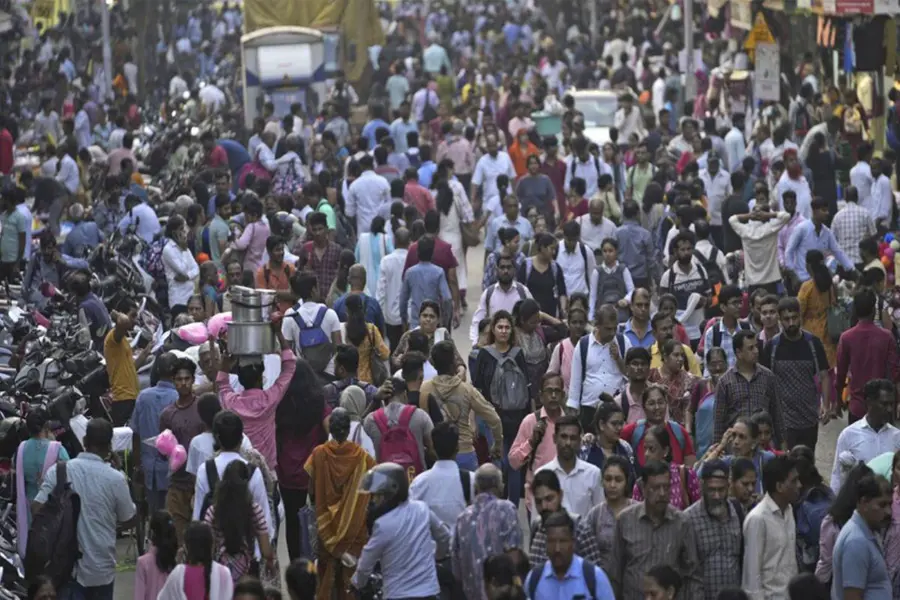
New Delhi: The Union government has announced that Census 2027, India’s next nationwide population count, will be conducted in two phases, beginning in April 2026 and concluding in February 2027.
The details were shared by Union Minister of State for Home Affairs Nityanand Rai in a written reply in the Rajya Sabha.
The upcoming exercise will be the 16th Census of India and is expected to be the largest population survey in the world, involving around 30 lakh enumerators and supervisors to collect data across the country.
Two phases of Census 2027
The census will be carried out in two stages: Houselisting and Housing Census followed by Population Enumeration.
Phase 1: Houselisting and Housing Census
The first phase will take place between April and September 2026, during which enumerators will visit households to collect information related to housing conditions and household amenities.
This stage will capture details such as:
- Type and condition of houses
- Household assets and amenities
- Drinking water and electricity access
- Cooking fuel and sanitation facilities
- Name and sex of the head of household
For the first time, the sex of the head of household will be recorded in three categories — male, female, and transgender. Enumerators will conduct door-to-door visits to ensure all households are covered, and no resident is excluded from the census.
Phase 2: Population Enumeration
The second phase, known as Population Enumeration, is scheduled for February 2027. During this stage, enumerators will collect individual-level information for each resident.
This phase will gather details such as:
- Age and gender
- Marital status
- Education level
- Occupation and economic activity
- Religion and social group
- Language and migration history
The official reference date for the population count will be March 1, 2027, except in certain snow-bound regions such as Ladakh and parts of Jammu and Kashmir, Himachal Pradesh and Uttarakhand, where enumeration may take place earlier due to climatic conditions.
Self-enumeration option introduced
A major feature of the upcoming census is the introduction of self-enumeration, allowing citizens to fill out their census details online through a dedicated portal.
People who choose this option will receive a reference ID, which enumerators will later verify during field visits before final submission.
The portal will include FAQs, tool tips, and validation checks to help respondents complete the process accurately.
Fully digital census exercise
Census 2027 will also mark India’s first fully digital census. Enumerators will use mobile applications and digital tools for data collection, monitoring and verification.
To support this effort, the government has launched several digital platforms, including:
- Self-enumeration portal
- Houselisting operations mobile application
- Houselisting block creator application
- Census management and monitoring system portal
These tools were developed by the Centre for Development of Advanced Computing (C-DAC). Officials said that validation rules and supervisor monitoring have been built into the mobile applications to ensure data accuracy.
Data security and training measures
The government has also emphasised strong data security measures for the digital census. Data collected via mobile devices will be protected during collection, transmission and storage at server level.
Enumerators and supervisors will undergo extensive training before the exercise begins to ensure smooth implementation and accuracy in data collection.
First census after a long delay
India’s last census was conducted in 2011, and the next round was originally scheduled for 2021. However, the exercise was postponed due to the COVID-19 pandemic, leading to the current schedule for Census 2027.
With millions of personnel deployed and digital technology integrated into the process, the upcoming census is expected to play a crucial role in policy planning, welfare programmes and demographic analysis for the next decade.
Published: 11 Mar 2026, 05:11 pm IST
Related Topics
Disclaimer: Kindly avoid objectionable, derogatory, unlawful and lewd comments, while responding to reports. Such comments are punishable under cyber laws. Please keep away from personal attacks. The opinions expressed here are the personal opinions of readers and not that of Mathrubhumi.
