
The AMCA is part of a massive ₹2 lakh crore defence manufacturing project, which aims to produce over 125 advanced stealth fighter jets
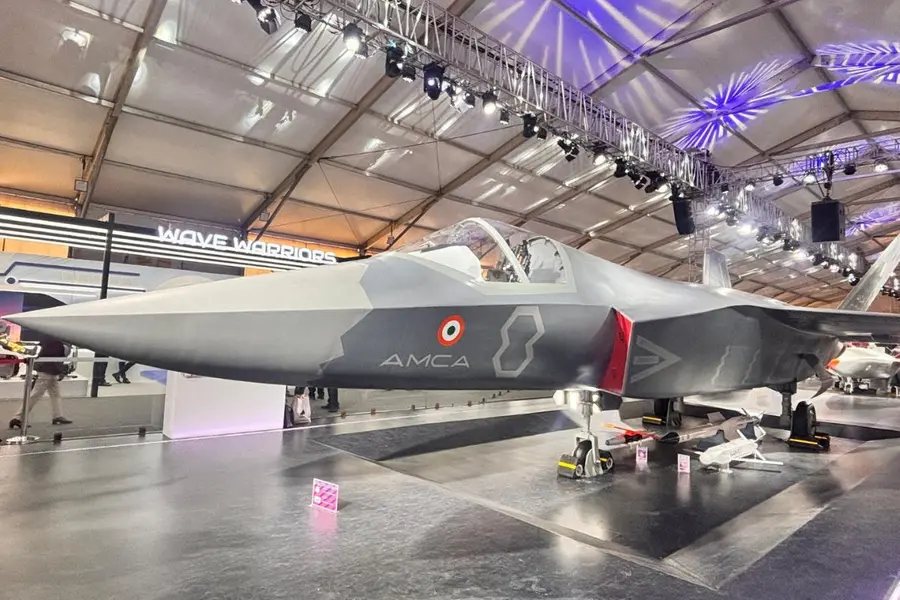
India is edging closer to joining an elite group of nations with its own fifth-generation fighter aircraft, as the Advanced Medium Combat Aircraft (AMCA) programme gains momentum. Seven Indian companies are currently in the race to partner with the Defence Research and Development Organisation (DRDO) to design and build the first prototypes.
The AMCA is part of a massive ₹2 lakh crore defence manufacturing project, which aims to produce over 125 advanced stealth fighter jets. If all goes according to plan, the AMCA could be inducted into the Indian Air Force before 2035.
As of now, only three countries operate fifth-generation fighter jets:
- The United States (F-22 Raptor, F-35 Lightning II)
- China (J-20 Mighty Dragon)
- Russia (Su-57 Felon)
If successful, India would become the fourth.
What is the AMCA?
The Advanced Medium Combat Aircraft (AMCA) is set to become India’s first indigenous fifth-generation stealth fighter jet. It is being designed as a twin-engine, single-seat, multirole aircraft with advanced stealth capabilities.
Key features include:
Stealth design: Internal weapons bays and radar-absorbing coatings for reduced visibility
Operational ceiling: Up to 55,000 feet
Weapon capacity:
1,500 kg in internal bays
5,500 kg on external hardpoints
Fuel capacity: An additional 6,500 kg, allowing for extended missions
Variants:
Initial variant powered by GE F414 (US-made) engine
Future variant to use a more powerful, indigenously developed engine
The AMCA is envisioned as a supermanoeuvrable, multirole stealth fighter, capable of operating in various combat roles ranging from air superiority to deep strike missions.
What is a Fifth-Generation Fighter Jet?
Fifth-generation fighter aircraft represent the cutting edge of modern aerial combat. Developed in the 21st century, they feature:
Stealth technology: To avoid radar detection
Advanced situational awareness: Real-time battlefield data for pilots
Superior avionics and sensors
Networked warfare capabilities: Integration with other platforms through enhanced Command, Control, and Communications (C3) systems
Multirole functionality: Able to switch between air-to-air and air-to-ground missions
Which Indian companies are competing?
Seven major Indian firms have submitted bids to partner with DRDO for the AMCA prototype development. They include:
- Larsen & Toubro (L&T)
- Hindustan Aeronautics Limited (HAL)
- Tata Advanced Systems Ltd
- Adani Defence and Aerospace
The proposals will be evaluated by a committee led by Dr A. Sivathanu Pillai, former chief of BrahMos Aerospace, according to ANI.
Once this evaluation is complete, a report will be submitted to the Defence Ministry, which will select two companies to co-develop the aircraft. These companies will receive ₹15,000 crore to build five prototype AMCA jets in the next phase.
Published: 01 Oct 2025, 07:07 pm IST
Related Topics
Disclaimer: Kindly avoid objectionable, derogatory, unlawful and lewd comments, while responding to reports. Such comments are punishable under cyber laws. Please keep away from personal attacks. The opinions expressed here are the personal opinions of readers and not that of Mathrubhumi.
