
From training future fighter pilots to expanding civil helicopter operations, the HTT-40, Dhruv NG and LCA Trainer showcase India’s growing ability to design and build aircraft at home.
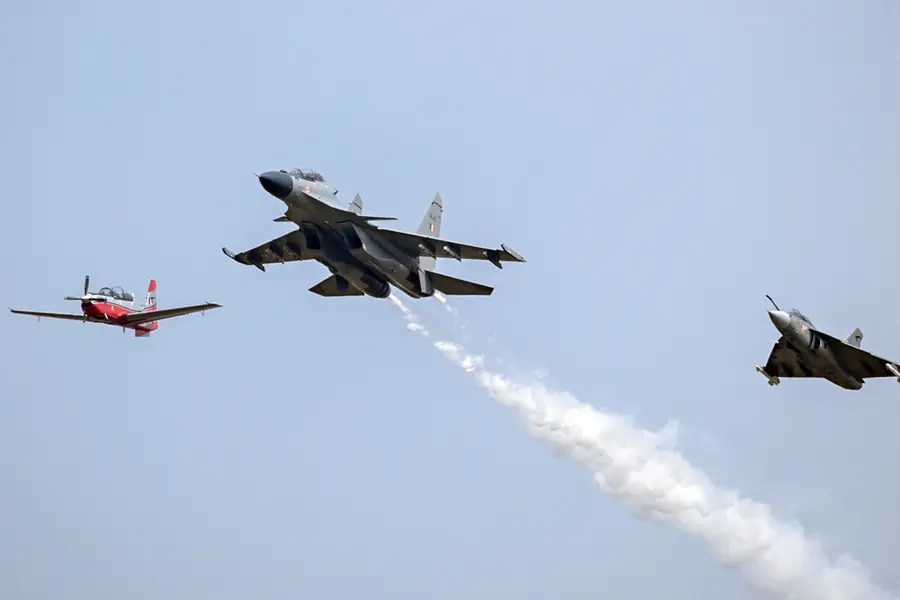
India’s push to build a stronger indigenous aerospace industry is set to get a major boost with Hindustan Aeronautics Limited (HAL) handing over three Indian-made aircraft to the Indian Air Force (IAF) and Pawan Hans.
The three platforms, the HTT-40 basic trainer aircraft, Dhruv NG civil helicopter and LCA FOC trainer, represent three different areas of aviation. Together, they highlight the growing ability of Indian companies and research agencies to design, develop and manufacture aircraft for both military and civil requirements.
The aircraft are being handed over in the presence of Defence Minister Rajnath Singh, Civil Aviation Minister K Rammohan Naidu and Chief of the Air Staff Air Chief Marshal AP Singh.
More importantly, the handover represents another step in India's effort to reduce dependence on foreign aircraft and strengthen the country's Make in India and Aatmanirbhar Bharat ambitions in aerospace.
HTT-40: An Indian aircraft to train India’s future pilots
The HTT-40 is designed for the first stage of military pilot training. HAL is handing over the first batch of three aircraft, with two manufactured at its Bengaluru facility and one at Nashik. The delivery is part of a Rs 6,838-crore contract signed in March 2023 for 70 HTT-40 aircraft.
The aircraft has been developed to meet the basic training requirements of the Indian Armed Forces. It is expected to eventually replace the Pilatus PC-7 MkII, which has been used for Stage-I training.
The HTT-40 is a turboprop aircraft designed specifically for training. It features a glass cockpit, which replaces many traditional analogue instruments with modern digital displays. This gives trainee pilots experience with cockpit technology that is closer to what they will encounter on more advanced aircraft.
The aircraft is also equipped with zero-zero ejection seats, designed to provide an emergency escape capability even when the aircraft is at very low altitude or speed. With a maximum speed of around 450 kmph, the HTT-40 is fully aerobatic and can be used for a wide range of basic pilot-training exercises.
From engine delays to higher production
The HTT-40 programme has faced delays, particularly because of the availability of its Honeywell TPE331-12B engines.
The situation has since improved. Honeywell delivered the first batch of engines in June 2026 under a contract worth more than US$100 million for 88 engines. Sixteen engines are being supplied directly, while the remaining engines are being supported through technology transfer. HAL has also increased its manufacturing capability for the HTT-40. Its production capacity now stands at 20 aircraft a year across two production lines.
The move is significant for the Make in India programme because producing an aircraft locally is only one part of building an indigenous aviation industry. The ability to manufacture aircraft in larger numbers, maintain them and develop a reliable domestic supply chain is equally important.
Dhruv NG: Taking an Indian military helicopter into civil aviation
The second aircraft being handed over is the Dhruv NG, the civil-certified version of HAL's Advanced Light Helicopter (ALH) Dhruv. Unlike the HTT-40, which is aimed primarily at military training, the Dhruv NG is designed for the civilian market.
The helicopter has received type certification from the Directorate General of Civil Aviation (DGCA) and its induction by Pawan Hans marks an important return for HAL to the civil helicopter market.
The Dhruv NG has been designed for several roles. These include VVIP transportation, offshore operations, air ambulance services and heli-pilgrimage operations. One of the important changes in the civil version is its wheeled landing gear, along with a modern glass cockpit and improved vibration-control systems.
These features are aimed at making the helicopter suitable for a wider range of civilian operations while improving pilot workload and passenger comfort.
An Indian helicopter for a growing civil market
The Dhruv NG could also become important as India looks to expand helicopter connectivity. The government has been pushing for better regional air connectivity under the UDAN scheme, while demand for helicopters is growing in areas such as emergency medical services, offshore operations, tourism and pilgrimage.
For HAL, therefore, the Dhruv NG is more than another aircraft programme. It represents an opportunity to establish a stronger presence in India's civil helicopter market using an aircraft developed within the country. Its induction by Pawan Hans could also provide an important operational platform for demonstrating the capabilities of an Indian-made civil helicopter.
LCA Trainer: Preparing pilots for India’s fighter fleet
The third platform is the LCA FOC trainer, a two-seat operational trainer based on the Tejas Mk-1 FOC fighter aircraft. The aircraft is designed to support advanced fighter pilot training, giving pilots an important stepping stone before they operate frontline fighter aircraft.
The two-seat configuration allows an instructor and trainee to operate together during training missions. This makes the aircraft particularly useful for converting pilots from basic and intermediate training platforms to India's indigenous fighter fleet.
The LCA trainer is also closely linked to the wider development of the Light Combat Aircraft (LCA) Tejas programme. HAL is simultaneously increasing production of the LCA Mk-1A, with a third production line now operational at Nashik. This growing manufacturing infrastructure is expected to support India's efforts to build a larger indigenous fighter aircraft ecosystem.
Three aircraft, three roles, one Make in India vision
The importance of the three aircraft lies not only in their individual capabilities but also in the different stages of aviation they represent. The HTT-40 will help train pilots at the beginning of their military flying careers. The LCA trainer will prepare pilots for advanced fighter operations. The Dhruv NG, meanwhile, takes Indian helicopter technology into the civilian market.
Together, they demonstrate how India's indigenous aerospace ambitions are expanding beyond the development of individual aircraft. The platforms have been developed and produced by HAL in collaboration with organisations including the Aeronautical Development Agency (ADA), Defence Research and Development Organisation (DRDO) and the Indian Air Force.
Building an aerospace ecosystem, not just aircraft
For India, the larger challenge is to move from assembling or producing individual aircraft to creating a complete domestic aerospace ecosystem. That ecosystem includes aircraft design, engines, avionics, components, testing, certification, maintenance, repair and overhaul, training and skilled manpower.
The HTT-40 programme, for instance, highlights the importance of having a dependable engine supply chain. The Dhruv NG opens opportunities in the civil aviation market, while the LCA trainer supports the development of an indigenous fighter ecosystem.
The increasing production capacity at HAL's facilities is another important part of this journey. Higher production rates can create opportunities for Indian suppliers and manufacturers while helping build expertise across the wider aerospace supply chain.
A wider role for Indian aerospace
The handover of the three aircraft therefore marks more than the delivery of new platforms to two Indian operators. It reflects India's gradual transition from being a major aircraft buyer to becoming a country capable of designing, developing, manufacturing and operating its own aircraft across multiple segments.
From the HTT-40 used to train future military pilots, to the LCA trainer supporting India's indigenous fighter programme, and the Dhruv NG entering the civil helicopter market, the three aircraft illustrate the expanding scope of India's aerospace ambitions.
The message behind the three platforms is clear, Make in India is moving from a policy ambition towards a broader aerospace ecosystem, where Indian-designed and Indian-built aircraft can serve both the country's defence requirements and its growing civil aviation market.
Published: 15 Sept 2026, 08:30 pm IST
ABOUT THE AUTHOR

Disclaimer: Kindly avoid objectionable, derogatory, unlawful and lewd comments, while responding to reports. Such comments are punishable under cyber laws. Please keep away from personal attacks. The opinions expressed here are the personal opinions of readers and not that of Mathrubhumi.