
HAL and GE Aerospace are close to finalising an agreement to co-produce F414 jet engines for the Tejas Mk 2, with 80% technology transfer.
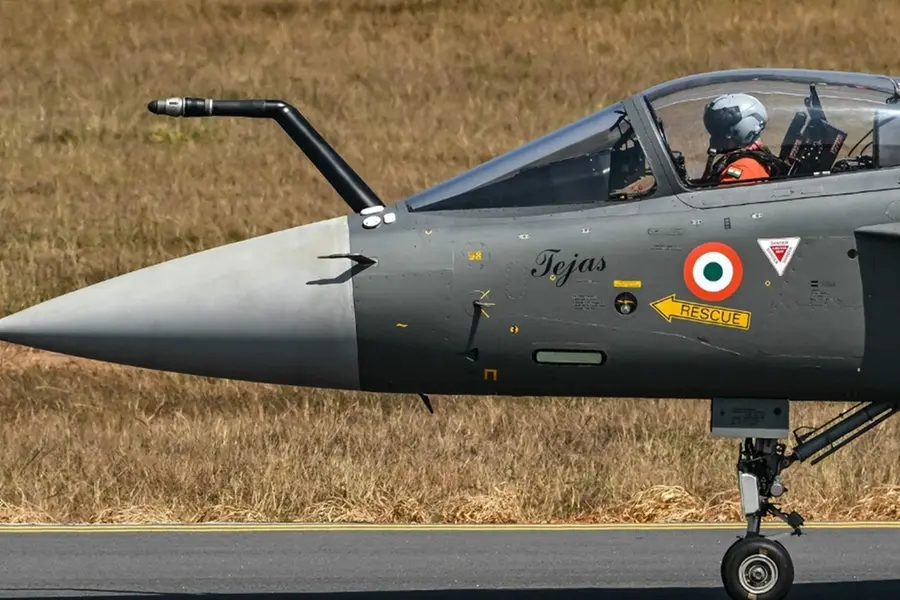
India is preparing for a major push in defence Atmanirbharta, just as Hindustan Aeronautics Limited (HAL) and GE Aerospace are in talks over commercial negotiations to co-produce the powerful F414 jet engine, the heart of the Tejas Mk 2 fighter aircraft.
The proposed agreement, anticipated to be finalised within three months, marks a significant leap in technology sharing. GE will transfer approximately 80% of the engine technologies, compared to just 58% in 2012, according to the latest Indian Express report.
The report further states that 12 pivotal capabilities, such as thermal and corrosion-resistant coatings, machining of single-crystal turbine blades, nozzle guide vane production, and blisk (bladed disk) manufacturing, are key advances in engine reliability and performance.
However, the agreement will not include the compressor design, combustion chamber, and turbine core, which remain critically sensitive technologies, the report claims.
Once finalised, local production of the F414 engines is expected to begin within three years, aligning with prototype testing and induction timelines for the Tejas Mk 2.
The journey to this moment spans decades. HAL and GE’s partnership began in 1986 with the indigenisation of the F404 engine for the original Tejas Mk 1 program, a milestone that laid the foundation for India’s domestic aerospace capabilities.
Amid delays, India has steadily ramped up access to GE engines, with the recent progress including a robust delivery schedule for GE-404 engines for the Tejas Mk 1A, with twelve more expected by year-end.
Prime Minister Modi has made developing indigenous jet engines a national mission by drawing parallels to India’s breakthroughs in vaccine manufacturing and UPI payments during his latest Independence Day speech. Defence Minister Rajnath Singh also calls these collaborations key steps toward reducing reliance on imports and reinforcing domestic defence production capability.
India is also advancing engine self-reliance for its next-generation AMCA stealth fighter. DRDO has shortlisted Safran (France), among others, to co-develop a 110–120 kN afterburning turbofan engine with full technology transfer, pending Cabinet approval.
If we look at the strategic importance of this deal in the long run, the deal lays the foundation for India to develop aftermarket support, overhaul facilities, and even evolve aerospace innovation. By mastering critical processes like turbine blade manufacturing and high-temp coatings, India gains leverage in future engine designs. With HAL leading production, the project can involve private sector partners and stimulate supply-chain and R&D expansion.
And lastly, timely release of jet engines ensures the Tejas Mk 2 fleet meets IAF squadron targets, boosting air power without dependency on foreign supply chains.
India’s earlier indigenous engine program, Kaveri, faltered under technical and institutional challenges. Today’s approach, partnering with international leaders while demanding meaningful tech transfer, is looked upon as a more pragmatic and optimistic strategy.
Published: 25 Aug 2025, 05:09 pm IST
Related Topics
Disclaimer: Kindly avoid objectionable, derogatory, unlawful and lewd comments, while responding to reports. Such comments are punishable under cyber laws. Please keep away from personal attacks. The opinions expressed here are the personal opinions of readers and not that of Mathrubhumi.
