
From leading British Airways and IATA to heading a low-cost airline, the veteran aviation executive faces perhaps the most unique challenge of his career
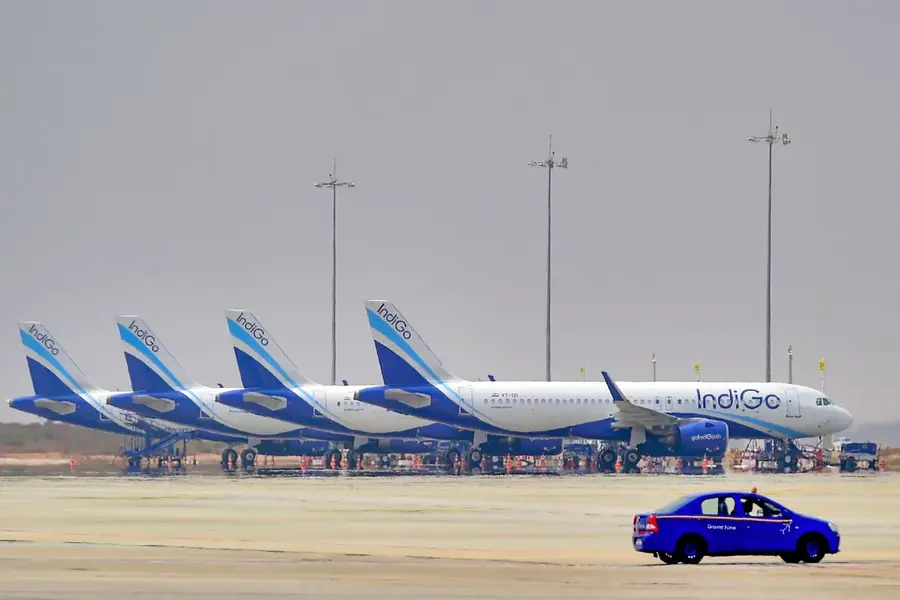
IndiGo has officially entered a new chapter with former International Air Transport Association (IATA) Director General Willie Walsh taking over as its Chief Executive Officer on Monday.
The appointment marks one of the biggest leadership changes in Indian aviation in recent years, as the country's dominant airline prepares for its next phase of global expansion.
Walsh succeeds Pieter Elbers, who led IndiGo through a period of rapid growth, record aircraft orders and an ambitious international expansion plan. However, the airline is now at a stage where simply adding more aircraft or more routes may no longer be enough. The challenge is evolving from being India's biggest airline into becoming a truly global aviation brand.
A veteran with decades of aviation experience
Walsh brings more than four decades of aviation experience to the role. He began his career as a pilot with Aer Lingus before rising through the ranks to become its Chief Executive Officer in 2001.
He later led British Airways and then International Airlines Group (IAG), the parent company of British Airways, Iberia, Aer Lingus, Vueling and LEVEL. Most recently, he served as Director General of IATA, representing airlines across the world on industry issues.
Welcoming Walsh, IndiGo Managing Director Rahul Bhatia said the airline was entering a new phase of growth and that Walsh's global experience and strategic leadership would help accelerate the carrier's international ambitions. He expressed confidence that the airline would strengthen its position on the global stage while continuing to contribute to the growth of India's aviation sector.
Taking charge, Walsh said IndiGo had built an extraordinary legacy over the past two decades and described this as one of the most exciting moments to join the airline. With India emerging as one of the world's fastest-growing aviation markets, he said the opportunities ahead were enormous and expressed his commitment to building on IndiGo's success with the airline's leadership team.
The challenge begins now
Although Walsh is one of the aviation industry's most respected leaders, his new assignment could also be among his most demanding.
Unlike his previous leadership roles at British Airways and IAG, which are full-service airline groups, IndiGo is fundamentally a low-cost carrier.
Over the last two decades, the airline has built its success on a simple formula, keeping costs low, maintaining high aircraft utilisation, operating a single-family fleet and offering reliable on-time performance.
Also Read: Why IndiGo is ending its Boeing 787 Dreamliner programme
The question many industry observers are asking is whether Walsh will preserve that formula or gradually steer IndiGo towards a more premium global airline model.
In recent years, IndiGo has already started moving beyond its traditional low-cost approach. The airline has introduced Stretch, its business-class style product on select domestic routes, launched a loyalty programme, expanded premium services and is preparing to induct Airbus A350 wide-body aircraft from 2027 to operate long-haul international flights.
These developments indicate that IndiGo is no longer thinking only about domestic dominance. Instead, it wants to compete more aggressively on international routes where passenger expectations are significantly different.
Building a global airline
Perhaps Walsh's biggest responsibility will be expanding IndiGo's international presence. While the airline dominates India's domestic skies, international operations still account for a relatively small share of its business.
The arrival of Airbus A350 aircraft will allow IndiGo to launch non-stop services to Europe and potentially other long-haul destinations, opening an entirely new phase in the airline's evolution.
However, long-haul operations are very different from running short domestic flights. They require stronger global partnerships, a wider international network, more complex operations and an enhanced customer experience. Walsh's extensive international background is expected to play a key role in helping IndiGo navigate this transition.
Balancing growth with discipline
Another major task will be maintaining IndiGo's reputation for operational efficiency while dealing with industry-wide challenges. Aircraft delivery delays, supply chain disruptions, rising lease costs and currency fluctuations continue to affect airlines worldwide.
At the same time, competition in India is intensifying, with Air India investing heavily in new aircraft, premium cabins and international expansion.
Walsh will therefore need to ensure that IndiGo continues to grow without losing the operational discipline and cost efficiency that have been central to its success.
A defining moment for IndiGo
The leadership transition comes at a defining moment in IndiGo's history. The airline already enjoys a commanding position in the Indian market and possesses one of the world's largest aircraft order books. The next challenge is not about becoming bigger, it is about becoming more global while remaining true to the low-cost philosophy that made it successful.
For Willie Walsh, this role presents a different kind of leadership test. While his career has largely been built around leading legacy and full-service airlines, IndiGo offers an opportunity to shape the future of one of the world's fastest-growing low-cost carriers.
Whether he chooses to preserve IndiGo's proven low-cost identity or gradually transform it into a more premium international airline will become clear over the coming years. One thing, however, is certain that Walsh era is set to be one of the most closely watched chapters in the history of Indian aviation.
Published: 03 Aug 2026, 01:22 pm IST
Related Topics
Disclaimer: Kindly avoid objectionable, derogatory, unlawful and lewd comments, while responding to reports. Such comments are punishable under cyber laws. Please keep away from personal attacks. The opinions expressed here are the personal opinions of readers and not that of Mathrubhumi.
